

Aromatic Acetoxy Intermediate Supplier for High-Purity Chemical Manufacturing
2026-08-16
High-purity chemical manufacturing has no room for guesswork—especially when an aromatic acetoxy intermediate is in the critical path. DSL Chemicals brings a level of batch-to-batch consistency and assay control that shifts the conversation from 'Will this pass?' to 'What’s next?' This post explores why the right supplier choice changes more than just yields.
Reading Impurity Profiles Like a Process Chemist
A process chemist doesn’t scan an impurity profile as a list of unknown peaks; they read it as a narrative of how the chemistry actually behaved. Every trace-level component is a clue: the side product from an overextended reaction time, the residual intermediate that never fully converted, the dimer formed during a slow addition. Spotting these patterns immediately narrows the search for the offending step, often before any formal investigation begins.
What matters is not just the identity of each impurity but its abundance relative to the stage. A jump in a particular species between two intermediates points to a specific unit operation, while a stubborn low-level contaminant that persists through multiple steps often indicates a solvent or reagent-derived issue rather than a reaction pathway problem. Reading the profile this way turns a routine QC report into a diagnostic tool for process robustness.
Experienced chemists also weigh what isn’t there. The absence of an expected byproduct can be as informative as the presence of an unexpected one, revealing that a proposed mechanism was incomplete or that an impurity was purged more effectively than anticipated. This kind of reading combines kinetic intuition, knowledge of typical side reactions, and a healthy skepticism for the assumption that every peak is a problem.
Why 'High Purity' Needs a Defined Baseline
The phrase "high purity" gets tossed around a lot, but ask five different suppliers what it actually means and you'll likely get five different answers. Without an agreed-upon reference point, the label is little more than marketing shorthand. A defined baseline turns that vague promise into something measurable, giving buyers and quality teams a way to compare materials on equal footing.
Consider two batches of a chemical both labeled 99% pure. One might be tested against a primary standard with tight uncertainty, while the other relies on a less rigorous method that overlooks certain impurities. The number alone doesn't reveal what's missing. A defined baseline specifies the analytical method, the impurity profile, and the detection limits, so "high purity" stops being a moving target.
When a baseline is established, it also changes how problems are diagnosed. If a reaction fails or a product underperforms, you can trace the issue back to a specific deviation from the reference rather than chasing an undefined ideal. That kind of clarity isn't just academic; it saves time and money in development and production.
Custom Synthesis Support for Aromatic Acetoxy Derivatives
When off-the-shelf aromatic acetoxy compounds fall short of your project's requirements, custom synthesis becomes the practical path forward. Our team works closely with you to design and produce derivatives that match precise specifications—whether that means adjusting substitution patterns, protecting sensitive functional groups, or scaling from milligram to multi-gram quantities. We understand that subtle changes in the acetoxy moiety can dramatically influence reactivity and downstream applications, so each synthetic route is planned with your end goal in mind, not just the immediate target structure.
Throughout the process, you receive clear communication about feasibility, timelines, and purity benchmarks. Starting materials are sourced based on your budget and purity needs, and analytical confirmation—typically NMR, HPLC, and mass spectrometry—is included before shipment. If a particular derivative proves challenging due to steric hindrance or instability, we explore alternative protecting strategies or stepwise modifications rather than pushing a route that won't hold up. This iterative approach helps avoid costly delays and ensures the final product is genuinely usable in your research or production workflow.
Beyond one-off syntheses, we also support lead optimization efforts where a series of aromatic acetoxy analogs are needed for structure-activity relationship studies. You can request small libraries with systematic variation at the aromatic core, and we'll document reaction conditions and characterization data for each compound. Because our lab maintains dedicated equipment for air-sensitive and low-temperature reactions, even acetoxy derivatives that are prone to hydrolysis or oxidation can be prepared reliably. Ultimately, the goal is to give you a dependable source for these building blocks without having to allocate your own time to synthetic troubleshooting.
Scaling Batches Without Drifting Specifications
When production volumes climb, the temptation is to loosen the original design tolerances just to keep pace. A better move is to freeze a clear specification sheet before scaling, then treat any deviation as a defect—not a shortcut. This keeps material choices, thread depths, and finish requirements stable from the first pilot run to the ten-thousandth unit.
Scaling works when the specification acts as a fixed reference point rather than a guideline. Small drift in one batch can quietly become the new normal, so line audits should compare every output against the locked baseline, not against the previous shift. If a process cannot hold the spec at higher speed, the answer is to adjust throughput or tooling—never to rewrite the standard under pressure.
Suppliers also need that same boundary. Sharing an unchanged spec sheet across the supply chain prevents different partners from interpreting “close enough” differently. Where local materials force a substitution, the change should trigger a formal review instead of an informal waiver, ensuring the batch scales without quietly abandoning the product definition.
Supply Chain Visibility for Critical Intermediates
Tracking critical intermediates often feels like watching a relay race through fog. A single precursor might change hands three times before it reaches the production line, and each handoff introduces a gap where inventory levels, quality status, or customs delays can go dark. Without a live view of these movements, teams default to buffer stock and late-night phone calls, which masks the real problem instead of fixing it.
Real visibility starts with mapping every tier that touches these materials, not just the immediate supplier. Many companies discover that their true exposure sits two or three layers upstream, where alternate sourcing decisions are made without their knowledge. Linking purchase orders, shipment milestones, and lab results into one shared timeline helps teams spot a bottleneck before it becomes a shutdown. It also changes the conversation with suppliers from blame to joint problem-solving, because both sides finally see the same facts at the same time.
The goal is not more data, but faster recognition of exceptions. A well-built visibility layer flags the one delayed lot among hundreds of on-time deliveries, so planning teams can act while options still exist. That is the difference between absorbing a disruption quietly and explaining it to a customer.
Handling and Packaging That Preserve Purity
Once a batch passes final testing, it moves into a dedicated low-particulate handling zone. Technicians wear double-layer nitrile gloves and work under laminar flow hoods to minimize contact with ambient air. Every transfer between vessels uses pre-sterilized, single-use tubing, and the material never touches a surface that has not been swabbed and logged earlier in the shift.
For packaging, we rely on borosilicate glass or fluoropolymer-lined containers with PTFE-sealed closures. Each container is purged with dry nitrogen before filling, then capped under a slight positive pressure so outside moisture cannot drift inward. Shrink-band seals and lot-specific labeling are applied only after a final visual check, which keeps the interior environment untouched until the end user opens it.
Temperature and humidity are tracked continuously during storage and transit. Small shipments travel inside insulated crates with phase-change packs rated for the exact temperature window, while larger orders use dedicated climate-controlled freight. A tamper-evident tape across every outer carton gives one last confirmation that nothing has been opened or handled since the purity check at our dock.
FAQ
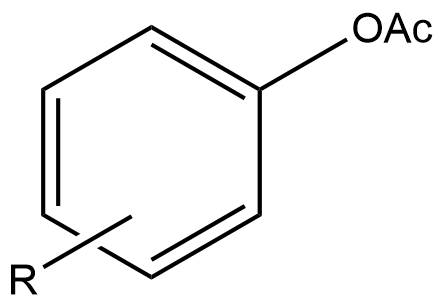
It is a benzene-ring-containing compound with an acetoxy functional group that serves as a building block in multi-step syntheses, commonly used to produce active pharmaceutical ingredients, agrochemicals, and specialty polymers where precise reactivity is needed.
Trace impurities can derail downstream reactions by acting as catalyst poisons or creating unwanted by-products. In regulated sectors, even 0.1% of an unknown contaminant can force batch rejection, so high purity directly protects yield and compliance.
Look for evidence of process understanding: how the supplier controls residual solvents, whether they monitor genotoxic impurities, and if they can share stability data under your intended storage conditions. A willingness to discuss failure modes usually signals deeper technical capability.
A capable supplier will already have robust unit operations in place, such as controlled acetylation and crystallization, and can demonstrate that impurity profiles remain consistent from 100-gram lots to 100-kilogram batches without relying on post-reaction purification tricks.
Beyond the standard certificate of analysis, expect a detailed batch record summary, residual solvent report, statement of origin, and, for pharmaceutical use, a declaration of compliance with relevant pharmacopoeia monographs or ICH guidelines.
It depends on the specific structure, but many acetoxy aromatics are prone to hydrolysis if exposed to humid air. Suppliers should provide moisture-barrier packaging, desiccant, and clear storage recommendations, often with a retest date based on real-time stability data.
The strong supplier can articulate how they prevent cross-contamination in multi-purpose plants, validate cleaning procedures, and provide a full impurity map rather than just a purity percentage. They also tend to offer smaller trial lots without inflated pricing.
Yes, acetoxy often serves as a protecting group for phenols or alcohols, temporarily masking reactivity until selective hydrolysis. This makes the intermediate valuable in complex syntheses where orthogonal deprotection is required.
Conclusion
In high-purity chemical manufacturing, the choice of an aromatic acetoxy intermediate supplier often determines whether a synthesis route stays robust or drifts into costly rework. A process chemist doesn’t just glance at a certificate of analysis; they read impurity profiles like a synthetic narrative—tracking trace aldehydes, brominated byproducts, or residual acetates that can derail downstream coupling steps. For this reason, “high purity” must be anchored to a defined baseline: what exactly is absent, at what detection limit, and under which analytical method. Without that clarity, purity claims become marketing noise rather than process assurance. The right supplier offers custom synthesis support for aromatic acetoxy derivatives, adjusting steric or electronic features on the ring without forcing a customer to compromise on the acetate protecting group’s lability or stability.
Scaling batches without drifting specifications is where many relationships fracture. A supplier that maintains tight control over reaction exotherms, crystallization kinetics, and solvent residues from kilo lab to pilot plant proves they understand the intermediate’s physical behavior, not just its chemical structure. That depth of knowledge extends into supply chain visibility—sharing batch genealogy, raw material sourcing changes, and stability data before problems surface. Finally, handling and packaging that preserve purity cannot be an afterthought. For oxygen- or moisture-sensitive acetoxy intermediates, inert atmosphere bagging, amber glass with PTFE-lined caps, or double-bagged fluoropolymer liners make the difference between on-spec material arriving ready to use and a shipment that quietly degrades in transit. A supplier that treats these details as part of the product, not logistics overhead, becomes a genuine extension of the manufacturing team.
Contact Us
Contact Person: Wei Zhang
Email: [email protected]
Tel/WhatsApp: 862163529955
Website: https://www.dslchem.com