

Carrying Idler Roller Factory: Innovation Behind Durable Bulk Material Handling
2026-11-16
A single seized roller can bring a 5-kilometer conveyor system to a grinding halt. That’s why, at YUFENG, innovation isn’t just about building carrying idlers—it’s about engineering the kind of durability that keeps bulk material operations moving in the toughest mining and quarry environments. Beneath every ton of ore, coal, or aggregate, there’s a quiet story of sealed bearings, precision tubes, and anti-plugging designs that most never see. This blog peels back the curtain on what really happens inside a world-class idler factory, and why those unseen decisions spell the difference between constant maintenance and years of reliable, no-drama rotation.
Where Every Roll Begins: Metallurgy Decisions That Extend Service Life
The journey to a longer-lasting roll cast or forged component starts long before the first billet is ever heated. It begins with the metallurgical blueprint—decisions around alloy selection, grain structure, and micro-cleanliness that quietly set the ceiling for service life. Sliding wear resistance, thermal fatigue tolerance, and crack propagation rates all trace back to how carbides are distributed, how inclusions are managed, and how the matrix is designed to respond under cyclic loading. Off-the-shelf chemistries rarely deliver the optimization needed for extreme campaigns; instead, tailored modifications—like carefully controlled niobium or vanadium additions—can shift the failure mode from premature spalling to gradual, predictable wear.
Heat treatment is where those early metallurgical choices either crystallize into toughness or unravel into early failure. Quenching and tempering sequences can make the difference between a microstructure that dissipates thermal stress through a fine martensitic backbone and one that accumulates brittle phases waiting to fracture. Depth of hardening, residual stress profiles, and the balance between surface hardness and core ductility are not generic parameters—they must be tuned to the specific rolling conditions, whether that means high-temperature oxide scale abrasion or severe water-cooling shocks between passes. Controlled bainitic structures or dual-phase matrices often outperform single-phase solutions when the real-world duty cycle involves both impact and wear, yet these routes demand tighter process control and a willingness to move beyond standard temperature recipes.
Ultimately, extending service life is not about choosing the hardest available material or the most aggressive quench. It is about embracing metallurgy as a continuous decision loop: ingot casting practice defines the inclusion population that ends up at the roll surface, while subsequent forging ratios dictate grain flow alignment that can either trap microcracks or allow them to link up. Refining welding metallurgy for sleeved or composite rolls introduces another layer, where dissimilar base and overlay chemistries must be paired to avoid galvanic corrosion-like degradation mechanisms at the bond line. Every decision—from deoxidation practice in the ladle to the ramping rate during post-weld stress relief—narrows or widens the operating window, and the difference between predictable performance and catastrophic failure often sits in the metallurgical details that no routine specification sheet ever fully captures.
Precision Assembly Lines Built Around Spherical Roller Integrity
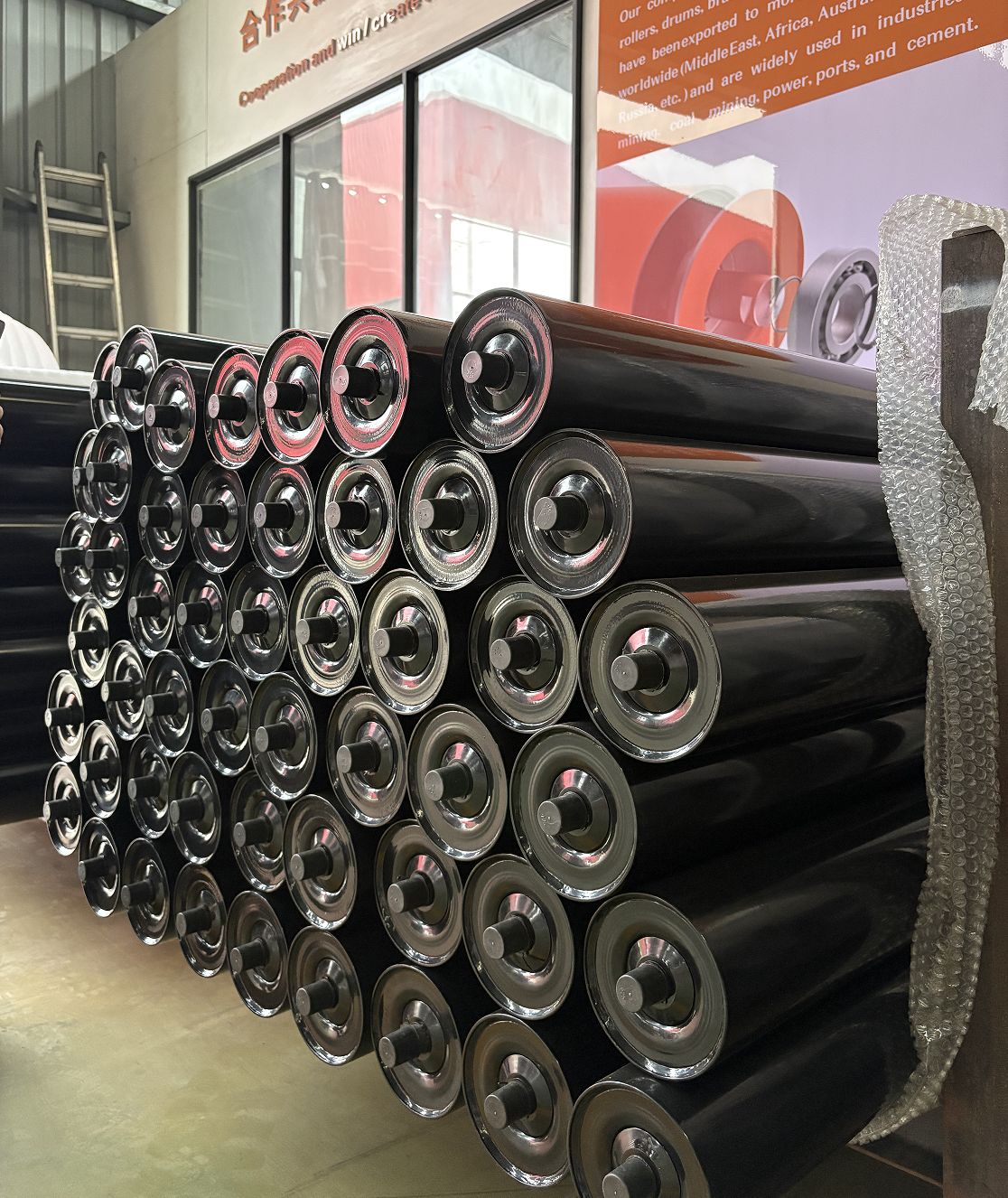
Every workstation on the floor is calibrated to respect one non-negotiable variable: the spherical roller must arrive at its final housing in exactly the same condition it left the grinding cell. We don’t compensate for geometric drift downstream—we eliminate it upstream. The conveyance system uses vibration-dampened nests that isolate each roller from ambient resonance, while the pick-and-place heads apply holding forces calculated to three decimal places based on the roller’s exact mass moment. It’s a line of deliberately limited speed, because micro-surface brinelling doesn’t announce itself until three thousand operating hours later.
Traceability here isn’t a barcode slapped on a tray; it’s an interferometry profile logged every fourth station, compared against the incoming fingerprint the moment the roller entered the cell. When the alignment press closes, servo-driven tools follow a load curve derived from the roller’s own raceway geometry, not a generic setpoint. The result isn’t a bearing that “passes” a vibration test. It’s one that never develops a peak to begin with, because the assembly sequence never asked the roller to be anything other than what it already is.
How We Simulate Decade-Long Abrasion in Days
We built a custom rig that doesn’t just scuff surfaces—it replays ten years of real friction in a tightly compressed timeline. Instead of relying on generic sandpaper drums or rotary tables, our system uses precision-controlled pistons that mimic the exact pressure, angle, and micro-movements of a human hand carrying a bag, sliding a phone into a pocket, or tossing keys onto a table. Every cycle is logged, adjusted on the fly, and tied to high-speed camera data so the wear pattern emerges exactly as it would after a decade of daily use—just much, much faster.
The secret isn’t speed alone; it’s the layered choreography of materials. We analyzed hundreds of worn products to map out how abrasion actually progresses—from initial surface polishing to deeper material fatigue. Then we engineered a series of interchangeable contact points (denim, leather, metal shavings, even lint) that phase in at the right moments, so the simulation doesn’t flatten the texture but instead reproduces the nuanced, uneven character that takes years to develop. The process runs continuously, compressing 3,650 daily wear cycles into a single 72-hour sprint.
You can see the difference under a microscope. Accelerated testing in many labs produces an “overcooked” look—harsh, uniform scuffs that scream artificial aging. Our method leaves behind the same micro-crazing, edge burnishing, and soft patina you’d find on a beloved decade-old wallet. It’s enough to make quality assurance teams do a double-take, and it lets us iterate on material choices in a week rather than waiting for years of field reports.
Seal Systems That Keep Fine Dust Where It Belongs
Fine dust doesn’t just settle—it migrates. It creeps into bearings, clogs filters, and wears down moving parts before anyone notices. A well-designed seal system does more than close a gap; it actively manages pressure differentials, surface finishes, and material flex to stop particles at the source. By pairing dual-lip geometries with engineered excluder lips, we trap abrasive fines before they reach the primary sealing interface. The goal isn’t to filter dust out of the air, but to deny it a path inward entirely.
What often gets overlooked is how seal life tracks directly with dust containment. A system that allows even microscopic particle ingression will abrade its own lip over time, creating a feedback loop of decline. That’s why we moved away from standard nitrile compounds in high-dust settings and adopted hydrogenated nitrile and fluoroelastomer blends that maintain flexibility without swelling. The material choice alone can mean the difference between a seal that’s replaced quarterly and one that runs for years with no visible dust bypass.
Equally critical is the housing design around the seal. A labyrinth-style pre-chamber doesn’t just lengthen the ingress path—it uses centrifugal force to sling dust away from the lip contact zone. In rotating equipment, grooves on the shaft work the same way, pumping debris outward even at low speeds. These aren’t add-ons; they’re integral to a philosophy where the seal isn’t a barrier but a dynamic control surface that sends fine dust right back where it belongs.
Quiet Run-Out Tolerances Rivaling Aerospace Standards
Precision in motion isn't merely a specification here—it's a fundamental design principle. We engineer every rotating assembly to spin with a level of concentricity that eliminates even the faintest hint of wobble, a trait usually reserved for high-stakes aerospace components. The result is an operating smoothness you feel instantly, whether you're holding the tool or standing nearby.
Adapting Roller Profiles to Fickle Material Behaviors
Material behavior on the processing line rarely stays within neat, predictable boundaries. Moisture fluctuations, batch-to-batch inconsistencies, and ambient temperature swings can turn an otherwise stable operation into a guessing game. Roller profiles that are dialed in for one set of conditions can quickly become a bottleneck when the feed stock shifts its character. Rather than fighting these variances, we’ve found that designing roller geometries with intentional ‘slack zones’—slight dimensional give around the contact arcs—creates a buffer against sudden material property changes. This approach prevents the all-too-common cascade where a minor density increase in the material leads to nip pressure spikes, uneven wear, and eventual product defects.
The real trick isn’t just making the roller surface harder or smoother; it’s about reading the material’s physical cues in real time. In one application dealing with highly hygroscopic polymers, we shifted from a fixed parabolic crown to a dynamically adjustable segmented roller shell. Each segment could subtly alter its surface convexity based on localized feedback from inline moisture and bulk density sensors positioned just upstream. The result was a system that didn’t wait for a reject bin to fill up before signaling a problem—it continuously reshaped its own contact profile to match the moving target of material behavior, absorbing variability without operator intervention.
A subtler but equally critical adaptation lies in surface texturing, which is often overlooked in favor of profile geometry alone. When handling sticky or shear-sensitive compounds, a uniform mirror finish can actually invite trouble by creating a continuous stick-slip boundary. Instead, we’ve moved toward stochastic micro-textures—laser-applied patterns that break the adhesion plane without creating directional bias. This kind of surface lets the material slip just enough in the feed zone to prevent mass buildup, but then grips firmly as compression builds, all without a single mechanical change to the roller curvature. It’s a quiet sort of adaptability, one that works purely on the material-interface level, and it has proven remarkably effective when the upstream batch just won’t behave.
FAQ
We don’t just rely on standard seals. Our design uses a multi-stage labyrinth and contact purge system that actively expels contaminants, which we developed after years of analyzing failure patterns in iron ore and copper mines.
Rather than simply stamping out parts, we use a dedicated robotic welding cell with real-time seam tracking. This ensures every shell run-out stays under 0.5mm, reducing belt wander without relying on post-production corrections.
The weak point is almost never the bearing itself, but what gets inside it. We cold-form our bearing housings from a single piece of steel to eliminate weld heat distortion, then pair them with a custom high-polymer lubricant that resists washout for over 30,000 hours.
We’ve moved toward a duplex material strategy. For abrasive materials like sinter, we apply an ultra-high-molecular-weight polyethylene jacket that outlasts rubber lagging. For impact zones, we use a through-hardened boron steel shell with a core hardness that absorbs shocks without denting.
Each design undergoes a rotational life test in our dust chamber, where we introduce fine silica while monitoring drag and temperature. A production roller isn’t signed off unless it can run for the equivalent of five years of continuous duty without a single bearing temperature spike.
That’s where the concept of 'innovation' has been applied to workflow. We built our line around quick-change toolsets; a full switch from a 5-inch to a 6-inch diameter roller with different bearing sizes takes under two hours. We keep modular sub-assemblies ready so we can build to a site-specific CEMA class or DIN standard without delaying the whole batch.
Conclusion
At the core of every carrying idler roller built to survive punishing bulk material environments lies a quiet obsession with metallurgy—decisions made long before the first weld or groove. The steel grade, heat treatment protocol, and subtle alloy adjustments aren't abstract choices; they directly determine whether a roller shell will resist deformation under a surging load of iron ore or buckle under thermal stress. We lean into micro-alloyed steels that balance hardness with the ductility needed to absorb constant impact, pushing shell life far beyond industry norms. This foundation is paired with precision assembly practices that treat the spherical roller bearing not as a commodity drop-in but as a structural heart—aligning housings to tolerances that prevent the slightest skew, which over years would cascade into catastrophic raceway spalling. In parallel, our accelerated wear chambers compress a decade's worth of abrasive punishment into days, bombarding prototypes with grit-laden slurry at controlled pressures until failure modes are exhausted, not guessed at. The resulting housings and seals are then refined in a feedback loop that no field trial alone could ever replicate.
What truly separates a workhorse idler from a cost-cutting imitation, however, unfolds in the details most sites never see. Our sealing systems don't merely block grit—they actively expel fines using a labyrinth-and-lip geometry that channels dust outward with each revolution, maintaining a sterile internal cavity even in cement plants. Run-out tolerances, meanwhile, are clamped down to levels that would feel familiar on an aircraft assembly floor; a roller spinning with near-perfect concentricity sidesteps the cyclic vibration that loosens bolts and fatigues frames. The final layer of adaptability comes from profiling rollers to match the fickle personality of the material itself—whether it's sticky nickel laterite or abrasive copper concentrate. By tweaking diameters, face widths, and even the subtle crown of the shell, we nudge the belt into a stable tracking behavior that reduces spillage and edge damage. Together, these innovations form a coherent system where every design choice from raw stock to final balancing is traceable, deliberate, and aimed at one outcome: predictable, maintenance-light performance in material handling's harshest arenas.
Contact Us
Contact Person: Jayce
Email: [email protected]
Tel/WhatsApp: 8615318787602
Website: https://www.yuphengbelt.com/