

Cheese Sauce Supplier Checklist for Consistent Quality and Reliable Delivery
2026-11-29
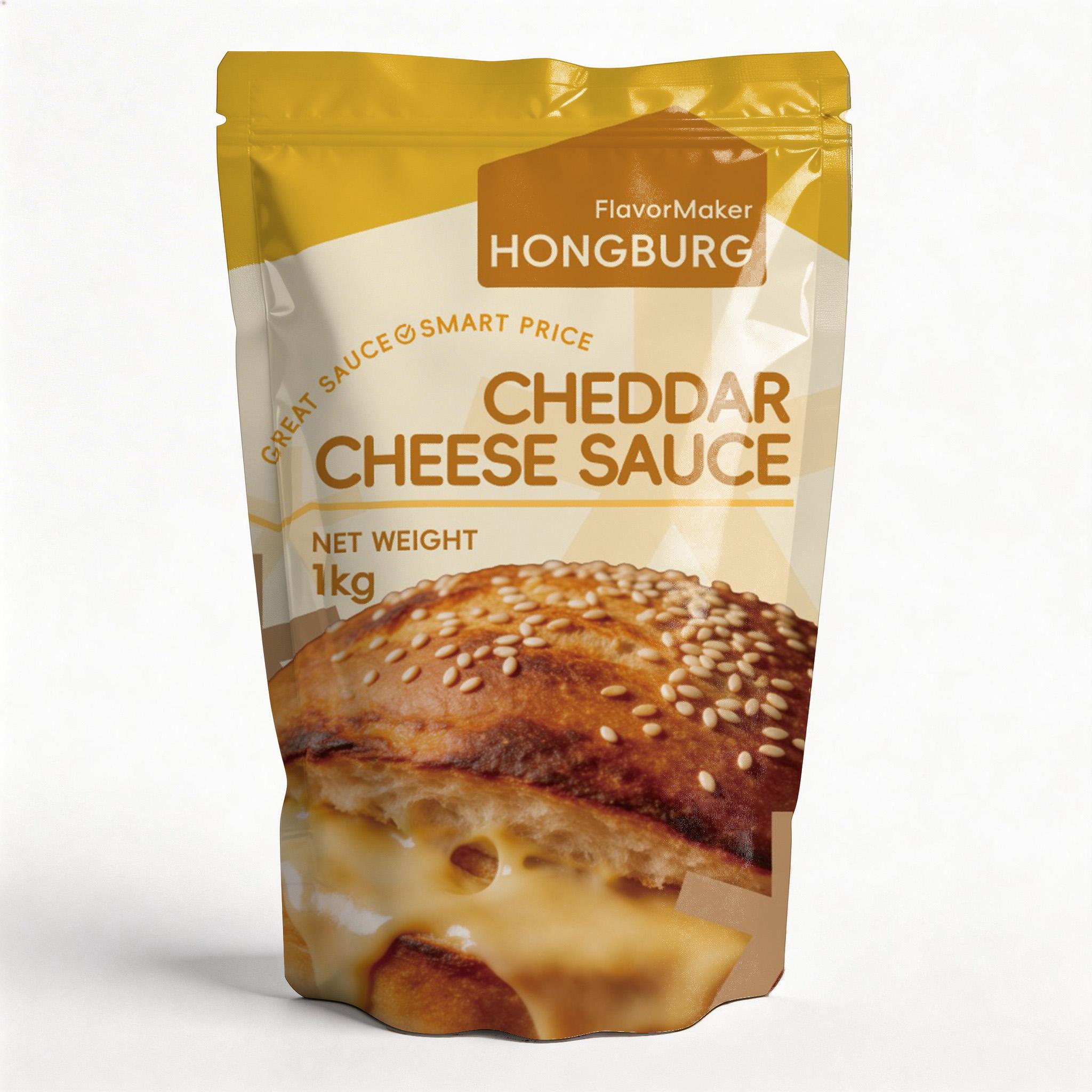
Most cheese sauce supplier checklists stop at price per case and a sample cup, but the real risks show up weeks later: unstable melt, split sauces, or delivery windows that drift. This guide walks through the checks that separate dependable suppliers from costly gambles—and shows where HONGBURG FLAVORMAKER fits into that standard.
What Consistent Quality Actually Means for Cheese Sauce
Consistent quality in a cheese sauce rarely gets noticed until it fails. It means the sauce holds the same viscosity at 140°F as it does after sitting on a steam table for an hour, without breaking into oil pools or turning grainy. It also means the cheese flavor stays rounded rather than shifting toward an overly sharp or flat profile from batch to batch.
For most kitchens, the real test is reheating. A sauce that splits after a freeze-thaw cycle or turns pasty when reheated in a microwave is not consistent, even if it tasted fine on day one. Reliable cheese sauce should recover its flow and cling without needing a whisk and extra liquid every time.
That kind of repeatability comes from more than a fixed recipe. It depends on emulsification that tolerates real-world handling—different pots, hold times, and serving temperatures. When the texture, salt level, and mouthfeel stop being a daily surprise, that is when a cheese sauce actually qualifies as consistent.
Why Batch Samples Rarely Predict Long-Term Performance
A batch sample captures a narrow slice of conditions. It might be produced during the first hour of a run, on a single machine, with freshly calibrated sensors and a stable ambient temperature. Long-term performance, by contrast, unfolds across shift changes, tool wear, raw material drift, and seasonal humidity swings. The gap between these two contexts is not a minor annoyance; it is the core reason a promising batch rarely translates into reliable output over months. Anyone who has watched a pilot line hum along beautifully only to see full production stumble has felt this mismatch firsthand.
There is also the problem of hidden variability that batch testing simply cannot see. A dozen samples might all fall within spec while a slow degradation mechanism is already eating away at the edges of the process. Thermal expansion, lubricant breakdown, operator fatigue, even a firmware update pushed weeks later can push a parameter outside the tested envelope. Batch results are like a single frame from a long film: they can be perfectly sharp and still tell you nothing about how the story unfolds.
Finally, batch tests tend to reward narrow optimization. Engineers tweak settings until the sample passes, but those tweaks often trade away robustness. A process tuned for one clean run may be fragile when raw material properties shift by a few percent. Long-term performance depends less on hitting a target once and more on staying inside a comfortable margin across hundreds of uncontrolled variations. That is why relying on batch samples feels safe in the lab and then quietly falls apart on the factory floor.
Storage and Transport Conditions That Preserve Texture
Texture loss often begins well before any visible spoilage, driven by small shifts in temperature and moisture movement. For baked goods, fresh produce, and foam-based desserts alike, keeping relative humidity within a narrow band helps prevent surface drying, crust softening, or collapse of delicate air cells. Even a few degrees of drift during refrigerated transport can speed up starch retrogradation in bread, leaving it firm and crumbly despite acceptable microbial quality.
Packaging choices and pallet configuration influence texture as much as climate settings do. Rigid trays, breathable films, and cushioning layers reduce compressive force during vibration, while overly tight strapping can deform soft matrices such as mousse, ripe berries, or filled pastries. Conversely, loose stacking invites abrasion and micro-cracking. In sealed containers, humidity-absorbing pads or desiccants help prevent free water from pooling at contact points, which is a common cause of localized softening and skin splitting.
Loading practices and handling routines also shape the final bite. Pre-cooling containers before filling lowers condensation risk, and minimizing door openings during short-haul delivery limits warm, humid air intrusion that can create soggy surfaces. Recording temperature deviations at receiving and following first-in-first-out rotation further protect structure, since texture damage is frequently irreversible even when the product remains safe to eat.
Delivery Reliability Signals Hidden in Supplier Logistics
Most buyers only check whether a shipment lands on the promised date. The quieter signals sit much earlier in the chain: how often a supplier books the same lane, whether freight is actually staged before the pickup window opens, and how frequently routing changes happen without a heads-up. These details rarely make it onto a scorecard, but they tend to repeat consistently before a late delivery ever reaches the dock.
A supplier with stable logistics partners usually shows a rhythm that is easy to miss. Drivers know the loading layout, trailer seals match paperwork on the first count, and pallets arrive in condition that does not require reworking at the receiving door. When that rhythm starts to fray through unfamiliar carriers, partial loads leaving later in the day, or tighter pickup windows, it often signals capacity pressure or upstream material gaps long before the due date changes.
The most useful indicators are behavioral rather than cosmetic. Watch how a supplier handles exceptions: do they flag a missed truck before you ask, offer a revised schedule with realistic time blocks, or quietly consolidate orders without updating the paperwork? The distance between formal updates and actual logistics decisions reveals more about delivery reliability than a dashboard summary can.
Ingredient Sourcing Red Flags That Affect Every Batch
When a mill switches from a named farm to an aggregated regional lot without updating the spec sheet, batch consistency starts drifting before anything looks officially wrong. Moisture, ash, and particle-size distribution move just enough to alter flow, compaction, and yield, but the certificate of analysis still says “pass.” That gap between what the paperwork claims and what actually arrived is the first red flag to chase down.
Another signal that shows up in every batch is a supplier who quotes lead times and pricing before confirming lot identity. If the team cannot produce a single-origin trace document, a recent heavy metal screen, and retention samples from the exact lot being shipped, small substitutions become routine. These are not one-time accidents; they become baked into the baseline, so every downstream batch inherits the same drift.
The most damaging red flag is when a raw material repeatedly arrives just inside a wide specification, but never near the middle. That pattern usually means the source is being blended or reworked to barely clear acceptance instead of being produced to target. Every batch made from that input will carry extra noise, and the variability shows up later as inconsistent color, dose uniformity, or stability, rather than at receiving.
Designing a Scorecard That Keeps Suppliers Accountable
A supplier scorecard often fails the moment it turns into a polite report card that everyone reviews and nobody acts on. To keep accountability real, the scorecard needs teeth from the start. Begin with a handful of metrics that directly affect your operation—on-time delivery, defect rate, responsiveness to corrective actions—and define exactly how each one is measured. If a supplier cannot see how a number was calculated, they will spend more time disputing the score than fixing the problem. Use a simple 0–100 scale or a color system, but tie every low mark to a concrete consequence, such as reduced order volume, a formal improvement plan, or a review meeting with procurement leadership.
Weight the metrics according to what actually disrupts your business, not what is easiest to track. A component that arrives two days late but stops an entire assembly line deserves more weight than a minor paperwork error. Share the weighting openly. Suppliers should know that delivery reliability counts for 40 percent while invoicing accuracy counts for 10 percent—this removes the feeling that scores are arbitrary or based on personal relationships. Then set a cadence that is frequent enough to catch drift early, such as monthly for critical suppliers and quarterly for the rest. A scorecard that only appears once a year becomes a historical document rather than a steering tool.
Finally, build the scorecard around dialogue, not just data. Every scoring cycle should end with a short written summary and a live conversation where the supplier explains the root cause of any drop and proposes a recovery plan with dates. If the supplier consistently ignores the plan, the scorecard gives you a defensible, objective basis for moving volume elsewhere or terminating the relationship. When suppliers know the scorecard is used to make those kinds of decisions, accountability stops being a slogan and becomes part of how you buy.
FAQ
Ask for production logs that show cook time, temperature, and pH for every batch, not just a certificate of analysis.
Request route-level temperature data or data logger reports from the carrier, and compare them against the supplier's recommended storage range.
Focus on HACCP or preventive control plans, allergen control records, and recent third-party audit results with corrective actions.
Sample each new lot for viscosity, flavor, color, and microbial limits until the supplier proves consistent performance, then reduce frequency by risk.
Monitor on-time percentage, fill rate, lead time variance, and how quickly the supplier communicates delays or shortages.
Check seal integrity, use-by dating clarity, and whether the packaging protects against light and oxygen if the sauce is sensitive.
Before first shipment and after any formula, process, or packaging change, so you are not receiving untested product.
Review their capacity plan, backup production lines, and raw material sourcing strategy for key ingredients like cheese and stabilizers.
Conclusion
A practical cheese sauce supplier checklist has to look beyond a one-time sample. Consistent quality means the sauce holds the same viscosity, melt, and emulsion stability across different production runs, not just in a controlled lab batch. Single samples rarely predict long-term performance because pilot batches often hide the variability that appears with larger volumes, shift changes, or seasonal shifts in dairy fat. That is why a working checklist includes tests across several lots, aging periods, and mild temperature swings before approving a supplier. Without that, a strong first impression can quickly turn into split sauces and customer complaints.
Transport and storage conditions deserve equal weight. Temperature abuse during shipping or warehousing can break an emulsion, cause oil separation, or leave the sauce with a grainy texture, so the checklist should verify cold chain logs, packaging integrity, and stock rotation practices. Delivery reliability is not only about on-time percentages; it also shows up in a supplier's backup routing, buffer inventory, and early notice of delays. Ingredient sourcing adds another layer of risk, especially when dairy sources change frequently or cheap fillers and single emulsifiers are used, since those choices affect every batch. A practical scorecard turns these areas into measurable checks, such as batch rejection rates, delivery deviations, and complaint trends, and makes periodic reviews part of the supplier relationship.
Contact Us
Contact Person: Peter Song
Email: [email protected]
Tel/WhatsApp: +86 18920189778
Website: https://www.hongburg.com