

China LED Therapy: Unlocking Advanced Light-Based Healing and Beauty Benefits
2026-11-02
Light is no longer just illumination—it’s becoming a precise tool for healing and rejuvenation. In China, a quiet revolution is unfolding in LED therapy, where advanced wavelengths are unlocking benefits that go far beyond surface-level beauty. From accelerating tissue repair to calming inflammation and boosting collagen, the applications are as diverse as they are promising. Among the innovators shaping this field is GUANG TAI, a name that consistently pushes the boundaries of what phototherapy can achieve. But what exactly makes China’s approach different? And how can these light-based solutions fit into your own wellness or skincare routine? Let’s explore the science, the standout devices, and the practical advantages that are turning LED therapy into a global phenomenon.
China's Quiet LED Therapy Revolution You Haven't Heard About
Walk into a mid-tier beauty salon in Chengdu or a dermatology clinic in Hangzhou, and you'll likely spot a small, unassuming panel of red and near-infrared lights tucked into a corner. It's not flashy, and it doesn't come with a celebrity endorsement blaring from a screen. Yet these devices—often priced under 500 yuan—are redefining how millions of Chinese consumers treat acne, fine lines, and even post-procedure recovery. The quiet part isn't the technology itself; it's the speed and scale at which it has become routine.
What sets China's approach apart is the blend of domestic manufacturing muscle and a no-nonsense consumer culture. Instead of marketing LED therapy as a luxury spa add-on, brands sell it as a practical, almost utilitarian habit—something you do while scrolling your phone before bed. This has pushed a wave of FDA-clearance-style home devices into the market, but at a fraction of Western prices. Meanwhile, hospitals and aesthetic chains treat it as a standard adjunct, not a novelty. The result is a quiet normalization: LED therapy is no longer a question of "if it works" but "which wavelength and for how long."
The Real Difference Between Salon and At-Home LED Panels
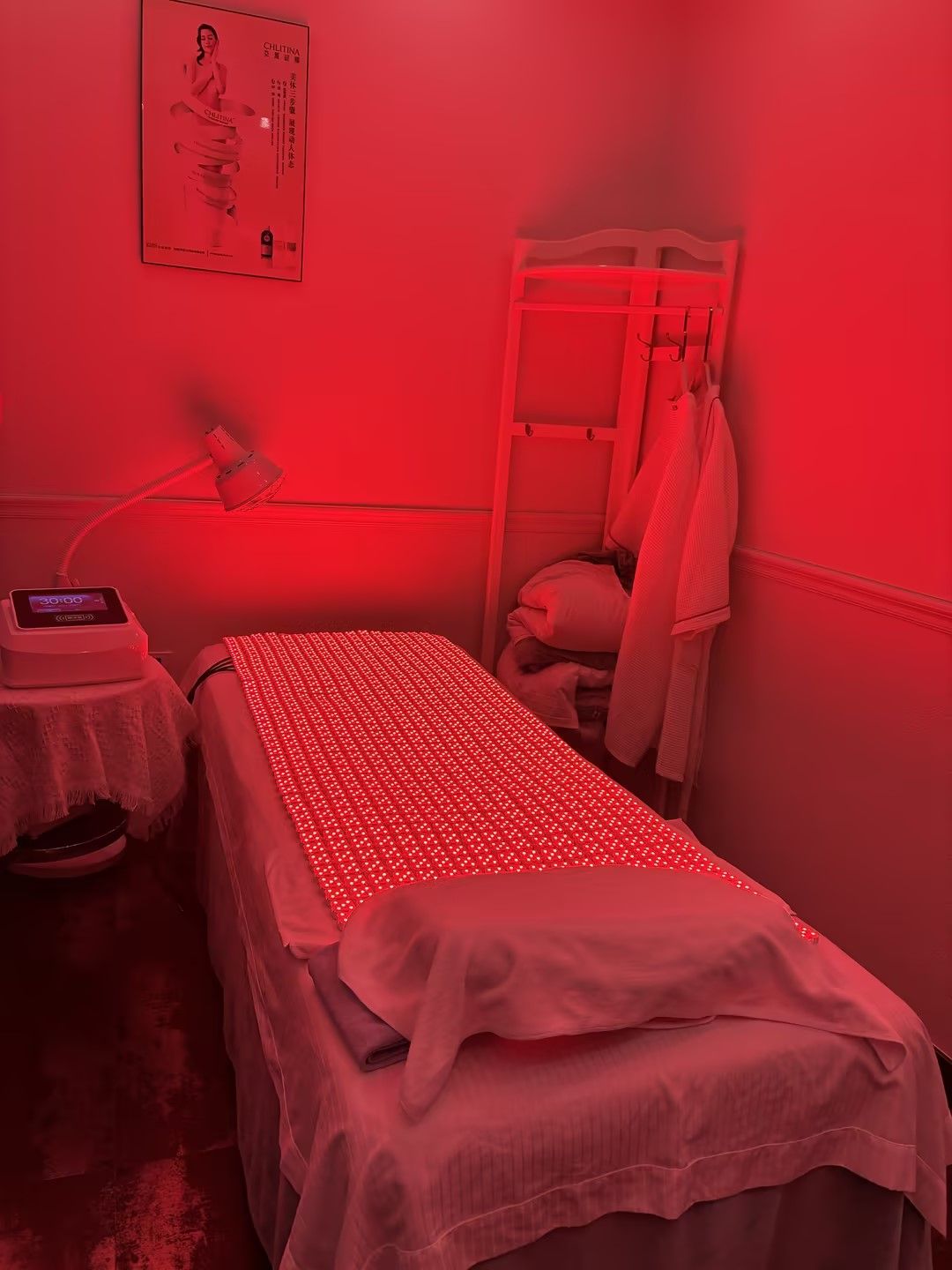
Salon LED panels generally deliver higher irradiance—often 100 mW/cm² or more—so they can trigger a visible skin response in a much shorter session. At-home devices, by contrast, usually top out around 30–60 mW/cm² for safety and regulatory reasons. That doesn’t make home panels useless; it simply means the treatment frequency has to change. A salon session might be needed once or twice a month, while a home panel often requires near-daily use over several weeks to produce comparable collagen and tone improvements.
Wavelength precision and panel construction set them apart too. Professional units tend to combine red and near-infrared diodes with tighter spectral output and more even coverage across the entire face. Many home units use fewer diodes spaced further apart, which can create subtle hot spots or weaker delivery at the edges of the treatment area. Salon protocols also allow an esthetician to adjust distance and duration based on your skin type and current condition—something a fixed home timer simply can’t do.
The real trade-off isn’t just raw power; it’s customization and accountability. In a salon you’re paying for a calibrated device and a trained operator who can respond to your skin on the day. At home you trade some of that output and oversight for convenience and a lower per-use cost. If your skin tolerates LED well, a high-quality home panel used consistently can close that gap far more than most people expect.
Why Wavelengths Matter More Than Brand Names
Most people shopping for a light therapy device start by comparing companies, but that's the wrong place to look. The light itself doesn't care what logo is printed on the casing. A 660 nm diode from an expensive brand and a 660 nm diode from a budget brand emit the same wavelength, and your skin absorbs them the same way. What changes is the marketing budget, not the biology.
Wavelength is what determines how deep the light reaches and what it triggers once it gets there. Red light around 630–660 nm works near the surface for skin texture and collagen support, while near-infrared around 810–850 nm goes deeper for muscle recovery and joint comfort. If a device lacks the right wavelengths, no amount of brand prestige can make up for it. Check the specs before you check the label.
A Practical Guide to Using LED Therapy for Stubborn Acne
First, forget the one-size-fits-all approach. If your acne has been hanging around despite creams and spot treatments, LED therapy works best when you match the wavelength to the problem. Blue light (around 415 nm) targets the bacteria that fuel breakouts, while red light (630–660 nm) calms the inflammation that makes stubborn spots look angrier than they are. Most devices combine both, but don’t assume more is better—start with 10 to 15 minutes, three to five times a week, and give your skin time to adjust before increasing frequency.
The biggest mistake people make is treating LED like a quick fix. Stubborn acne didn’t form overnight, and light therapy won’t erase it in a week. Use the device on freshly cleansed, dry skin with no thick serums or moisturizers blocking the light. Keep your eyes protected, position the panel or mask a few inches from your face, and stay consistent for at least four to six weeks—that’s roughly one full skin renewal cycle. You’ll likely notice reduced redness before you see fewer actual breakouts, so don’t judge results too early.
Finally, pair LED with a stripped-down routine. Harsh scrubs and high-percentage actives can undermine the calming benefits of light therapy, so stick to a gentle cleanser and a non-comedogenic moisturizer on treatment days. If you’re dealing with deep cysts or hormonal flare-ups, LED can help with surface inflammation, but it won’t replace a dermatologist’s evaluation. Choose a device with a solid track record and clear wavelength specs, then use it as one tool among several—not the whole toolkit.
How Near-Infrared Light Reaches Deeper Than Your Skincare Routine
Most topical products stop where the stratum corneum begins to shrug them off. A serum loaded with peptides or vitamin C might sit in the upper epidermis, but near-infrared light doesn't ask permission. Its wavelengths—typically 800 to 1100 nanometers—slip past the skin's surface layers and keep going, reaching muscles, joint capsules, and even shallow bone. That's not a marginal improvement; it's a different postal code entirely.
Think of your nightly moisturizer as a handwritten note left at the front door. Near-infrared light is more like a key that opens the basement, the boiler room, and the fuse box. Because water and melanin absorb less of these longer wavelengths, the energy isn't spent in the first millimeter. Instead, it disperses gradually, warming tissue and nudging cellular metabolism in places your jar of retinol will never see.
Skincare operates in the epidermis' top floors; NIR rides the elevator to the subdermal parking garage. Once there, it interacts with cytochrome c oxidase in mitochondria—a mechanism topical creams can only dream about. The result is a cascade that may ease muscle tension, support recovery, and leave you wondering why you spent so much on serums that never left the lobby.
When LED Therapy Might Not Be Worth Your Money
If you're dealing with cystic acne, deep wrinkles, or precancerous lesions, a home LED device is unlikely to move the needle. These gadgets emit low-intensity light that works best on mild, surface-level concerns—think faint redness or minor texture changes. When the problem runs deeper, you'll likely end up spending months on daily sessions only to realize a dermatologist visit would have been faster and, in the long run, cheaper.
Another overlooked factor is consistency. LED therapy demands near-daily use over several weeks to show even subtle improvements. If your routine is already packed or you tend to abandon new habits after a week, the device will probably gather dust next to your abandoned fitness tracker. No tech, no matter how well designed, can fix a schedule that doesn't exist.
Finally, pay attention to the numbers that actually matter: irradiance and wavelength. Many budget-friendly masks and wands list the right nanometers but deliver so little energy that the session becomes a placebo with a warming bulb. Without enough power density, you're not stimulating collagen or calming inflammation—you're just wearing a fancy light-up face mask. In those cases, a solid retinol cream or a consistent sunscreen habit will do more for your skin per dollar spent.
FAQ
China LED therapy uses semiconductor-based light-emitting diodes tuned to specific wavelengths—typically red, near-infrared, and blue—to trigger cellular responses. Unlike older laser or broad-spectrum lamps, these devices are engineered with high-density chip arrays and more uniform irradiance, which lets them deliver comparable energy at lower heat and a fraction of the cost. Chinese manufacturers often integrate pulse modes and multi-wavelength panels, so one device can address both skin rejuvenation and deeper tissue recovery.
Red light around 630–660 nm works mostly on the epidermis and upper dermis, boosting collagen production and calming redness. Near-infrared around 810–850 nm penetrates deeper to reach muscles and joints, helping with post-exercise soreness and tissue repair. Blue light near 415 nm targets acne-causing bacteria. Amber and green wavelengths are sometimes added to reduce pigmentation and even out skin tone, though their effects are milder and usually secondary.
The main safety advantage is low thermal output—LEDs do not burn or ablate tissue. Most devices are cleared for home use and include skin tone sensors or automatic shut-off. People with very sensitive skin, active photosensitizing medication, or eye conditions should start with short sessions and wear protective goggles. Pregnant women and those with a history of light-triggered seizures should consult a doctor first.
For skin concerns like fine lines or acne, three to five short sessions per week for the first month works well; after that, two or three maintenance sessions are enough. For muscle recovery or joint discomfort, a 10–20 minute session right after exercise or before bed can be repeated daily. Results build cumulatively because the therapy works by shifting cellular signaling, not by delivering a one-time dose.
The cost difference comes mainly from supply chain integration and scale. Many factories in Shenzhen and Guangzhou produce both the LED chips and the control boards, so there is less markup between components. They also iterate quickly on thermal management and lens design, which means a mid-priced panel can still deliver clinically relevant irradiance. You are not paying for a luxury brand name; you are paying for the actual diode count, wavelength accuracy, and power density.
Near-infrared light has solid evidence for reducing inflammation and improving blood flow in superficial muscles and joints. Many people use it for lower back stiffness, knee soreness, or post-workout recovery. It is not a replacement for physical therapy or medication, but as an adjunct it can lower perceived pain and speed up healing. The key is using enough irradiance and holding the panel close enough for the photons to reach the target depth.
Check the actual irradiance at the skin surface, not just the wattage. Look for a stated wavelength range with a tolerance of ±10 nm, a decent number of LEDs per treatment area, and a cooling system that prevents flicker or hot spots. Reviews with independent spectrometer readings are more useful than glossy marketing images. Also confirm the warranty covers the power supply and that replacement parts are easily available.
Generally yes, it works well with topical serums, microcurrent, or massage, as long as the LED session is done on clean skin before applying heavy occlusive products. Avoid pairing it with strong exfoliating acids or retinoids immediately before a session if you have sensitive skin, since the light can increase transient redness. For recovery, using LED after stretching or foam rolling can amplify relaxation and blood flow without any known negative interaction.
Conclusion
China's LED therapy scene has grown far beyond cheap knockoffs, quietly turning clinical-grade light treatment into something you can do at home. The gap between a salon panel and a quality home unit now comes down to irradiance, diode density, and whether the wavelengths actually match the label. Before you get swayed by a brand name, look at the nanometer range: red light around 630–660 nm mostly works on skin surface issues, while near-infrared at 830–850 nm goes deeper into tissue and muscle. Chinese manufacturers have pushed prices down while keeping those specifications reasonably honest, which makes this technology more accessible than ever.
For acne that refuses to budge, blue light near 415 nm targets the bacteria, but combining it with red light calms inflammation and supports healing. Consistency beats intensity: use a home panel for 10–20 minutes, three to five times weekly, and you may see real changes after a month or two. Near-infrared wavelengths reach layers your skincare routine simply cannot touch, influencing cellular repair and blood flow. Still, LED therapy has clear limits. If the device has weak output, questionable wavelength accuracy, or you're not willing to stick with a routine, the money might be better spent elsewhere. Knowing these boundaries helps you avoid buying hype instead of results.
Contact Us
Contact Person: Manager Mei
Email: [email protected]
Tel/WhatsApp: +8618627866609
Website: https://zzgt.en.alibaba.com/