

China Sand and Gravel Separator Chute That Improves Aggregate Sorting Efficiency
2026-11-16
Sorting aggregate is rarely the first thing anyone notices on a job site—until a poorly designed chute slows the whole line down. The China sand and gravel separator chute from Sinou takes aim at that bottleneck, using a smarter flow path to push cleaner separation without adding extra steps. In this post, we’ll look at why chute geometry matters more than most operators expect and how a better build can lift sorting efficiency where it counts.
Rethinking Chute Geometry for Cleaner Separations
Most chute design still starts from a straight-line profile and a generic material angle. That works for dry, free-flowing feeds, but it falls apart when fines, moisture, or slabby particles enter the stream. Looking again at the actual path material takes through the transfer point shows that even a small change in the lower radius can move the impact point, change the bed depth, and send dust in a different direction.
A useful shift is to shape the chute from the discharge backward. Instead of forcing the stream to fit a standard trough, the cross-section can be tapered, twisted, or widened just enough to keep the burden together. This helps air move through the top of the flow rather than blowing fines out sideways, and it reduces the turbulence that throws particles across the separation zone.
The result is a cleaner split: less carryover, less dust at the transfer, and fewer adjustments needed to keep the screen or separator in balance. Because the geometry is passive, it continues working without extra controls, which is often the difference between a separator that performs on good days and one that holds its settings through shifts.
Wear Components That Keep Aggregate Flow Steady
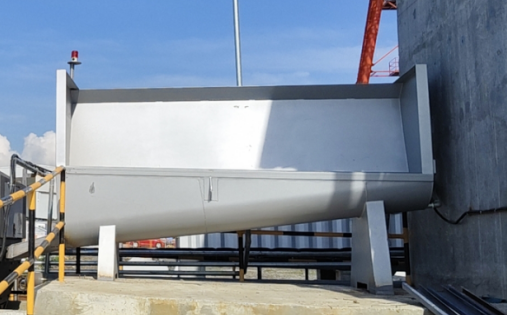
Replacing wear components before they reach the end of their service life is one of the fastest ways to stop unexpected slowdowns on a crushing or screening line. Liners, feed plates, and impact bars all take a beating from daily contact with abrasive material, and when they lose their original profile the flow of rock changes in ways that are easy to miss at first. A worn liner may still look intact but can redirect material toward chute walls, create uneven wear patterns, or reduce the effective opening size. Keeping fresh wear parts on the machine means the aggregate keeps moving in the path the design intended, without operators having to constantly adjust settings or clear blockages.
The real payoff comes from matching wear part selection to the actual conditions on site rather than simply buying the same item over and over. Different feed materials, moisture levels, and production targets call for different alloys, thicknesses, and profiles. A liner that works well in a granite spread may be the wrong choice in a limestone application where the wear mechanism is more about impact than abrasion. Paying attention to how a worn component fails tells you whether you need a harder surface, a thicker cross section, or a different geometry to keep material tumbling instead of stalling. That kind of small adjustment keeps the whole circuit running at a steady pace.
Scheduled inspections should focus on the contact points that most directly control flow, such as discharge lips, deflector plates, and transition zones between conveyors. Catching wear in those areas before it becomes visible as a bottleneck saves far more time than reacting after production has dropped. A simple visual check during a shift change, combined with a record of hours on each wear part, gives the maintenance team enough information to plan replacements without guesswork. Over time this turns wear management from an emergency repair into a routine that quietly protects throughput.
Slope Adjustments Without Shutting Down the Line
Adjusting the incline on a running line comes down to working with the load rather than fighting it. Small changes to support stands or threaded leveling feet can often be made while material keeps moving, provided the frame is not under severe twist and the fasteners are rated for live tension. The first step is to watch how the belt or track sits near the transfer points and mark the exact spots where drift, bunching, or side pressure starts. Once that is clear, make a slight lift or drop at the nearest adjustable point, then give the line a few cycles to settle before touching anything else.
Working in small increments matters more than the final angle. A quarter turn on one adjuster can shift load distribution enough to quiet a rattle or stop a package from walking sideways, but a full turn may create a new problem downstream. It usually helps to have one person at the adjustment point and another watching the discharge area for pile-ups, belt slip, or uneven spacing. After each move, note the change in position, the speed setting, and any change in motor sound or frame vibration. Those notes make it easier to return to a known good setting if the line begins to drift again later in the shift.
If a creak, spike in current draw, or sudden hang-up appears during the adjustment, back the screw or shim off slightly and let the line stabilize before continuing. Some systems have slotted mounts or spring-loaded adjusters that allow slope correction under load, but they still need to be checked for loose hardware once the adjustment is finished. Keep hands away from rollers and pinch points, and use a long-handled wrench so the work can be done from outside the moving path. The goal is not to force the line into position, but to remove enough bind or sag so the product finds its own balance while the line keeps producing.
Managing Uneven Feed Before It Reaches the Screen
Uneven distribution seldom announces itself until screen efficiency drops, and by then the damage is already spreading across the deck. The goal is to catch the problem at the chute, hopper, or transfer point before material ever touches the screen surface. Small adjustments to deflector angles, feed tray width, or discharge gates often make a larger difference than adding more screen area.
A common fix is to slow the material down just enough to let it spread. Surge sections, shallow ledges, and adjustable wear plates can break up the roping or side-biased flow coming off a conveyor. When the feed arrives as a broad, even curtain, the screen openings do their job instead of fighting overloaded spots and bare patches.
It also helps to watch the feed pattern during real operating conditions, not just at startup. Changes in moisture, feed rate, or upstream crusher output can shift the load toward one side without warning. Building in a few simple mechanical adjustments, rather than relying on a fixed chute design, keeps the distribution correct as those conditions drift.
What High-Volume Plants Notice After the Swap
The first thing a flowering room notices after the swap is the absence of infrared heat. Leaves that used to run warm now sit closer to air temperature, and within days the plants pull noticeably less water from the medium. That single change throws off the old dryback schedule more than most growers expect. Runoff reads can drift upward even when the input EC stays exactly the same, so the plants might look mildly overfed for the first week while the root zone finds its new balance.
Once the canopy adjusts, the growth pattern shifts. Branches stretch with shorter internodes, petioles stay a little stouter, and the lower leaves hold on longer instead of fading early. That tighter structure means a room that used to need aggressive pruning can suddenly become its own shade cloth. Trellis timing and leaf removal have to move with it, otherwise the middle of the canopy closes in right before the real swell starts.
The quieter change is in nutrient appetite. With less water moving through the plant, calcium and magnesium can lag behind even when the feed looks balanced on paper. Many growers find that a slightly lower EC and a more consistent moisture profile bring the leaf color back and stop the faint interveinal yellowing that shows up after the swap. By the second full run, the payoff usually shows below the lights: firmer lower flowers, fewer hollow gaps in the canopy, and a much easier trim day.
Simple Inspection Points That Prevent Sorting Drift
When bins start to look a little too mixed, the culprit is often something nobody bothered to check at shift change. A quick walk past the sorting line with a flashlight can reveal more than a week of reports. Look for worn edges on the diverter paddles and any spot where material hangs up for even a second. Those tiny hesitations add up, pushing the same grade into the wrong lane again and again.
It also helps to check the gap between the belt and the side skirts, especially after a jam has been cleared. If someone adjusted the skirting in a hurry, the new setting might be off by a few millimetres. That small opening lets fines escape underneath, and before long the contamination level climbs. A simple gauge made from a scrap of metal can give operators a consistent reference instead of relying on a visual guess.
Pay attention to how the material lands after the last transfer point. If the stream is hitting the centre of the next belt, fine. If it is drifting to one side, the sorting sensors are reading a biased sample. Straightening a misaligned chute or replacing a bent deflector plate can bring the whole line back into balance without touching the main control settings.
FAQ
The chute uses a staged series of adjustable baffles along the flow path. As the slurry moves down the incline, coarser gravel loses velocity earlier and drops to the bottom, while finer sand stays suspended and travels farther with the water. This creates a cleaner split without relying on a single screen deck.
The contact surfaces are fitted with low-friction polymer or ceramic liners, and an optional vibrator can be mounted on the chute body to prevent buildup. This keeps sticky clay or wet fines moving instead of clinging to the trough and blocking the outlet.
It fits well in sand plants, crushed stone operations, and pre-screening circuits where material needs a preliminary size split before entering a vibrating screen or sand washer. It can be placed directly after a crusher discharge or a wash box.
Routine checks include inspecting wear liners for thinning, confirming baffle bolts stay tight, and clearing any compacted material in the bottom corners. If equipped with a vibrator, its mounting bolts and electrical connections should be checked monthly.
Yes. The support frame allows the operator to change the incline angle within a working range, and the baffles can be repositioned or replaced with different heights. That makes it possible to tune the split point when feed gradation shifts.
Typical throughput for a standard-width chute runs from about 100 to 400 tonnes per hour, depending on chute width, incline angle, moisture content, and the ratio of sand to gravel in the feed.
A regular hopper mostly drops material straight through with minimal size separation. This chute extends the effective settling distance, keeps the slurry in a controlled thin layer, and lets fine particles escape over the baffles while coarse particles settle behind them. That reduces misplaced material in the final stockpiles.
Conclusion
Reworking the chute profile on a Chinese sand and gravel separator does more than change the angle of descent. The practical gain comes from controlling how the material lands. Instead of letting aggregate hit the screen deck as a fast, uneven stream, the revised geometry spreads the load across a wider path and lowers particle velocity just enough to keep fines from bouncing away. Wear components play a supporting role: replaceable liners and side plates keep the flow face consistent, so the chute does not gradually reshape itself into a less efficient profile. When feed characteristics shift, the slope can be trimmed with an adjustment mechanism that works while the line is running, avoiding slowdowns for small calibration changes.
High-volume plants often notice the difference quickly. The screen receives a steadier, more even layer, which reduces overloaded sections and carryover. Uneven feed that once surged toward one side is broken up before it reaches the screen, making full use of the deck width. After the swap, operators tend to inspect a short list of points: liner wear, fastener tightness, and whether the discharge trajectory has drifted toward one edge. Catching those changes early prevents sorting drift from returning. The net result is more predictable screening, a cleaner split between coarse and fine material, and less time spent compensating for a chute that works against the process.
Contact Us
Contact Person: HaiYan
Email: [email protected]
Tel/WhatsApp: +86 18957325588
Website: https://www.senyoubeton.com/