China Signage Engraving Plastic Manufacturer Delivers Durable Custom Sign Materials
2026-10-28
A sign's lifespan is written long before it's mounted—on the material it's cut from. Too many sign makers learn this the hard way, dealing with plastic that chips under the router or fades after one season. LYSHIRE, a China signage engraving plastic manufacturer, takes a different route: engineering durable custom sign materials that hold crisp details and color through years of real-world use. Here's what to expect when you stop settling for stock sheets and start specifying materials built for the job.
Durable Acrylic That Engraves Cleanly Without Micro-Cracks
This acrylic sheet stands up to repeated use without developing those annoying hairline fractures that ruin a clean engraving. The material's internal structure resists stress points, so even detailed lettering and fine-line artwork come out crisp every time.
Unlike cheaper plastics that chip or fog under a laser, this formula stays clear and stable. You can run it through multiple passes or adjust power settings without worrying about surface pitting or edge degradation. The result is a smooth, professional finish that holds up under close inspection.
From nameplates to intricate display pieces, the durability means fewer rejects and less wasted material. It handles temperature changes during engraving without warping, and the cut edges remain clean rather than turning brittle. That reliability makes it a go-to choice for shops that need consistent output on every job.
Custom Sheet Sizes and Thicknesses Cut to Your Exact Spec
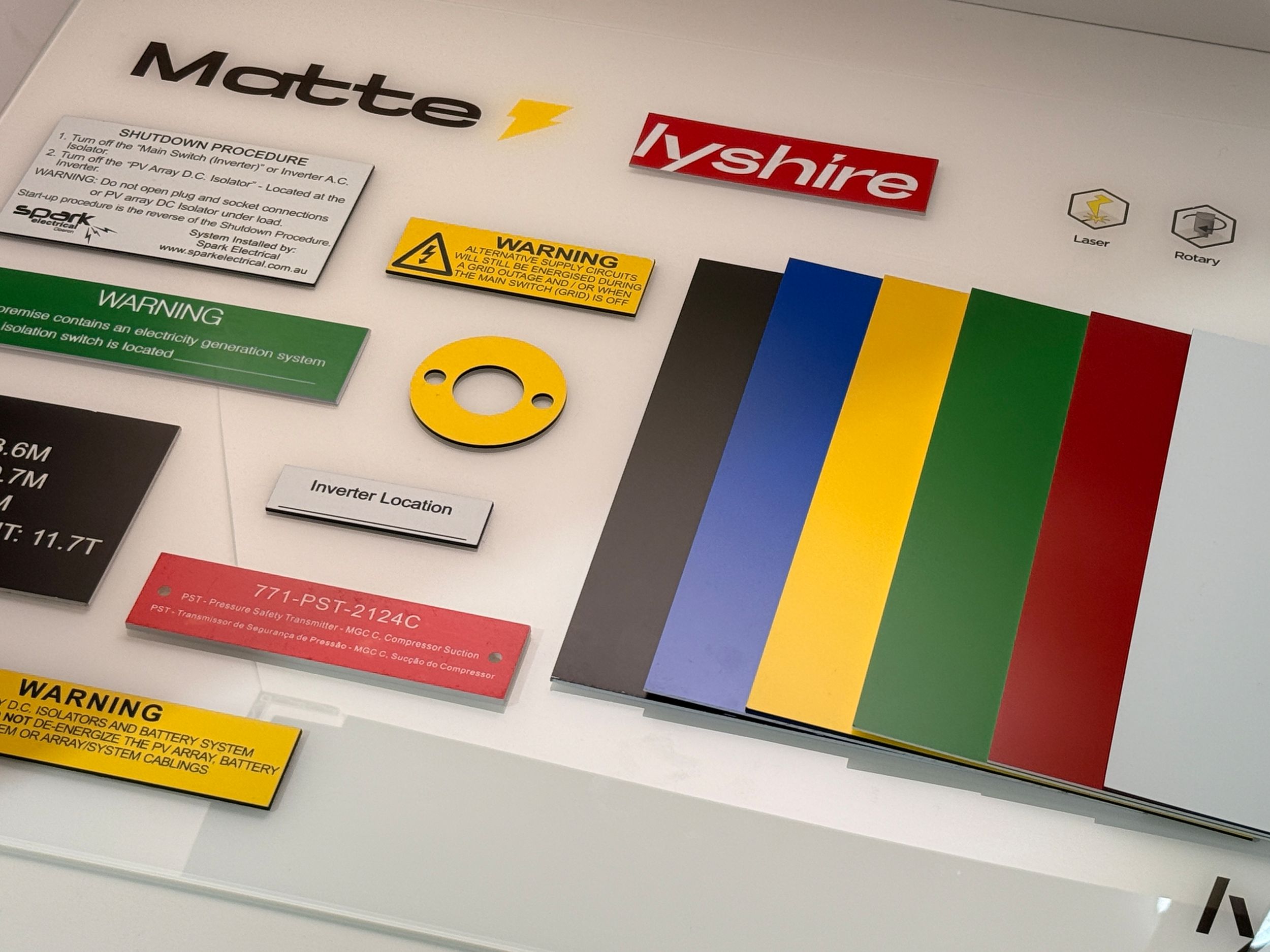
Send us a dimension that isn't on the rack and we'll cut it from stock the same day. Thickness calls are just as specific: 0.118", 0.236", 0.394" — no rounding up to the nearest standard gauge. Our shear and panel saw hold a ±0.005" tolerance on length and width, and a digital caliper check at three points confirms thickness before anything leaves the floor.
Odd rectangles, long narrow strips, or blanks for a second operation all come off the same line. We'll deburr or leave the edge as cut, and stack with interleaving if you need surface protection. If the alloy or temper matters more than the size, mention both — we'll match the spec instead of forcing a substitution.
Why Outdoor Signs Hold Their Color Better With Our UV Inhibitors
Sunlight breaks down most sign inks and films through a chain reaction: UV photons excite pigment molecules, which then react with oxygen and weaken the surrounding resin. Our UV inhibitors interrupt that chain at two points. Hindered amine light stabilizers (HALS) scavenge the free radicals that form after UV exposure, while a benzotriazole absorber screens the most damaging wavelengths before they reach the colorants. Because the two mechanisms work in tandem, the sign face doesn't just fade slowly—it largely sidesteps the chemical breakdown that causes cracking, chalking, and color shift.
We've also paired these inhibitors with pigments that have inherently high lightfastness, so the protection isn't simply a surface coating that weathers away. The inhibitors are dispersed through the entire ink or vinyl layer. After 3,000 hours of accelerated weathering in a QUV chamber, our reds and blues showed less than 2.0 Delta E shift, where most unmodified inks exceed 6.0 in the same window. That translates to outdoor signage that holds its original hue through several summers of direct exposure rather than turning pastel by the second season.
The real difference shows on jobs where brand colors matter. A retail sign with a specific PMS value or a wayfinding panel with safety-critical contrast can't tolerate a slow drift into a different shade. Our UV stabilizer package keeps those values inside the tolerance range long after standard inks would have faded unevenly—some pigments drop faster than others, leaving a mismatched, tired-looking sign. With this approach, the whole color palette ages at roughly the same rate, so the sign remains legible and intentional for years.
Small Batch Orders for Testing New Sign Designs
Testing a revised sign layout across a handful of locations often uncovers details that digital mockups miss. Small batch orders let you compare finishes, mounting heights, and legibility under actual lighting without committing to a full rollout. You might notice edge curling on a particular substrate, or find that a font size reads well up close but disappears from across the street.
Ordering in limited quantities also creates room for honest feedback from staff and customers before you invest in hundreds of units. A matte laminate might look sharp in a sample photo yet show fingerprints quickly at the drive-thru. With a short run, you can swap materials or adjust contrast and reorder only what meets your standards. This kind of iterative testing tends to produce signs that feel intentional rather than rushed.
For businesses that change promotions or rebrand seasonally, small batches keep storage needs low and prevent outdated inventory. You can trial a new icon set or a bolder color scheme in three stores, gather reactions, and then scale up with confidence. The lower upfront cost also makes it easier to test unconventional ideas that might otherwise feel too risky for a large production order.
Surface Finishes That Reduce Glare and Hide Fingerprints
Matte finishes and etched micro-textures have become essential for modern devices, where every reflection competes for attention. By scattering light instead of mirroring it, these surfaces cut down on harsh glare without dulling the underlying color. The same fine grain that breaks up reflections also masks smudges—each ridge and valley gives oils nowhere to settle in an obvious film.
Manufacturers often pair anti-reflective coatings with oleophobic layers, but the most effective approach is physically altering the surface itself. A lightly sandblasted or chemically frosted texture creates thousands of tiny light traps, so fingerprints blend into the background rather than standing out as shiny patches. This means fewer wipes with a cloth and less frustration in bright environments.
Unlike glossy panels that demand constant cleaning, reduced-glare finishes feel softer to the touch and stay cleaner longer. The trade-off is a slight loss in contrast for some users, yet the everyday benefit is undeniable: screens and casings that look calm under office lights, in direct sun, or after a full day of handling.
Packed and Shipped to Prevent Damage on the Way to Your Shop
No two products get the same packing treatment here. Glassware and ceramics are wrapped in anti-abrasion film, then seated into custom-cut foam that matches their exact shape. The outer carton is double-walled, and each of the eight corners gets an extra layer of corrugated reinforcement because those are the spots that take the first hit.
Before a box is sealed, we lift it about waist height and give it a firm shake. If anything inside shifts even slightly, it gets unpacked and redone with denser fill. We also seal every seam with water-activated tape, which bonds to the cardboard instead of peeling away like standard packing tape, and we place a moisture-absorbing packet inside for shipments that might sit in a damp truck or warehouse.
For larger orders or oddly shaped equipment, we skip the box entirely and build a lightweight wooden cradle that bolts the item in place. Pallets are stretch-wrapped with edge guards, and we mark the load with orientation arrows that actually face the right way. The goal is simple: your shop shouldn't have to waste time filing damage claims or sending stock back.
FAQ
We usually work with acrylic and polycarbonate sheets. Acrylic gives a crisp frosted effect when laser engraved and handles sunlight well without yellowing quickly. Polycarbonate is tougher if the sign might take impacts, like in public spaces or factory floors.
Yes, thickness is not a fixed list. We can cut and finish panels from around 1mm up to 30mm depending on the plastic. Just tell us the mounting method and the look you want, and we'll suggest a thickness that balances weight and rigidity.
We pay attention to depth and contrast. For painted or filled engravings, we use a two-step process that locks the color into the grooves so it doesn't rub off. For bare engraving, we adjust the laser settings to avoid micro-cracks that collect dirt.
We do a lot of custom contour cutting. Send a vector file or even a clear sketch, and we'll route or laser-cut the outline. We can also add radius corners, notches for mounting, or holes for standoff screws.
We can send a small material swatch pack, and if you need a proof of a specific engraving, we'll run a demo piece on the actual plastic you're considering. That way you can check the edge finish and engraving contrast before committing.
For simple engraved panels, we usually ship within 7-10 working days after artwork approval. If there's painting, multi-layer assembly, or a very large quantity, it may take 15-20 working days. We'll give you a clear schedule once we see the specs.
Both. We have CNC machines with oversized beds, so we can produce panels up to 2 meters wide. Small nameplates are our daily work, but large lobby signs, wayfinding panels, and even full door facades are within our capacity.
Each piece gets a protective film on both faces, then we wrap them in foam or corrugated board. For international orders, we pack into wooden crates with enough space between layers to avoid pressure marks.
Conclusion
Sign makers who have struggled with brittle acrylic that chips or cracks during engraving will appreciate the difference this Chinese manufacturer brings to the table. Their signage engraving plastic is formulated for clean, precise cuts without micro-cracks, so even fine lettering and detailed logos come out sharp. Beyond the material itself, the factory cuts sheets to your exact size and thickness—no more trimming oversized panels or settling for near-enough dimensions. Small batch orders are accepted, which is a real advantage when you're testing a new sign design or serving a client who only needs a handful of units. You can order just what you need, see how the material performs in your own shop, and then scale up with confidence.
Outdoor durability is another strong point. The acrylic includes UV inhibitors that help colors hold up under prolonged sun exposure, reducing the faded, washed-out look that plagues many plastic signs after a season or two. If glare or fingerprint marks have been a concern for indoor displays, the available surface finishes address both—think low-reflectance options that keep text readable under bright lights and coatings that resist smudges from handling. Finally, each order is packed with real care: sheets are separated, protected, and boxed to withstand the bumps of freight shipping, so you're less likely to receive corners that are chipped or surfaces that are scuffed. All of this comes together as a practical, dependable source for custom sign materials rather than a generic commodity supplier.
Contact Us
Contact Person: Tina Hou
Email: [email protected]
Tel/WhatsApp: +86 17816238685
Website: https://www.lyshire.com