

China Trench Convector Options Worth Your Attention for Efficient Heating
2026-11-21
Finding the right heating solution for a modern space can feel like chasing warmth through a maze of oversized radiators and noisy fan units. China trench convectors are quietly changing that picture, offering low-profile efficiency that hides beneath the floor while still delivering steady comfort. But with so many options on the market, how do you separate genuinely smart engineering from thin metal and a promise? This guide walks through the trench convector choices actually worth your time, including standout models from shairko that pair clean installation with dependable heat output. If you have been overlooking floor-level heating, the next few sections might change how you plan your next project.
Why Floor-Level Heat Feels Different in Rooms With Tall Glass
In a room with floor-to-ceiling glass, the air near your ankles rarely matches the air near your shoulders. Warm air from a floor vent or radiator rises quickly toward the cold pane, where it sheds heat and sinks back down as a slow, barely noticeable draft. The result is a room that can feel warm on the thermostat but cool at foot level, especially when the glass is the dominant wall surface.
Tall glazing also pulls warmth away from your body in a way solid walls do not. Glass stays colder than the indoor air on chilly days, and your skin radiates heat toward that cooler surface even when the sun is out. Standing close to a tall window can feel like standing near a mild cold sink, no matter how hard the heating system works.
The fix tends to be less about raising the temperature and more about changing where heat enters the room. Low-level supply vents, heated floors, or even a modest return path near the glass can break up the uneven layer of cool air that settles at the base of the window. Until that air movement shifts, the lower part of the room will keep holding a different climate than the top.
Choosing a Trench Convector That Matches Your Actual Heat Loss
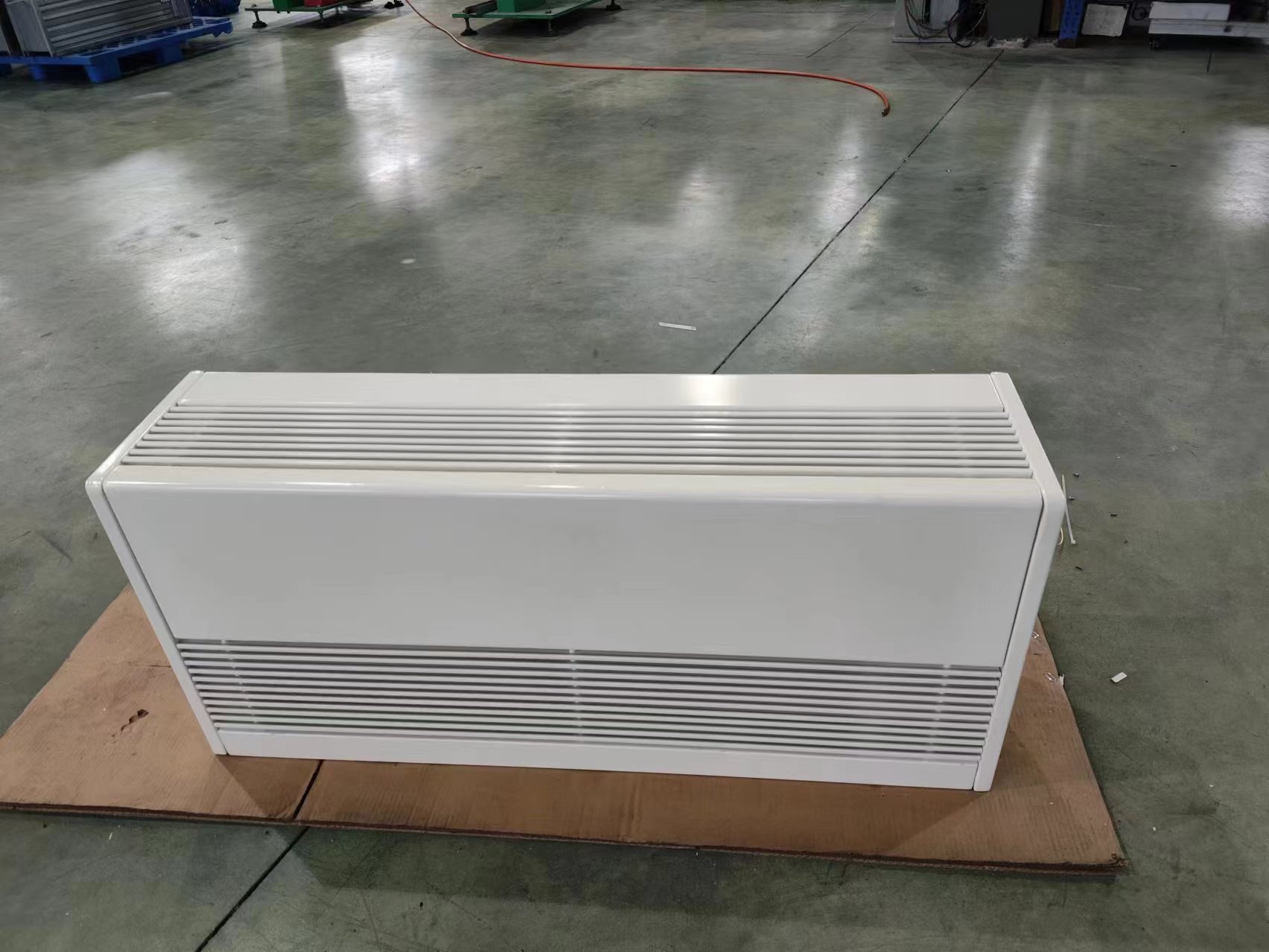
A credible selection starts with a room-by-room heat loss calculation rather than a square-metre estimate. Once you know the actual wattage needed under design conditions, compare it against the convector’s output at your planned flow and return temperatures, not the headline figure on a datasheet. Low-temperature systems can cut published capacity by 20–40%, so a unit sized for 75/65°C may fall short if you are running an air-source heat pump at 45/40°C.
Pay attention to how the casing changes output, especially with shallow or narrow trenches. Grille free area, floor recess depth, and nearby curtains or full-height glazing all affect air movement and therefore delivered heat. If the trench has to fit beneath a fixed window with limited depth, a fan-assisted model may be the only practical way to reach the required output without specifying an unrealistically long unit. In quieter rooms, though, the fan speed needed to hit that output can trade thermal performance against background noise, so check both on the fan curve before deciding.
Finally, look at response time and zoning. A generously sized natural convection trench will heat slowly and can overshoot if controls react too late, whereas a compact fan convector responds faster but may cycle more often. Matching the convector to your actual heat loss means balancing steady-state output, start-up behaviour, and the quality of the air path rather than simply buying a longer grille.
Grille Materials and Load Ratings When Foot Traffic Never Stops
In a concourse where the flow never really pauses, material choice is less about initial appearance and more about what the surface will look like after a few million footsteps. Ductile iron holds up well but tends to become slick when wet and often needs a coating that wears through at the edges. Stainless steel costs more upfront, yet it keeps a predictable slip-resistant finish and does not leave rust stains when cleaning crews wash the floor nightly. Aluminum works for interior, dry locations where weight matters, but it can dent under hard-wheeled carts if the section is undersized. Galvanized steel is a middle-ground option, though its cut edges deserve extra protection because that is where corrosion starts.
Load rating should not be set by foot traffic alone. B125 may cover pedestrians on paper, but uninterrupted footfall brings rolling luggage, wheelchairs, housekeeping trolleys and the occasional scissor lift. C250 is usually a safer floor specification in public buildings because it accounts for slow-moving pneumatic tires and moderate point loads without forcing a jump to heavy castings. If maintenance vehicles or small electric carts can enter the space, D400 removes the guesswork. More important than the test load itself is repeated loading: frames need continuous bearing support, and the locking system must survive vibration and constant directional changes from people turning or stopping abruptly.
In continuously occupied areas, the details determine whether a grille stays quiet and stable. A loose grate will start ticking under footfall long before it becomes a safety hazard, so specify a locking method that does not rely on gravity alone. Cushioned seats or rubber isolation strips cut down the metallic click and reduce impact transfer to the surrounding floor. The surface pattern deserves close attention too: openings should prevent a stiletto heel or cane tip from catching, while still allowing water and debris to pass. Where stainless steel or aluminum is used, allow for thermal movement at the frame junction so expansion does not cause panels to bow or bind.
What to Check Before Ordering From a Chinese Trench Heating Supplier
Start with the heating element and casing details rather than the sales pitch. Ask for the exact alloy used in the element, the wall thickness of the grille, and whether the enclosure is treated for corrosion before powder coating. A supplier that can share dimensional drawings, wiring diagrams, and real installation photos without chasing is usually easier to work with later. Also confirm the voltage, wattage per metre, and whether the control options match your site conditions — mismatched thermostats or fan speeds are common sources of delay.
Request a sample with the same junction box position and end caps you intend to order, not a generic demo unit. Check how the terminal block is accessed, whether the drain holes actually work in the intended mounting orientation, and how the floor channel aligns with your planned floor finish. Small physical details like the grille alignment and edge finish often tell you more about quality than the datasheet.
Finally, pin down what happens after delivery. Ask about spare parts availability, warranty response times, and whether the supplier keeps consistent batches of the same profile and coating. If you need custom lengths or RAL colours, get written confirmation of tolerances and lead times before paying a deposit. A supplier that gives clear answers on these points is usually safer than one that promises only the lowest price.
Install Details That Determine Whether the Unit Runs Quietly
Most noise complaints trace back to a few overlooked moments during installation. A mounting bracket that is torqued unevenly can turn a whisper-quiet motor into a persistent hum, while a surface that is even slightly out of level forces the unit to fight its own frame. The difference between a flawless install and a rattling one often comes down to whether the installer bothered to check for gaps between the chassis and the wall, or whether they reused old, compressed rubber washers instead of fresh isolation pads.
Ductwork and piping connections play an equally decisive role. Every unnecessary bend or crush in an exhaust path adds turbulence that manifests as a low-frequency drone. Tightening a compression fitting by feel rather than with a torque wrench can leave a joint that vibrates loose within weeks. Small choices, like inserting a flexible coupling where rigid pipe meets the unit, or adding a second set of anti-vibration mounts on the underside of a shelf, are the kind of details that separate an install that stays silent from one that gradually grows louder as components settle.
Even the order of operations matters. Securing the unit before attaching trim panels, or leveling the base before connecting the ducting, prevents stress from being locked into the assembly. Installers who rush through these final adjustments often leave behind tension that only becomes audible after a few thermal cycles. When the room finally goes quiet at night, the only sound you should hear is the gentle movement of air, not the evidence of a shortcut taken during the install.
Cutting Energy Waste Without Creating Cold Spots at Floor Level
Most heating systems waste energy by fighting the natural tendency of warm air to rise. If the thermostat is mounted at eye level, it may read a comfortable 22°C while the floor stays several degrees cooler, pushing occupants to nudge the setpoint higher. The cheaper fix is not to heat harder but to keep the lower zone from leaking warmth into unoccupied spaces and to deliver gentler, longer air circulation so the heat already produced reaches ankle height instead of hugging the ceiling.
One practical approach is to reduce the temperature difference between supply air and room air. Blasts of very hot air create strong stratification: the upper layer gets warm quickly, the thermostat shuts off, and cold air pools near the floor. By extending fan run time at a lower discharge temperature, the system can mix the room more evenly without using more total energy. Sealing perimeter gaps and insulating slab edges also helps, because cold drafts near exterior walls often feel like a heating problem when they are actually an air leakage problem.
Floor-level comfort should be checked at the source, not assumed from a single wall sensor. Placing small temperature loggers near the baseboard or under a desk can reveal whether the lower 30 cm of the room lags the rest of the space. In many buildings, adjusting diffuser direction, balancing dampers, and slowing the fan improve comfort scores more than raising the boiler or heat pump output. The goal is to keep the warmth where people actually sit and stand, rather than paying to heat the ceiling void.
FAQ
The better units now pair copper-aluminium heat exchangers with low-wattage EC fans, so they deliver steady warmth from a compact floor slot. Many also have reduced water content, which helps them react quickly when the thermostat changes instead of lagging behind the room.
Look past the casing and ask about the heat exchanger construction and fan motor type. A copper tube with aluminium fins usually holds up well, and an EC motor tends to be quieter and cheaper to run over time. Also confirm the stated output at the water temperatures your system actually uses, not just the peak figure.
That is one of their stronger uses. A continuous trench under the glass creates an air curtain that reduces cold downdraughts and condensation. Just make sure the selected length covers most of the glazing and that the output is calculated for the room's worst-case heat loss.
Many are, because they are designed for lower water temperatures. Look for models with a large enough heat exchanger and fan-assisted airflow, which lets them deliver usable warmth at 35 to 45 degrees Celsius supply temperatures instead of needing traditional radiator temperatures.
Most of the work is keeping the trench clear of dust and debris. Filters, if fitted, should be rinsed or replaced occasionally, and the fan and coil benefit from a careful vacuum once or twice a year. In hard-water areas, checking the coil for scale matters more than the brand name.
Fan-assisted models are not silent, but many now use EC motors with stepped or variable speed control, so on lower settings they fade into the background. If noise is critical, ask for sound data at the operating speed you expect rather than the lowest possible setting.
The unit cost is often higher because you are buying a fan, coil, and floor enclosure, plus installation work in the floor. However, they can save wall space and improve comfort near glass, so the value depends on whether those benefits matter in the room.
Drainage and access are the two big ones. If the trench sits below ground level, any leaks or condensation need a route away, and the grille must be easy to lift for cleaning. Duct connections and floor recess depth should be checked against the exact model before the screed goes down.
Conclusion
Tall glass facades create a cold downdraught that settles at ankle level, so a trench convector placed along the glass line makes a noticeable difference, interrupting that falling air before it spreads across the room. Rather than treating wattage as a guess, a useful Chinese unit is selected after working through room-by-room heat loss, allowing output to sit closer to actual demand instead of oversizing the space. Where lobbies and corridors never stop moving, the grille is often the first thing to fail. Extruded aluminium with a high load rating holds up better than thin rolled sections, and the finish should resist scuffs rather than simply look neat in a brochure.
Before ordering from a Chinese supplier, check whether the fan deck, heat exchanger, and control wiring are clearly documented, because inconsistent paperwork tends to show up later as installation delays. Quiet running usually depends less on the motor spec alone and more on how the unit is supported and sealed: rubber isolation, a level trench base, and properly fixed end plates reduce rattles that a free-standing test never exposes. To cut energy waste without leaving cold spots, look for controls that respond to floor-level temperature and fan speed rather than fixed high-output settings. This keeps the glazing line warm without forcing the rest of the room to overheat.
Contact Us
Contact Person: Crystal
Email: [email protected]
Tel/WhatsApp: 8613524235353
Website: https://www.airkohvac.com