

CI Flexo Printing Machinery Solutions for Superior Print Quality
2026-11-16
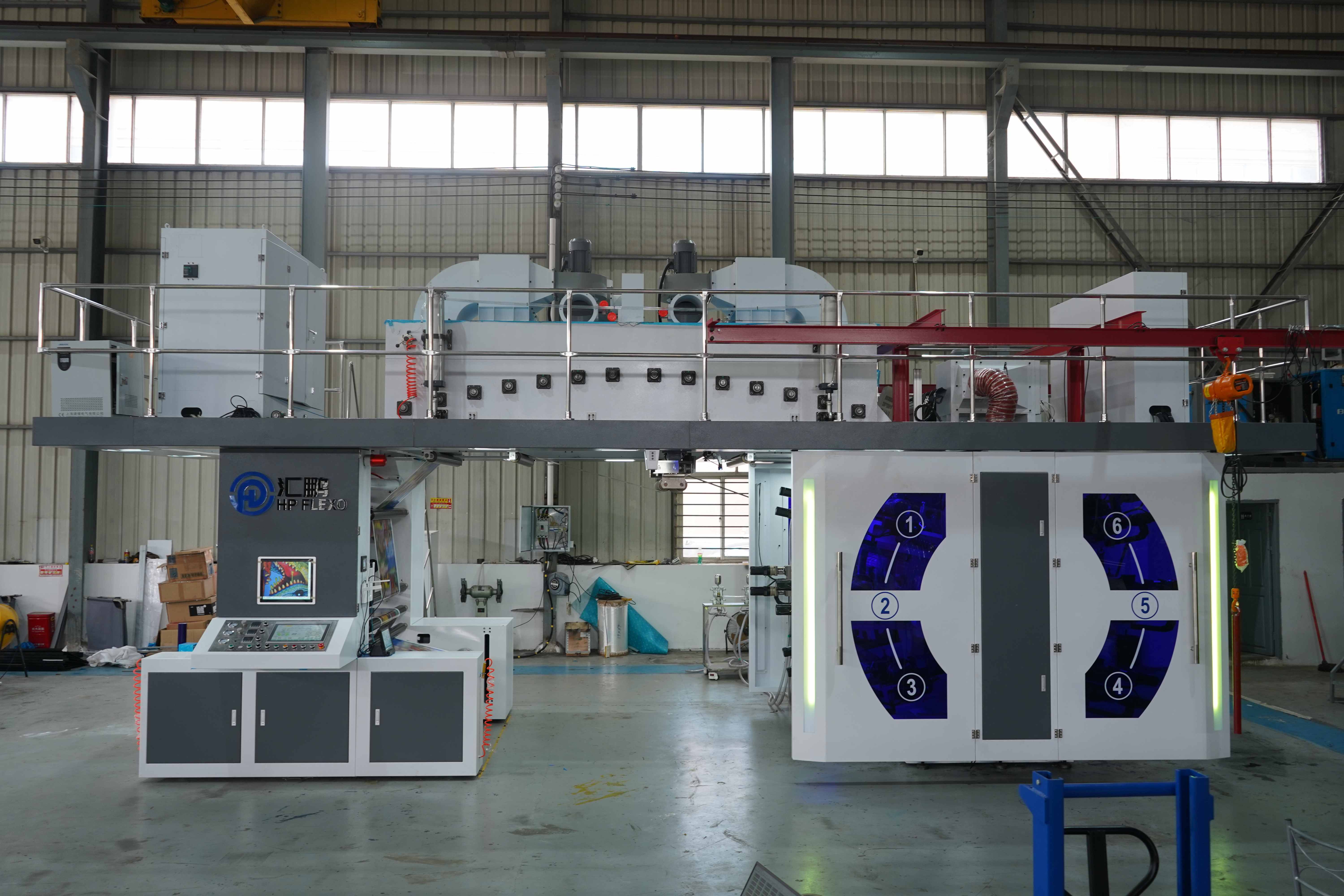
Superior print quality doesn't happen by chance—it requires the right CI flexo printing machinery backed by genuine engineering expertise. That's exactly what HuiPeng delivers: tailored solutions that address the common pitfalls of flexo printing, from ink transfer to registration accuracy. Read on to see how our machinery can transform your output.
How a Single-Point Impression Drum Keeps Dots Round
In most drum-based printing systems, the plate or blanket makes contact across a wide cylindrical arc, which can subtly distort halftone dots as the surface wraps and releases. A single-point impression drum changes that geometry entirely. Instead of a broad contact zone, the substrate meets the imaging drum at only one precise line of pressure. This focused nip eliminates the stretching and smearing forces that usually pull dots into ovals or teardrops when paper, tension, or speed vary.
The roundness of each dot depends on how evenly the ink transfers from the plate to the blanket and then to the sheet. With a single-point design, the contact duration is extremely short and perfectly perpendicular, so ink cannot spread laterally during transfer. Even at high production speeds, the dot remains a clean circle because there is no dwell time under pressure where capillary action or mechanical shear could flatten one edge. This matters most in highlights and midtones, where any distortion becomes visible as graininess or color shift.
Operators also gain consistency across long runs. Since the impression force concentrates in one narrow line, the drum does not develop uneven wear patterns that typically appear on wider-nip systems. That means the first sheet and the ten-thousandth sheet see the same dot geometry, maintaining roundness without constant adjustment or plate compensation curves.
Registration Stability That Survives Marathon Runs
Registration spikes during marathon weekends are brutal—thousands of runners hit the signup page within the same ten-minute window, often from shaky mobile connections near the start line. A stable system doesn't just scale; it absorbs the surge without dropping sessions or forcing users to re-enter their bib details. We've seen platforms crumble under exactly this load, and the fallout isn't just frustration—it's lost entries and angry race directors on the phone. Building for this means treating every registration as a transaction that must complete, even when the network stumbles or the server peaks.
What actually holds up over a long event isn't fancy infrastructure—it's the boring stuff done right. Idempotent submission keys prevent duplicate charges when a runner's thumb taps twice. Queued writes keep the database from locking up when a wave of finishers scans their wristbands at the same moment. And the signup flow itself needs to stay responsive after six hours of continuous use, because runners registering mid-race on a phone at mile 20 won't tolerate a spinner. The best stability comes from assuming the connection will drop, the user will double-submit, and the clock will keep ticking.
Test it like a marathon, not a sprint. Load-test by replaying actual race-day traffic patterns—bursty, unpredictable, coming from thousands of distinct IPs with varying latency. Watch how the system behaves after hour three, when memory leaks typically surface and connection pools start to fatigue. A registration page that works flawlessly for the first hundred users but chokes on the next thousand isn't stable; it's just lucky. Surviving marathon runs means the hundredth registration of the day feels exactly as clean as the first, with no error pages, no forced logouts, and no lost data to patch up later.
Doctor Blade Geometries That Reduce Streaking
Streaking on the anilox roll rarely traces back to a single culprit, but the physical profile of the doctor blade is often the quiet variable no one checks until a job goes sideways. A rounded or micro-beveled tip, for instance, can ride over residual ink pockets rather than shearing them cleanly, leaving faint trails that only become obvious under a loupe or after the press has already run a few hundred feet. Switching to a lamella tip with a precisely ground radius changes how the blade contacts the cell walls, reducing the hydraulic pressure spike that pushes ink past the edge unevenly.
Thickness also plays a sleeper role in streak formation. A blade that is too stiff for the cylinder's diameter will chatter at high speeds, creating a rhythmic pattern that mimics gear marks. On the other hand, a thin, flexible edge may deflect under higher viscosity inks, letting a film build up and then smear across the web. Matching the blade thickness to both the line screen of the anilox and the expected press speed shifts the contact angle from a scraping action to a controlled metering one, which many operators find eliminates the fine horizontal lines that appear on solid coverage areas.
Beyond the edge itself, the back-bevel or trailing geometry deserves attention. A steep back angle encourages ink to recirculate into the cells rather than accumulating behind the blade, while a shallower angle can create a stagnant zone where dried particles break loose intermittently. Some converters now use a dual-bevel design that combines a sharp leading edge for clean shear with a slight secondary relief to reduce friction heat. The result is a longer blade life and a noticeably more uniform ink deposit, especially on extended runs where temperature drift would otherwise cause the edge to wear unevenly and start streaking mid-roll.
Anilox Cells Sized for Crisp Text and Smooth Gradients
In flexographic printing, the geometry of anilox cells dictates how much ink reaches the plate and, in turn, the printed surface. For crisp text, cells are kept small and shallow so they carry a thin, tightly controlled film. This keeps fine strokes and letterforms from filling in or gaining weight, even at small point sizes. The opening and depth of each cell are matched to the ink’s viscosity and the plate’s dot structure, leaving sharp edges without starving the solid areas.
For smooth gradients, the same cell design must release ink evenly across larger tonal ranges. A uniform wall thickness and consistent cell depth prevent ink from pooling or skipping, so transitions from highlights to shadows stay gradual. This balance lets process-color blends and vignettes appear silky rather than stepped, while still giving text the clean definition that comes from precise ink delivery.
Sleeve Changeovers That Don't Disturb Ink Settings
Quick sleeve swaps usually force operators to recalibrate ink densities from scratch. But with this design, the mandrel locks into the same depth every time, so the blade angle and anilox pressure stay exactly where you left them. You pull one sleeve off, slide the next one on, and the press remembers the rest.
The real difference sits in the pneumatic clamping collar. It grips the sleeve without shifting the register, and there's no need to zero out the ink tray or chase ghosting after the switch. Print supervisors can move between jobs with shorter makeready windows, because the ink film thickness remains stable run after run.
Even when a job requires a repeat order weeks later, the settings hold from the previous production. That means less trial-and-error on press, fewer substrate waste sheets, and no surprises in color matching across shifts. It's not just a time-saver; it keeps the entire printing curve predictable.
Inline Temperature Control for Consistent Viscosity
Maintaining consistent viscosity in coatings, adhesives, or inks often fails not because the formulation is wrong, but because small temperature swings go unnoticed until the product is already out of spec. Inline temperature control tackles this by placing a heating or cooling element directly in the fluid path, coupled with a fast-response sensor just upstream of the application point. This setup continuously trims the thermal energy added or removed, so viscosity stays within a narrow band even when ambient conditions shift or flow rates change.
Unlike batch heating, where a tank is brought to temperature and then left to drift, inline control reacts within seconds. For example, a hot-melt adhesive line might see a 5°C drop when a fresh slug of cooler material enters the pump; an inline system detects that dip at the sensor and compensates before the material reaches the dispensing head. The result is less scrap from start-up or pause cycles, and fewer manual adjustments by operators who would otherwise be chasing viscosity with solvent or thinner additions.
Placement and tuning matter more than raw heating power. The temperature probe should sit close enough to the nozzle or coating die to capture the conditions that actually affect flow, not the temperature inside a mixing vessel. And the control loop needs to account for thermal lag in the heater itself—too aggressive a response overshoots and creates its own viscosity swings, while too gentle a response lets variations through. Many plants find that pairing a modest inline heater with a simple PID loop tuned for the specific fluid's heat capacity and flow profile delivers more consistent viscosity than a larger, slower system ever could.
FAQ
Because all color stations share a single large impression drum, the substrate wraps around it and stays under constant tension. This removes the web wander and stretch that typically cause misregister between stations.
Thin films, foil, paper, and even nonwoven materials run well. The key is the servo-driven tension zones and the ability to fine-tune impression pressure independently at each deck, so you can maintain dot integrity on sensitive surfaces.
Schedule regular anilox and doctor blade inspections, and use automatic wash-up systems between jobs. Also, keep the central drum temperature stable—thermal drift can change the web tension and ruin registration faster than most operators expect.
High-line-count anilox rolls paired with chambered doctor blades apply a thinner, more uniform ink film. Closed-loop viscosity control and ink recirculation prevent evaporation drift, so you hit target density with less ink volume.
Modern quick-change sleeve systems and pre-register functions cut setup time dramatically. Job changeovers that once took hours now take under 30 minutes, making short runs viable without losing print quality or margin.
Look for presses with direct-drive servo motors on every cylinder, precision gearboxes on the impression drum, and software that compensates for gear backlash. These details prevent the banding and stepping that often appear in flat gradient areas.
Interstation dryers must remove enough solvent or water between decks, but over-drying can cause film distortion or static buildup. The best solution is adjustable airflow nozzles that let you balance drying rate against web temperature.
Even the most advanced CI press underperforms if operators don't understand how tension, impression, and anilox metering interact. Short, hands-on training loops on the actual press reveal issues before they become printed defects.
Conclusion
Achieving round dots on flexible packaging starts with a single-point impression drum that removes bounce at the nip. Without that, even a precisely engraved anilox collapses dots into elliptical smears on film or board. The same drum geometry, paired with tightly machined register controls, holds colour-to-colour alignment through marathon runs—no drift after the ten-thousandth metre, no sawtooth edges on small text. Doctor blade angles and edge profiles then need to match the ink system rather than the machine itself, so streaking from dried pigment or fast solvent never reaches solid areas. Anilox cell geometry handles the fine work: shallower cells for crisp reverse text, deeper cells for smooth gradients and heavy solids. When these elements align, the printed dot stays round, and the eye reads it as sharp.
What often goes unnoticed is how sleeve tooling interacts with ink settings. A well-designed changeover lets operators swap repeat lengths without resetting chamber pressure or blade load, preserving the setup that already prints clean. Meanwhile, inline temperature control keeps viscosity stable as pressrooms heat up through the day, reducing density drift in mid-run. These are not isolated upgrades. They work as one system—impression uniformity, mechanical stability, metering precision, and thermal consistency—so the printed result holds its character from first copy to last. That is the quiet advantage of a CI flexo machine built around the whole process, not just the print deck.
Contact Us
Contact Person: Isaias
Email: [email protected]
Tel/WhatsApp: 86-13868693129
Website: https://www.hpflexo.com/