

Curdlan Gum Company Innovations Driving Next Generation Food Texture Solutions
2026-11-17
Texture is the quiet architect of every great food experience, and few ingredients shape it as decisively as curdlan gum. In a market chasing cleaner labels and bolder mouthfeels, the real breakthroughs are no longer coming from generic thickeners but from companies rethinking how fermentation-derived polymers behave under heat, acid, and shear. Among them, ZIPIN is pushing curdlan beyond its traditional role in plant-based meats and noodles, turning it into a precision tool for juicier dairy alternatives, resilient frozen formats, and low-fat systems that still eat rich. This post examines the innovations behind that shift and what they mean for the next wave of product development.
Heat-Set Gel Systems That Withstand Real Thermal Processes
Heat-set gel systems rarely survive contact with real production lines. The idea works on a bench, but the moment it meets a tunnel oven, a plate exchanger, or a cooling spiral, the network collapses. The usual failure is syneresis: water weeps out, the texture turns grainy, and the batch loses the exact mouthfeel that made it worth developing in the first place. To avoid that, formulators often lower the processing temperature, which only creates a second problem: under-set product that smears on slicing or breaks under its own weight in packaging.
A more reliable route is to design the gel around the thermal load, not around the ingredient label. That means pairing a heat-stable gelling agent with a protective colloid or a delayed-set calcium source, then validating the blend at the upper end of the plant's actual profile. For example, a methylcellulose-based system can be pushed through a 30-minute hold at 85°C if the salt level and pH are tuned to keep the gel point from drifting. The texture after cooling stays springy, with no visible serum separation even after a freeze-thaw swing.
The payoff is not just stability; it is freedom in scheduling. When a gel system holds its shape through a real thermal process, production can run longer, repack fewer rejects, and stop redesigning recipes around the oven's quirks. It also opens the door to cleaner labels, since the stabilizing work is done by the process-compatible ingredients rather than by a long list of masking starches and gums. In practice, that is what "heat-set" should have meant all along: set when you want it to set, and stay set until the customer opens the tray.
Clean-Label Mouthfeel Without Relying on Traditional Stabilizers
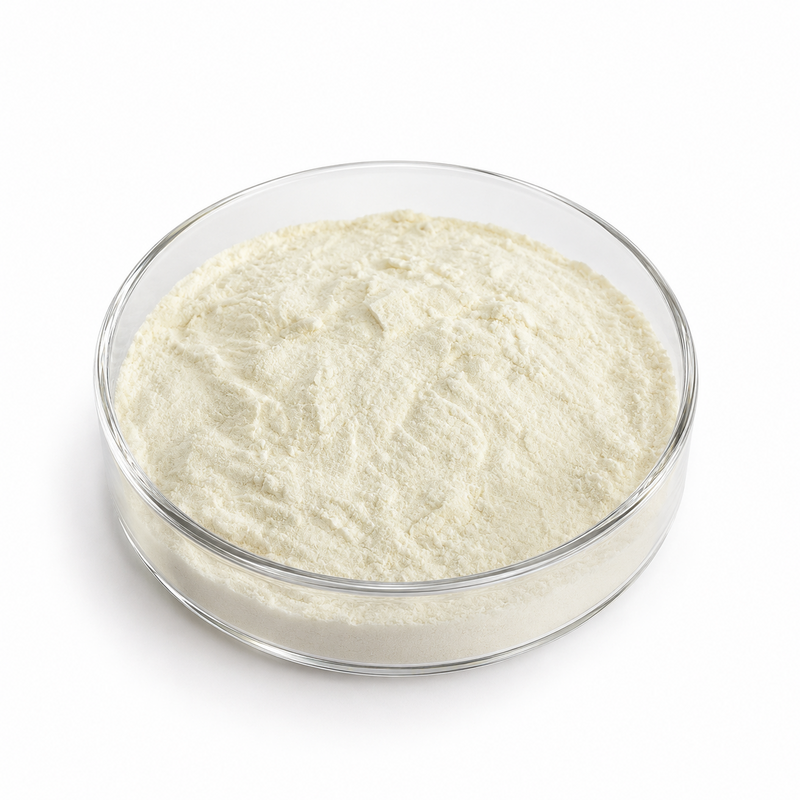
Replacing traditional stabilizers starts with rethinking how water, fat, and protein interact under shear and heat. Instead of reaching for a standard gum blend, formulators can lean on ingredient pairs that naturally build viscosity and structure—think oat beta-glucan with citrus fiber, or modified tapioca that hydrates at low temperature. These combinations create a slower, more even breakdown on the tongue without forcing a slick or gummy film. The result is a mouthfeel that reads as fuller and rounder, while the ingredient list stays short and recognizable.
Process tweaks often matter more than the additives being removed. A staged homogenization step can reduce fat droplet size enough to mimic the creamy drag of a heavier formula, while careful pH adjustment during mixing changes how proteins aggregate and coat the palate. Small shifts in temperature and timing give a product more body than its stripped-back label would suggest, and they prevent the watery separation that usually pushes manufacturers back toward conventional stabilizers.
Tasting panels tend to notice the difference when a clean-label system is built around natural starches and fibers that swell gradually. Potato fiber, chia mucilage, and finely milled flax can hold moisture without turning the texture chalky or masking flavor. Letting the base ferment or rest before final blending also develops a subtle viscosity that feels less engineered. That kind of quiet, layered mouthfeel is difficult to trace to a single ingredient, which is exactly what makes the formulation feel more like food than a technical fix.
Freeze-Thaw Resilience for Cold Chain and Ready-Meal Formats
Most ready-meal developers learn the hard way that a formulation can survive a single freeze but fall apart after three. The real test is how a sauce, starch, or protein behaves when the cold chain wobbles between -18°C and -12°C during distribution. In practice, that means selecting starches and gums that do not weep after thawing, and designing emulsions that will not split when a consumer reheats the tray unevenly.
For cold chain formats, the packaging and fill temperature matter just as much as the recipe. A tray that is sealed too warm can trap condensation, which later forms large ice crystals on the surface and makes vegetables mushy. Switching to rapid chilling before freezing, and leaving a small headspace for expansion, tends to preserve texture better than simply lowering the freezer temperature.
Ready-meal formats also benefit from a short abuse test: freeze, thaw in a domestic fridge overnight, then refreeze once before reheating. If the sauce separates or the rice turns gritty, the formulation needs more work. This kind of practical benchmark catches failures that standard shelf-life tests miss, especially for multi-component meals where each element freezes and thaws at a different rate.
Custom Gel Strength Across Dairy, Meat, and Plant-Based Systems
Dialing in a gel that holds its shape at exactly the right moment is less about chasing a single number and more about reading the material itself. A dairy dessert may want a soft, almost spoonable set that breaks gently under pressure, while a meat analogue often demands a firmer bite with clean sliceability. Plant-based systems add another layer: protein isolates, starches, and fibers each pull water differently, so the same hydrocolloid blend can land anywhere from a weak slump to a rubbery block.
Working across these categories means treating gel strength as a sliding scale rather than a fixed target. We often start with a baseline blend and then adjust the ratio of, say, carrageenan to locust bean gum, or swap in a bit of konjac for extra resilience. Small shifts in pH, salt load, or fat content can push the texture sideways too. The goal is a custom curve: one that survives cooling, reheating, or freezing without turning watery or chalky.
The real difference shows up in how the product fails. A dairy flan should tear with a creamy drag; a plant-based deli slice should snap back slightly instead of crumbling. By testing gel strength under the conditions the product will actually face, we can move beyond standard bloom readings and build textures that feel intentional rather than generic.
Advances in Fermentation That Improve Batch-to-Batch Texture
Batch-to-batch texture drift is seldom traced to a single failure point. It usually accumulates from small mismatches in oxygen transfer, pH timing, and nutrient depletion that only become visible once the broth has already thickened or thinned beyond specification. Newer fermentation platforms close that gap by coupling inline rheological measurements with automated feed and agitation adjustments. Instead of reacting after a deviation, the system corrects the trajectory during the exponential phase, keeping viscosity-related metabolites within a tighter range from one run to the next.
Strain development has also shifted toward textural consistency rather than yield alone. Candidates are now screened under fluctuating dissolved oxygen and temperature profiles that mimic production-scale gradients, selecting for stable exopolysaccharide and cell wall characteristics. The result is a culture less sensitive to minor lot changes in raw materials, which removes much of the variability that used to appear only downstream as inconsistent mouthfeel, sliceability, or suspension stability.
Hybrid process models provide another practical layer. A kinetic framework describes the expected growth and acidification, while a data-driven correction accounts for lot-level variation in incoming media. This allows a predicted final texture to be updated early enough for small counter-adjustments, such as shifting the temperature drop or extending a conditioning phase. Repeated across campaigns, those small moves narrow the textural band enough that consecutive batches become hard to distinguish in routine quality checks.
Rapid Prototyping Through Adjustable Curdlan Gel Profiles
Tuning the gelation profile of curdlan changes what can be built and how quickly a design moves from screen to bench. By shifting the heating ramp, holding time, or concentration, the material can be pushed toward softer, more fluid deposition or toward firmer, self-supporting structures without swapping the base formulation. That width of behavior makes it possible to run several prototype variants in a single session, using the same stock solution and only altering the thermal history.
The adjustability also shortens the feedback loop when dimensions or surface finish start to drift. A slightly lower gel strength can improve layer fusion and reduce visible seams, while a higher set temperature can preserve overhangs or taller unsupported walls long enough for post-stabilization. Because these changes come from process parameters rather than new additives, they are easier to document, reproduce, and transfer to another batch or printer.
In practice, the gel profile becomes part of the design space. Small test grids can be printed at different settings, measured after cooling, and used to map the trade-off between flow and shape retention. This lets the next iteration start from a known region of the profile instead of relying on trial and error, which is what keeps rapid prototyping rapid.
FAQ
They focus on tailored gel strength and particle size distributions rather than one generic product. That means a nugget coating can get a crisp, heat-stable shell while a dairy alternative uses a softer, more elastic set without having to blend in extra starches or gums.
It sets into a thermally irreversible gel once heated, so the structure doesn't melt or thin out during retorting, frying, or reheating. This makes it useful in soups, sauces, and meat analogues that need to hold texture from factory to table.
Plant-based meats, instant noodles, dairy alternatives, and frozen prepared meals are getting the largest gains. In each case, curdlan adds a firmer bite, better water binding, and improved shape retention after freezing or microwave reheating.
Yes, in many formulas it can replace part or all of those ingredients. It provides similar binding and firmness but remains stable through freeze-thaw cycles and long heat exposure, which starches often struggle with.
Yes. The gum is produced through microbial fermentation, then dried and milled under controlled conditions. The company adjusts fermentation and drying parameters to create different functional grades, which gives more predictable results in food processing.
It can. Because it often replaces multiple stabilizers or modified starches, a product may be able to list a single texturizer such as curdlan or a shorter gum blend, which appeals to shoppers looking for recognizable ingredients.
The company offers pilot-scale testing, usage-rate guidance, and troubleshooting across processing conditions like pH, salt, and heating. Their team typically works with a product brief and helps adjust gel strength rather than just supplying a data sheet.
It could allow developers to move away from overly soft or mushy textures and build products that survive reheating, freezing, and high-moisture cooking. As alternative proteins become more complex, heat-stable texture will likely sit at the center of product design.
Conclusion
Recent developments in curdlan gum are changing how food manufacturers approach texture, especially where standard gums fall short under stress. Heat-set gel systems now hold their shape through actual thermal processing steps such as retorting, pasteurization, and hot filling, which gives product developers more freedom in ready meals and shelf-stable formats. At the same time, curdlan is enabling cleaner labels by delivering a smooth, neutral mouthfeel without leaning on the usual blend of stabilizers. These gels also tolerate repeated freeze-thaw cycles without syneresis or a mealy texture, a practical advantage in cold chain distribution and frozen prepared foods. This combination of heat tolerance and freeze-thaw resilience is particularly valuable in formats that move between ambient, chilled, and frozen storage.
Beyond stability, the ingredient offers a wide window for custom gel strength. By changing concentration, hydration time, and heating intensity, manufacturers can produce anything from a soft, creamy body in dairy or plant-based drinks to a firm, sliceable set in meat analogues. Fermentation advances are also tightening batch-to-batch consistency, which has long been a pain point when scaling new textures. For R&D groups, adjustable curdlan gel profiles shorten the trial process: a few structured runs can define target firmness, elasticity, and water-holding capacity before commercial production begins. In practice, that means fewer reformulation loops and more confidence when moving from benchtop samples to full-scale lines.
Contact Us
Contact Person: TANG JUN
Email: [email protected]
Tel/WhatsApp: +86-523-87608619
Website: https://www.zipinbiotech.com