
Custom Conveyor Roller Solutions: Tailored Designs for Efficient Material Handling
2026-09-14
Most conveyor problems start with a simple mismatch: the roller wasn’t designed for the job. XAN changes that with custom conveyor roller solutions that fit your exact load, speed, and material flow. No more forcing square pegs into round holes. Read on to see how tailored designs keep your material handling moving—without the usual bottlenecks.
Rollers Designed Around Your Load, Not the Catalog
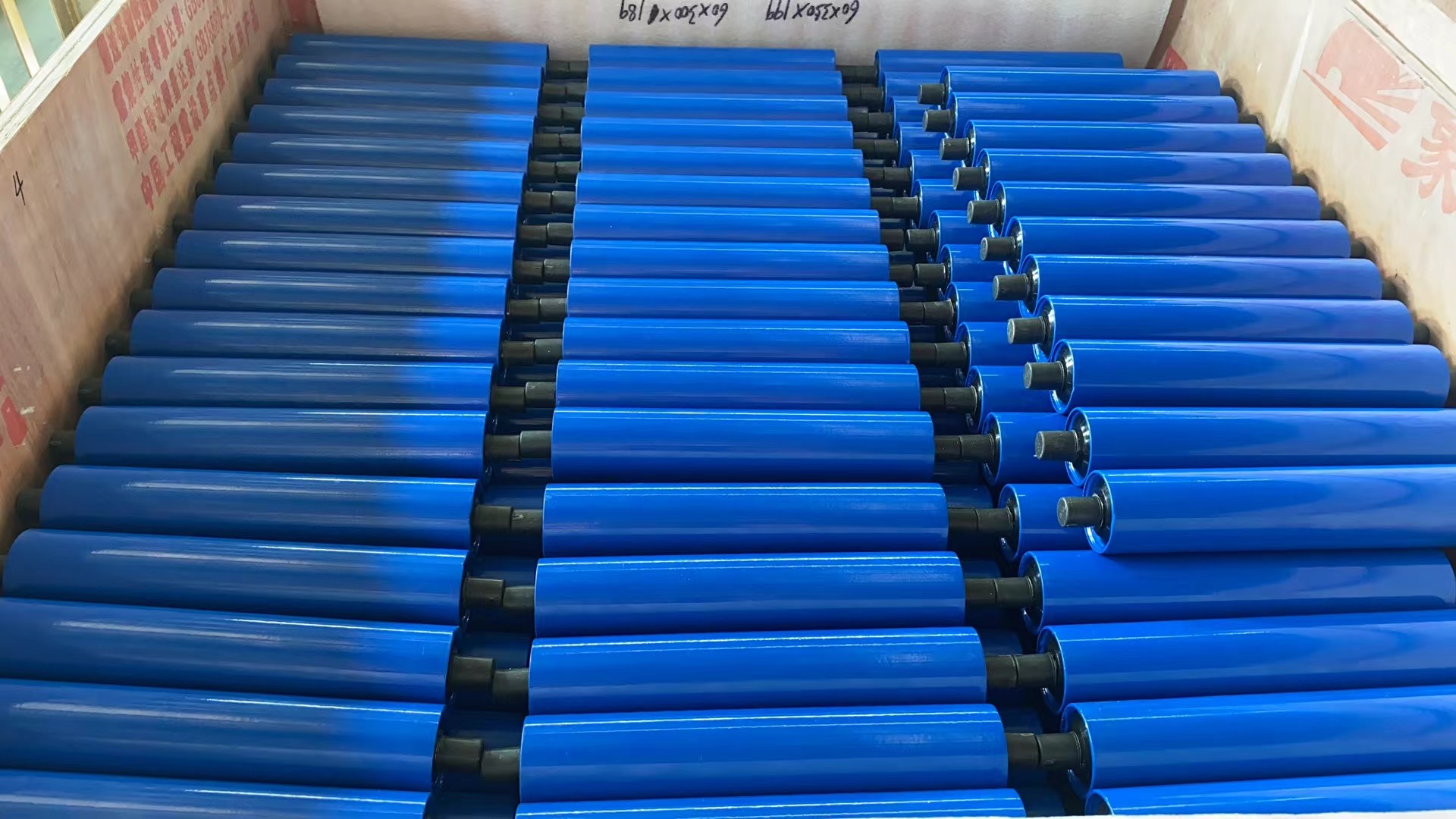
Most catalog rollers assume an average load, a generic speed, and a clean environment. Yours might be carrying sharp-edged scrap under a washdown spray, or creeping through a furnace at 400°F with a dense, uneven weight distribution. The moment you force a standard roller into that reality, you inherit premature bearing failures, cracked shells, and a maintenance schedule nobody signed up for. Designing around your load means starting from the actual force path, not a part number.
We map the contact pressure across the full roller face, account for transient shocks when material drops into place, and factor in thermal expansion or chemical exposure. Then we adjust the wall thickness, weld placement, shaft diameter, and bearing spread to match those conditions. A roller that sees a static, centered load gets a different profile than one supporting a cantilevered edge. The catalog won’t tell you that difference—your load will.
The result is a roller that doesn’t just survive; it settles into the system and stays quiet. You stop swapping parts every quarter, stop greasing on a prayer, and stop wondering why the “same” roller lasted years on one line and weeks on another. Because it was never the same roller once you looked past the catalog page.
Material Pairings That Survive Your Harshest Line
Stainless steel and ceramic coating are a pairing that shrugs off salt spray, abrasive grit, and rapid temperature swings without losing structural integrity. The ceramic layer forms a hard, chemically inert skin that prevents pitting and crevice corrosion, while the steel underneath absorbs impact energy that would crack a pure ceramic part. In exhaust systems and marine hardware, this combination keeps threads clean and flanges flat even after thousands of thermal cycles between freezing and glowing hot.
PTFE and woven glass fiber offer a different kind of endurance: they flex without fracturing. The glass weave provides tensile strength and dimensional stability, preventing the PTFE from cold-flowing under compression or stretching out of shape at elevated temperatures. Exposed to aggressive solvents, hydraulic fluid, or ozone, this duo maintains a low-friction surface and a reliable seal. It is why lined hoses and dynamic shaft seals built this way outlast rubber alternatives by a wide margin in chemical processing lines.
For the highest mechanical stress combined with thermal extremes, titanium and carbon-fiber composite prove their worth. Titanium resists galvanic corrosion and fatigue cracking at the fastening points, while the carbon-fiber body carries bending and torsional loads at a fraction of metal weight. The mismatch in thermal expansion is managed with precision-machined interfaces and anaerobic adhesives, so joints remain tight after repeated deep-freeze to bake-out cycling. This pairing shows up in aerospace actuators and high-end bicycle frames where failure is not an option.
What Happens When Standard Rollers Can't Keep Up
The first sign is subtle—a faint skid mark on the material, a slight hesitation in the feed, a temperature gauge creeping past its usual range. Standard rollers are designed around predictable loads and steady speeds. Toss in a sudden surge in throughput or a switch to a heavier stock, and their limitations surface fast. Bearings start to whine, surfaces glaze over, and the consistent tension you relied on becomes a variable you can no longer control.
Once that threshold is crossed, the failures compound. A roller that slips even a fraction of a millimeter per cycle will eventually throw off alignment downstream. In printing applications, that means ghosting and color drift. In packaging lines, it translates to wrinkled film or misfed cartons. The maintenance team responds by cranking up pressure or running the line slower, but these are band-aids. What the system actually needs is a roller engineered for the higher demand—different durometer, better heat dissipation, or a surface treatment that maintains grip under load.
Ignoring the mismatch for too long turns a performance issue into a durability one. Shafts wear unevenly, housings crack from vibration, and the inner cores of rubber rollers can delaminate from their metal hubs. By then, a simple component swap has become a full rebuild. The smart move is to recognize the warning signs early and upgrade before standard rollers force you into emergency downtime.
Built to Carry the Weight You Actually Handle
Most load ratings chase a single dramatic number, but the daily reality is messier—laptop, water bottle, charger, a folded jacket, maybe some groceries wedged in at the last minute. The design here starts from that clutter. Straps are anchored to handle shifting weight without digging into shoulders, and the base is reinforced where real bags fail, not where a lab test says they should.
Instead of adding bulk for a hypothetical capacity, the structure channels stress along the routes you actually use. Zippers run on tracks that stay smooth under uneven pressure, and the grab handle sits where your hand naturally reaches when the bag is overfull. It holds its shape when half-empty and doesn't punish you when you've overpacked by a few pounds.
The result is a carry experience that feels less like a performance spec and more like a quiet agreement: bring what you need, move through the day, and the bag won't be the thing that wears you out.
Drop-In Replacement, Zero Line Retooling
Switching engines usually means touching every call site, rewriting configs, and chasing subtle behavior changes. This one doesn't ask for any of that. The public surface matches what your team already uses, so you can swap the dependency, update the import path if needed, and move on.
Internals can change without dragging your codebase into a refactor. Requests, responses, error shapes, and defaults stay aligned with the previous implementation. That's the point: you shouldn't have to retrain yourself or your tooling just to get a faster, more reliable core.
For teams with long-lived integrations, this removes the usual migration tax. Roll it out behind a flag, compare behavior in staging, and promote when you're ready. No generated wrappers, no compatibility shims, no "just one small change" surprises.
From Blueprint to Moving Parts in Days
Most teams get stuck in the gap between a finished CAD model and a physical prototype that actually moves. The usual route involves weeks of back-and-forth with external vendors, tweaking tolerances, and waiting on parts that arrive only to reveal a clearance issue. We flipped that workflow on its head. By pairing parametric design rules with in-house rapid fabrication, the first functional assembly can be bolted together while the digital twin is still warm from the render.
The trick isn't just speed—it's keeping the design intent alive throughout the process. Instead of exporting a static file and hoping for the best, every joint, bearing surface, and actuator mount is tested against real motion profiles before a single piece of metal is cut. That means the blueprint and the moving prototype share the same constraints, so what works on screen translates directly to the bench. When a part does need a tweak, the change propagates through the model and the next iteration is in your hands the same afternoon, not next month.
The result is a cadence that feels more like software sprints than traditional hardware development. You sketch an idea in the morning, watch a prototype articulate by evening, and spend the next day refining the feel instead of chasing a courier. It closes the loop between imagination and physical reality so tightly that the gap disappears—blueprint one moment, moving parts the next.
FAQ
Standard rollers are built around a fixed set of diameters, materials, and load ratings. Custom rollers start from the actual application: the weight per zone, the type of product moving across them, the speed required, and any contamination or temperature issues on the line. The result is a roller that matches the system instead of forcing the system to work around an off-the-shelf component.
The trigger is usually repetitive problems—premature bearing failures, rollers wearing unevenly, products slipping or getting damaged, or constant adjustments to keep the line running. If a standard roller needs frequent replacement or the line has a unique footprint, custom designs become cheaper over time than repeated downtime.
Material selection depends on what the roller will touch and where it will live. Abrasive products call for hardened steel or coated surfaces; washdown areas need stainless or polymer rollers that resist corrosion; very light products may require low-inertia aluminum or composite tubes. Noise limits and static buildup also push choices toward specific plastics or conductive materials.
Properly matched rollers reduce drag, prevent product skew, and maintain consistent spacing on accumulation lines. A custom diameter and bearing combination can lower the energy needed to drive the line and allow gentler starts and stops. Over a year, these small gains add up to fewer jams, higher throughput, and less manual intervention.
Yes, that is often the main reason to go custom. Designers can specify high-temperature lubricants for ovens, sealed bearings for dusty or wet areas, static-dissipative materials for electronics handling, or heavy-wall tubing for sharp impacts. The geometry can also be adjusted—longer shafts, special end fittings, or non-standard spacing—to fit existing frames without reworking the whole conveyor.
It begins with a detailed application review: load per roller, speed, duty cycle, temperature range, and any chemical exposure. From there, the engineer selects tube material, wall thickness, shaft size, bearing type, and surface finish. A prototype or small batch is usually tested on the actual line before full production, so the final design is validated under real conditions rather than only in theory.
The surface controls how the product interacts with the roller. A rough or high-grip coating keeps packages from sliding during acceleration; a smooth polished finish prevents marking on delicate items; non-stick coatings stop adhesive buildup; and certain finishes can reduce friction with accumulated products or improve release in cold environments.
Conclusion
Standard conveyor rollers force your operation to adapt to off-the-shelf constraints, but custom solutions flip that equation entirely. Instead of sifting through a catalog for a roller that might survive your line, engineers design each component around the specific weight, speed, and load distribution you actually handle. This means no more guesswork when abrasive dust, extreme temperatures, or chemical exposure eats through a generic roller in weeks. Material pairings—from hardened steel cores to polyurethane covers with custom durometers—are chosen to match the harshest conditions on your floor, not a laboratory average. The result is a roller that carries the real burden of your process, not a hypothetical one.
When standard rollers can't keep up, the typical reaction is a costly retooling of the conveyor frame or a patchwork of frequent replacements. Custom designs eliminate that trade-off: a drop-in replacement matches existing shaft diameters, bearing centers, and mounting footprints precisely, so installation happens without cutting, welding, or realigning the line. From blueprint to moving parts, the turnaround is measured in days, not months, because the design process starts with your existing load data rather than a blank sheet. The final roller isn't just a part—it's a tailored answer to the exact failure mode you've been tolerating, built to make material handling boringly reliable again.
Contact Us
Contact Person: Anna Lu
Email: [email protected]
Tel/WhatsApp: 8618561668850
Website: https://www.x-conveyor.com