

Custom Shot Blasting Machine Solutions: Achieving Optimal Surface Finish
2026-08-11
Achieving the perfect surface finish isn't just about the blasting media—it's about the system delivering it. Every workpiece has unique contours, material sensitivities, and finish requirements that standard machines can't always satisfy. At PuHua, we understand that one-size-fits-all solutions rarely yield flawless results. That's why custom shot blasting machines are reshaping industry expectations, turning complex finishing challenges into consistent, high-quality outcomes. In this post, we'll uncover how tailored configurations and intelligent design put you in control of surface integrity, and why generic setups often fall short.
When Standard Isn’t Enough: The Case for Custom Blasting Setups
Standard blasting setups often work for routine jobs, but when you're dealing with uneven surfaces, stubborn coatings, or delicate substrates, off-the-shelf solutions quickly show their limitations. What works on a flat steel beam might clog on textured concrete or leave a rough finish on aluminum. The real challenge isn't just getting the abrasive onto the surface—it's controlling how it hits, how long it lingers, and how much energy it transfers. Without customization, you risk over-blasting, under-cleaning, or harming the very material you're trying to prepare.
Custom setups let you tailor everything from nozzle shape and media flow to air pressure and standoff distance. For instance, a contractor restoring a historic brick facade might use a low-pressure vortex system with a fine abrasive mix to gently lift decades of paint without pitting the bricks. In a shipyard, a specialized nozzle array can blast corrosion off hull plates in a single pass, cutting project time in half. It's not about having more power—it's about having the right kind of power, dialed in for the task at hand.
When you move beyond standard configurations, you also open the door to efficiency gains that prefab kits can't touch. Rebound becomes predictable, dust suppression improves, and media costs drop because you're not wasting abrasive on overspray. Some operators even design hybrid systems that combine dry blasting with mist injection or vacuum recovery, creating a closed-loop process that keeps the worksite cleaner and safer. In an industry where one misapplied blast can set a timeline back by weeks, a custom approach isn't just a luxury—it's often the only way to get the job done right.
Precision Tuning: How Adjustable Intensity Shapes Surface Texture
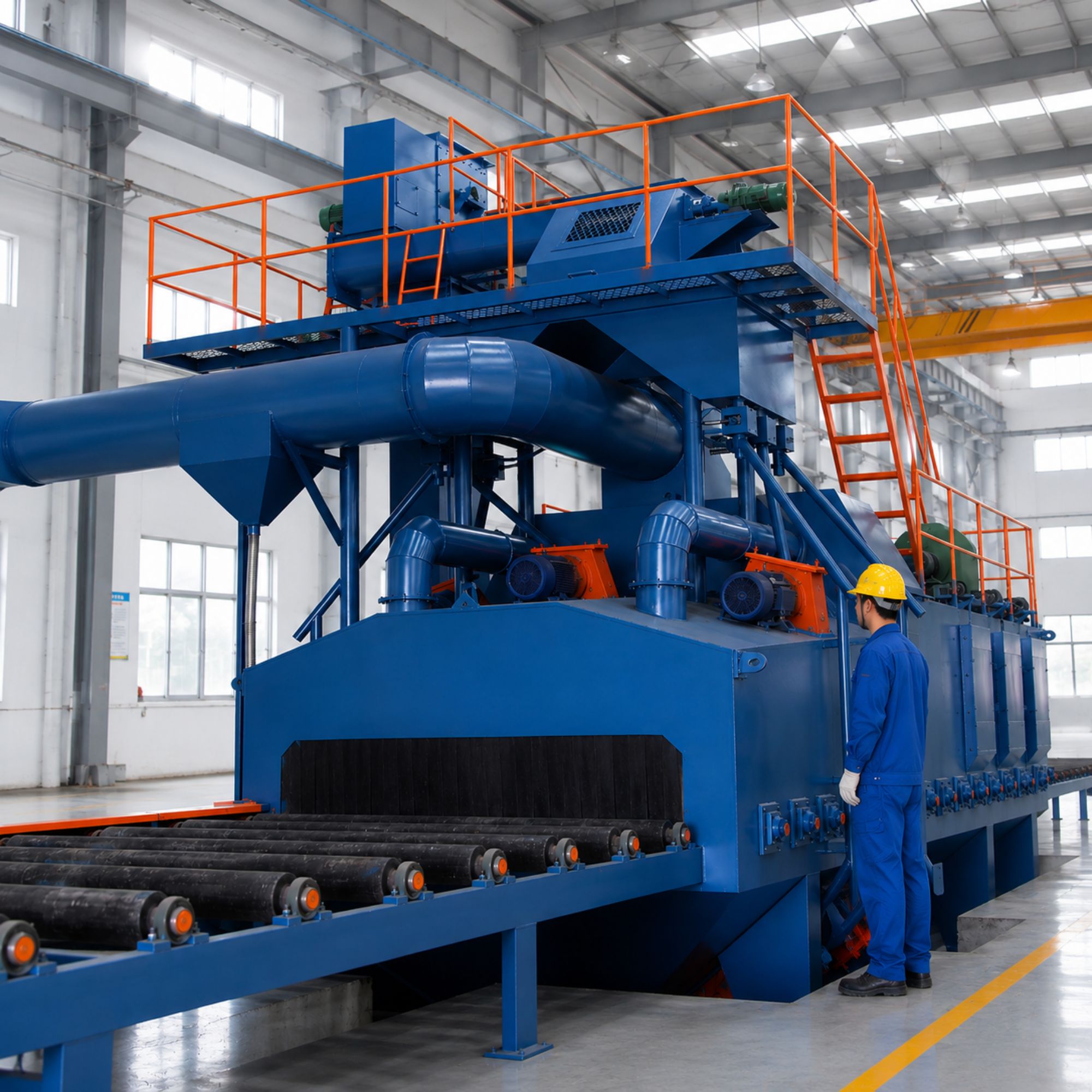
Fine-tuning surface textures isn't just about picking a setting—it's about dialing in the exact energy transfer to the material. By adjusting intensity through real-time feedback loops, the system modulates parameters like pulse frequency and dwell time, directly influencing peak-to-valley heights and the overall anisotropy of the finish. This level of control means you can shift from a uniform, low-Ra satin sheen to a coarser, more tactile grain without changing tooling.
What sets this apart is how incremental adjustments translate into distinct tactile and visual outcomes. A slight boost in intensity might deepen the etch pattern just enough to reduce reflectivity for glare-sensitive applications, while a carefully tapered reduction yields a near-mirror polish. Even within a single part, gradient textures become possible—think subtly shifting patterns that follow contours or functional zones, all defined by intensity mapping rather than mechanical masks.
Operators gain a repeatable, data-backed palette of textures, down to the micrometer. Instead of trial-and-error passes, the interface lets you preview intensity profiles and lock in profiles that become part of the digital recipe. This closes the gap between design intent and physical outcome, making custom textures as predictable as setting the depth on a CNC cut. The result is a surface that’s not just engineered, but precisely tuned to its purpose.
Media Matters: Matching Abrasives to Material and Desired Finish
Selecting the right abrasive is rarely a one-size-fits-all decision. The media you choose directly shapes how material is removed, how the surface responds, and whether the finish matches your expectations. Start by considering the workpiece itself — metals like aluminum and steel react differently under friction, and the same goes for wood, glass, or composites. A grit that cuts beautifully on hardened steel might embed or gall on softer metals, turning a simple job into a headache.
Beyond the material, think about the surface you want to leave behind. Coarse abrasives rip away stock fast but leave deep scratches; finer grits gradually erase those marks but demand patience. Sometimes the goal isn’t just smoothness — a brushed finish might call for a specific non-woven abrasive, while polishing compound and a soft wheel bring out a mirror shine. The binder and backing also matter: a rigid wheel holds its shape for precision edges, while a flexible belt follows contours without gouging.
Testing often reveals what spec sheets can’t. Run a small sample with the abrasive you’re considering, checking for heat buildup, loading, and consistency across the surface. Adjust speed, pressure, or coolant as needed — even the best-matched media can disappoint if the process fights against it. When you get the pairing right, the tool feels stable, the finish emerges cleanly, and rework becomes the exception rather than the rule.
Balancing Speed and Quality in High-Throughput Applications
Finding equilibrium between rapid response and consistent output isn’t just a technical goal—it’s an operational necessity. In high‑throughput environments, the pressure to process massive volumes can quietly erode accuracy, turning a split‑second gain into a long‑term liability. Teams that treat speed and quality as opposing forces often end up firefighting both, rather than designing systems where one reinforces the other. A more practical approach looks at where constraints actually live: batch sizes, validation checkpoints, and feedback loops that catch drift before it cascades.
Real‑world architectures reveal that quality doesn’t have to be the casualty of scale. By layering lightweight verification directly into the data pipeline—think probabilistic checks that run in parallel rather than sequential gatekeeping—throughput can stay high without sacrificing trust in the output. The trick is to avoid perfect being the enemy of good; sometimes a 99.9% accurate result delivered in milliseconds beats a flawless one that arrives too late to matter. Fine‑tuning this balance means watching not just average latency but tail‑end behavior, because the slowest 1% of transactions often dictate the user’s entire experience.
The conversation shifts when you stop chasing abstract benchmarks and start instrumenting for actual trade‑offs. Dynamic throttling based on real‑time error budgets, for instance, lets the system breathe when conditions are favorable and tighten checks when anomalies spike. This isn’t about choosing a fixed point on the spectrum—it’s about building responsiveness into the decision‑making layer itself. Mature high‑throughput systems don’t settle for a static compromise; they adjust the dial continuously, guided by metrics that reflect both velocity and veracity in terms the business cares about.
Unexpected Variables That Influence Final Surface Appearance
Even the most meticulously controlled finishing process can be thrown off by factors that rarely make it onto a standard checklist. Ambient humidity, for instance, can subtly alter drying times and flow characteristics, leaving behind haze or orange peel where a smooth gloss was expected. Similarly, the age and storage conditions of raw materials—from a coating that’s been sitting on a shelf past its ideal window to a batch of abrasive media that’s absorbed moisture—can introduce variability that no amount of process tweaking can fully override.
Tooling and equipment wear also play a quiet but powerful role. A polishing pad that’s lost its nap or a spray nozzle that’s imperceptibly eroded can shift the pattern of material removal or deposition just enough to create noticeable inconsistencies. Even the operator’s technique, often assumed to be constant, can drift over a long shift, introducing subtle changes in pressure, angle, or speed that compound into a visibly different surface.
Lighting conditions during inspection, both in the production area and where the part will ultimately be seen, further complicate the picture. A surface that looks flawless under cool fluorescent tubes might reveal swirling or blotchiness in natural daylight. These hidden variables rarely announce themselves, but learning to spot and control them is what separates a reliable finish from one that surprises you at the final audit.
From Prototype to Production: Keeping Finishes Consistent at Scale
Moving from a one-off prototype to full-scale production can reveal hidden inconsistencies in surface finishes that weren't apparent before. Early samples often benefit from hand-applied techniques or small-batch processes that simply don't translate when you're producing thousands of parts. To bridge this gap, it's essential to identify which aspects of the finish are truly critical to the design intent—whether it's gloss level, texture depth, or color accuracy—and then build a robust process around those parameters.
Establishing clear specifications early helps, but the real challenge lies in maintaining those specs across different production runs, materials, or even facilities. That means moving beyond subjective visual inspections and instead relying on measurable data—using tools like spectrophotometers, gloss meters, and profilometers to set pass/fail criteria. It also requires close collaboration with manufacturing partners to understand their process capabilities and limitations so that the finish isn't just aspirational but actually repeatable.
Even with solid specs in place, scale introduces variables that prototype stages rarely face: tooling wear, environmental shifts, or operator variability. Building in regular checkpoints and a feedback loop between design, engineering, and production teams helps catch drifts before they become volume-wide issues. Often, the most elegant solution is simplifying the finish itself—opting for textures or coatings that are inherently more stable and forgiving, which ultimately keeps the product looking consistently premium without costly rework.
FAQ
Standard machines force you to adapt your process to their fixed limitations. Custom solutions flip that logic entirely. They're built around your specific part geometry, material sensitivity, and the exact finish profile you need. This means optimized blast pattern coverage, precisely controlled impact energy, and the right mix of wheel placement, speed, and media flow. The result is far fewer missed spots, less rework, and a finish that's consistent from the first part to the thousandth.
It starts with understanding the end goal—whether it's a coarse anchor profile for heavy coatings or a smooth satin finish for aesthetic parts. We run controlled tests on sample parts, adjusting variables like abrasive type, particle size, blast wheel RPM, and exposure time. Surface roughness measurements and visual standards are tracked until the parameters hit the spec. Once dialed in, those settings are locked into the machine's recipe system, so repeatability is automatic.
Consistency comes from how the machine handles part movement and media delivery. We engineer the conveyor or manipulator system to expose every surface evenly, avoiding shadows or dead zones. Adjustable blast wheel positions, precision media valves, and air wash separators keep the media blend clean and flowing uniformly. Real-time monitoring of amperage and abrasive usage helps catch drift before it affects the finish. Essentially, every subsystem is tailored to eliminate variability.
Absolutely. The trick lies in matching the blast intensity to the part's fragility. For thin-walled or precision-machined parts, we often use softer media combined with lower wheel speeds or employ suction-blast systems with fine control. Fixturing is designed to hold parts gently but firmly, masking critical areas if needed. The process then imparts the required clean or texture without warping, peening over edges, or embedding particles.
Aerospace, automotive, and heavy machinery are the obvious ones, but we've also done extensive work for 3D-printed metal part finishing, medical implant texturing, and architectural metalwork. Any sector where surface integrity directly impacts product performance—think fatigue life, coating adhesion, or corrosion resistance—can gain a lot from a purpose-built system. It's less about the industry and more about the technical demands of the surface.
Media choice essentially defines the finish's character. Angular grit like steel or aluminum oxide cuts aggressively, leaving a sharper profile ideal for bonding paint. Round shot peens surfaces, improving fatigue strength while creating a more uniform matte look. Organic media can strip coatings without marking substrates. In a custom system, we don't just pick one; we often blend media or stage different types to achieve a very specific outcome, like a satin polish with a hidden compressive stress benefit.
The number one rule is staying on top of media condition. A worn, dusty, or contaminated abrasive mix won't give you the same finish. We recommend daily checks of the separator, regular screen inspections, and tracking media consumption to spot leaks. Blast wheel blades and liners wear predictably, so we build in easy access for quick swaps. Scheduled deep cleans and verifying sensor calibration also prevent slow performance declines that are hard to notice until quality dips.
It's a matter of controlled keying. Coatings need a microscopic 'tooth' to bite into, and that's measured in Ra or Rz values. By adjusting media shape, size, and impact velocity, we can dial in a roughness envelope—say Ra 3.2 to 6.3 microns for a heavy epoxy. On a custom machine, we might tilt blast angles or modulate exposure time across complex shapes to keep the profile within that range everywhere. Validation is done with a profilometer, and once proven, the parameters stay locked.
Conclusion
Off-the-shelf shot blasting machines often fall short when specific surface finish requirements come into play. Custom setups step in where standard equipment can't deliver the desired texture, uniformity, or material compatibility. By tailoring everything from blast wheel positioning to nozzle angles, manufacturers can address unique part geometries and coating adhesion needs that generic systems miss. The ability to dial in adjustable intensity—controlling factors like blast pressure, exposure time, and media velocity—allows for precision tuning that transforms a basic clean into a meticulously crafted surface profile. Pairing the right abrasive with the substrate is equally critical; glass beads, aluminum oxide, or steel grit each impart distinct characteristics, and a mismatch can ruin both finish and part integrity. These foundational choices set the stage for a process that achieves exactly the look and performance required.
In high-throughput environments, the challenge becomes balancing aggressive stock removal with the finesse needed for a consistent, high-quality finish. Custom solutions often incorporate automated monitoring and real-time adjustments to maintain that equilibrium, avoiding the trap of sacrificing one for the other. Yet even the most calibrated systems face unpredictable variables—ambient humidity, dust extraction efficiency, and even minor variations in part metallurgy can subtly shift the final appearance. Addressing these through controlled environments and adaptive process feedback keeps results stable. Finally, translating a successfully developed prototype finish to full-scale production demands rigorous documentation and repeatable parameters. Custom machines equipped with programmable recipes and consistent media reclamation ensure that every batch matches the approved sample, bridging the gap between lab precision and shop-floor reality without losing the surface quality that made the prototype successful.
Contact Us
Contact Person: Bruce
Email: [email protected]
Tel/WhatsApp: +86 15166629468
Website: https://www.povalchina.com/