

Custom Slitter Rewinder Machine Solutions for High Precision Converting and Efficient Production
2026-11-27
Precision converting rarely starts with the machine itself. It starts with the gaps between what standard slitter rewinders promise and what your material actually demands. XIAOPAI approaches custom slitter rewinder solutions from that exact tension point, pairing high precision control with efficient production workflows that hold up under real running conditions. This post looks at where off the shelf equipment falls short, and how a purpose built configuration changes throughput, edge quality, and downtime in ways that show up on the production floor rather than only in a spec sheet.
Precision That Handles Films, Foils, and Specialty Webs Without the Guesswork
Running thin polyester or soft aluminum foil through a web line usually means trading speed for caution. Here, the tension zones adapt to the material rather than forcing the material to fit a fixed recipe. Load cells read the roll's behavior in real time, and the drive response keeps the web flat without stretching it beyond its elastic limit.
The edge sensors do more than correct drift. They learn the natural wander of each substrate, so a clear film with low contrast doesn't trigger unnecessary corrections that ripple downstream. That stability matters most when coating or laminating, where a tiny lateral shift turns into visible waste.
Operators still have control, but they are not asked to guess at settings. The interface shows what the line is feeling, not just what it is doing. Saved profiles for films, foils, and specialty webs let a shift change happen without a round of trial runs or scrap rolls piling up at the unwind.
Modular Builds That Cut Setup Time on Short-Run Jobs
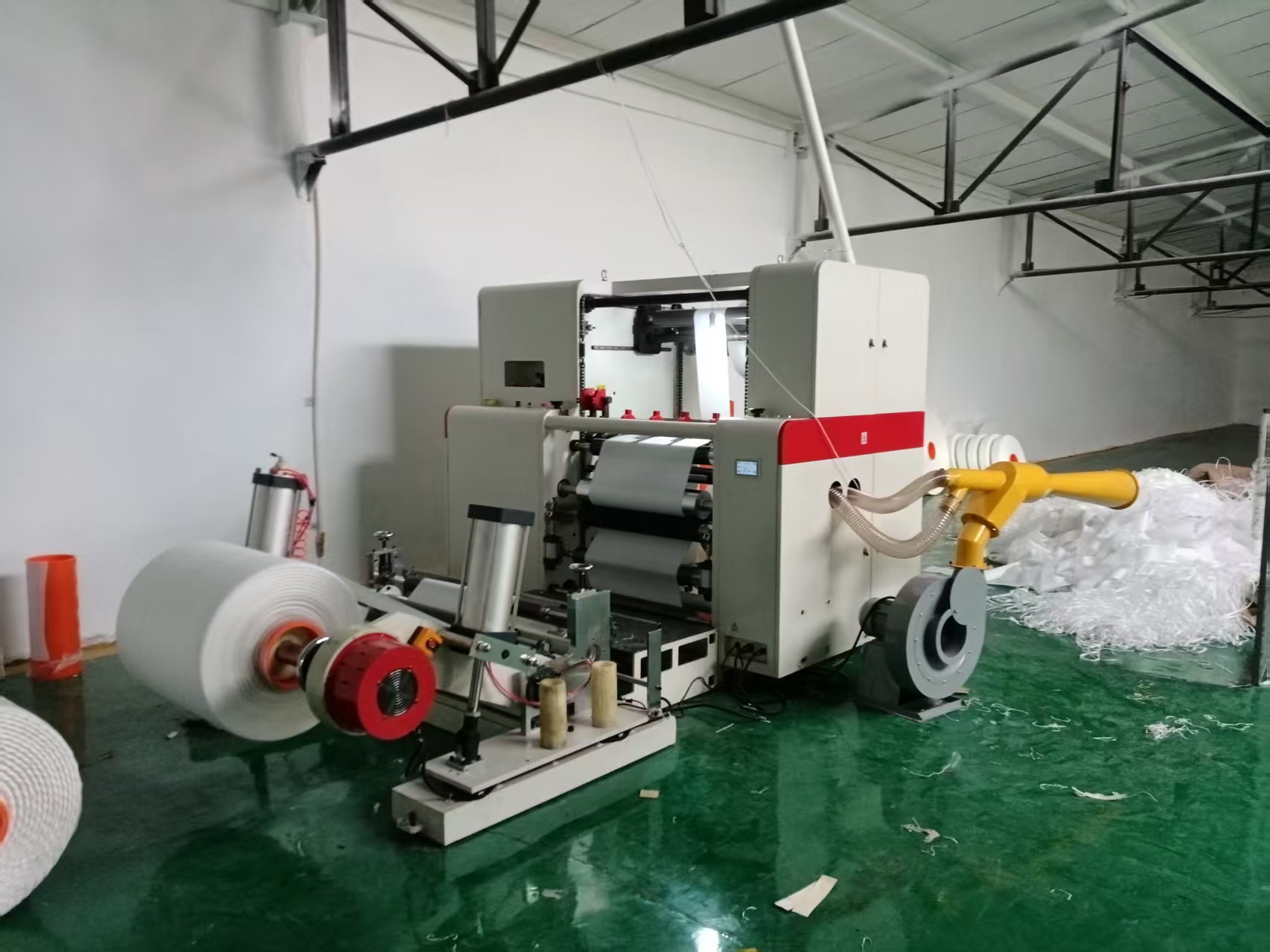
Shops chasing short-run work rarely lose money on cycle time; they lose it on changeovers. A modular setup flips that equation. Instead of machining custom soft jaws or building dedicated fixtures for every part number, the machine table carries a standard grid plate. Stops, clamps, and locating pins drop into position, get locked down, and repeat within a few tenths. What used to eat forty-five minutes of an operator's morning now takes ten, and the spindle starts turning while the next job is still being staged.
The real advantage shows up when the mix gets messy. Three different brackets, two housing covers, a rush prototype, all in the same week. With modular components stored on a cart next to the machine, switching from one job to the next becomes closer to assembling a kit than performing a setup. Because every element references the same known positions, there is no need to re-indicate each fixture from zero. Operators trust the repeatability, pull the old blocks off, snap the new arrangement in, and verify only a couple of critical dimensions before hitting cycle start.
There is also a quiet financial benefit that shows up on quotes. When setup time drops across many small batches, a shop can price short-run work without padding the estimate for changeover labor. The initial spend on base plates and building blocks looks less like an expense and more like buying back hours every week. The result is a floor that moves from job to job without the usual pause, and a team that stops dreading the next setup.
Where Tension Control and Slitting Accuracy Actually Meet
Most slitting lines treat tension and knife setup as separate conversations. The operator adjusts unwind torque in one place, lateral position in another, and then wonders why the edge wanders on acceleration. The point where they actually meet is not in the control cabinet but at the nip just before the blade, where a tiny change in web elongation shifts the material sideways by more than the kerf width.
On thin films and coated papers, the problem gets sharper. A stiff control loop can hold average tension within a fraction of a newton, yet still produce scalloped edges because the real disturbance is inertial: a parent roll with soft spots, a splicing cycle, or a ramp from crawl to run speed. Slitting accuracy stops being about blade sharpness and starts being about how quickly the tension zone can absorb those transients before they reach the cut point.
The systems that hold tight tolerances for years tend to use separate tension islands and deliberately low-friction roller paths, but the deciding factor is often less glamorous. It is the operator who learns the personality of each stock, trims the profile by a few percent, and knows when a worn bearing will show up as a fuzzy edge before the sensor does.
Turning Roll Defects into Measurable Yield Gains
Most converting lines treat roll defects as a quality nuisance rather than a yield problem. A scratched idler or worn spreader roll does not just leave a mark; it shifts tension, alters coating thickness, and forces operators to slow the line or scrap a section that could have been sold as prime. The first step is to stop logging these events by frequency alone and start attaching them to their true cost per running meter.
One practical approach is to map each defect to the exact meter position on the parent roll, then cross-reference that with winding and slitting records. When a repeat impression shows up every revolution, you can calculate the affected length, the downgrade percentage, and the speed loss tied to that roll. A single edge burr on a nip roll, tracked across a week, often reveals a recurring loss pattern that is hidden inside average scrap numbers.
Once the data is in place, maintenance decisions become straightforward: replace or refinish the roll with the highest measured impact, not the one that looks worst. After the fix, compare day-level yield before and after to confirm the gain. Over time this turns roll maintenance from a firefighting exercise into a small portfolio of yield projects, each with a clear payback.
Matching Automation Levels to Real Production Demands
Many plants stall because leadership treats automation as a binary choice: either a cell is fully manual or it runs lights-out. That ignores how uneven real production demand tends to be. A line making three variants at high volume every day can justify hard tooling and dedicated transfer systems; a job shop that ships twelve custom orders a week usually gets more from a compact cobot handling one repetitive pick-and-place step than from a sprawling automated line that sits idle half the shift.
The useful question is not “can this be automated?” but “which portions of this process are stable enough to hand off?” If cycle times wobble, tolerances drift, or operators constantly improvise around missing parts, bolting on automation only makes the chaos faster. More durable gains come from automating the narrow, predictable slice first— pallet loading, deburring, inspection data capture—and leaving the judgment-heavy work to people until the inputs are under control.
There is also a case for deliberately choosing a lower automation level. When demand shifts every quarter, flexible fixtures and a trained crew often beat a high-speed fixed line that requires expensive changeovers. The right match usually sits somewhere between the sales forecast and what the shop floor actually repeats, not at the peak of a vendor’s capability slide.
What Operators Notice First on a Well-Designed Slitter Rewinder
The first thing that tends to catch an operator's eye isn't the spec sheet or the paint finish—it's how little effort it takes to thread a new roll. If the unwind side, slitters, and rewind shafts line up in a way that feels obvious from the normal standing position, the machine earns trust before it even starts running. A well-designed unit removes those awkward reaches around guards and eliminates the need to duck under open rollers just to tape a tail.
After threading, attention shifts to how the controls match the physical layout. Operators notice when blade depth adjustments, nip pressure settings, and tension readouts sit close to the stations they affect, not buried three screens deep. Good machines keep everyday adjustments mechanical or one-touch, so a shift change doesn't turn into a training session just to set the shear angle.
Finally, there's the feel at running speed. A slitter rewinder that doesn't shake the floor, keeps the web tracking flat through the cut points, and lets the operator hear a bearing going dry before it becomes a problem is immediately recognized as well built. Those first impressions tend to stick because they show whether the designers actually spent time on the floor or only in CAD.
FAQ
Slitting width, rewind tension, nip pressure, and knife type can all be changed and saved as a recipe. Operators simply call up the stored setting instead of starting from scratch each time.
Closed-loop tension control, servo-driven axes, and a rigid unwind and rewind section keep the web stable. Automatic edge guiding and balanced rollers reduce lateral movement, so cuts stay consistent even as line speed increases.
Films, paper, foil, laminates, label stock, nonwovens, and specialty composites are common. The machine is configured around the specific stretch, thickness, and surface sensitivity of your material rather than forcing the material to fit a fixed design.
Razor, shear, and score slitting can be specified alone or in combination. Shear knives are often selected for tougher or thicker webs, razor slitting for thin films, and score cutting for materials that need a clean, dust-free separation.
Yes. The control system can communicate with upstream unwinds, downstream packing stations, or plant networks through standard industrial interfaces. Integration points are defined early so installation does not require major rework of your current line.
Automated knife positioning, quick-change cores, and recipe-based setup help operators switch from one order to the next much faster. The rewind shafts can also be designed for easy unloading without extra lifting equipment.
Installation supervision, mechanical and electrical commissioning, and hands-on operator training are normally included. Support continues with spare parts, remote diagnostics, and service visits when needed.
The frame length, web path, unwind and rewind diameters, and safety guarding are all sized around your available floor space and operator workflow. Controls can also match the level of automation your team is comfortable with, from basic HMI to full recipe management and data logging.
Conclusion
Custom slitter rewinder solutions earn their place on the floor when films, foils, and specialty webs stop behaving unpredictably. The real difference is not just tighter tolerances on paper but how the machine holds tension through acceleration, splices, and diameter changes without forcing operators to chase settings. Edge quality, core alignment, and roll hardness improve because the unwind, slitting section, and rewind stations are designed around the material rather than adapted to it after the fact. That same focus turns common roll defects such as telescoping, starring, and soft edges into measurable yield gains instead of routine rework. When the web path is predictable and the knife geometry matches the substrate, fewer meters end up as scrap and more finished rolls leave the line ready for downstream converting.
Short-run jobs expose how much time setup actually costs, so modular builds matter more than flashy features. Quick-change knife holders, cartridge assemblies, and preset rewind parameters let a small crew move from one width or material to another without rebuilding the machine between orders. Automation is matched to what the plant genuinely needs, from manual tension assist to closed-loop correction on delicate films. Operators tend to notice the same things first when a slitter rewinder is well designed, such as accessible controls, clear web visibility, and fewer emergency stops caused by wandering edges or snapped cores. Those details reduce hesitation during changeovers and make consistent output feel like a normal shift rather than an achievement.
Contact Us
Contact Person: Kellen Chen
Email: [email protected]
Tel/WhatsApp: 8613806536768
Website: https://www.cnxiaopai.com