

Energy Efficient HVAC System Maker Leads the Way in Sustainable Climate Control
2026-09-28
When it comes to cutting energy costs without sacrificing comfort, one name keeps surfacing: Tongbaote. This energy efficient HVAC system maker isn't just keeping rooms at the right temperature—it's redefining what sustainable climate control looks like in modern buildings. Here's why Tongbaote's approach is turning heads among facility managers and eco-conscious builders alike.
Energy Efficient HVAC Systems That Cut Waste in Commercial Spaces
Commercial HVAC systems often squander energy through outdated control sequences and oversized equipment. Instead of relying on fixed schedules that cool or heat empty zones, facilities teams are turning to demand-controlled ventilation paired with occupancy sensors. These systems adjust airflow based on real-time CO₂ levels and headcounts, so a half-empty conference room no longer receives the same conditioning as a packed lobby. Simple retrofits like adding variable frequency drives to fan motors can trim electrical waste by matching speed to actual load rather than running at full tilt whenever the unit cycles on.
Another overlooked source of waste is simultaneous heating and cooling. In many buildings, perimeter zones fight the central air handler, one reheating air that another just chilled. Upgrading to a dedicated outdoor air system (DOAS) with energy recovery separates ventilation from space conditioning, letting each do its job without fighting. Heat exchangers capture warmth from exhaust air in winter and precool incoming air in summer, cutting the load on compressors and boilers. Buildings that pair DOAS with variable refrigerant flow see sharper reductions because compressors ramp down during partial loads instead of cycling on and off.
Maintenance practices also determine whether an HVAC system wastes energy. Dirty coils, leaking ducts, and uncalibrated sensors force equipment to work harder for the same comfort. A quarterly tune-up that includes checking refrigerant charge, cleaning condenser fins, and verifying damper positions can yield 5–10% energy savings without any capital project. Pair that with a building automation system that trends zone temperatures and runtime hours, and facility managers can spot anomalies—like a stuck reheat valve or a fan running overnight—before they become routine waste.
Lowering Carbon Footprints Through Smarter HVAC Engineering
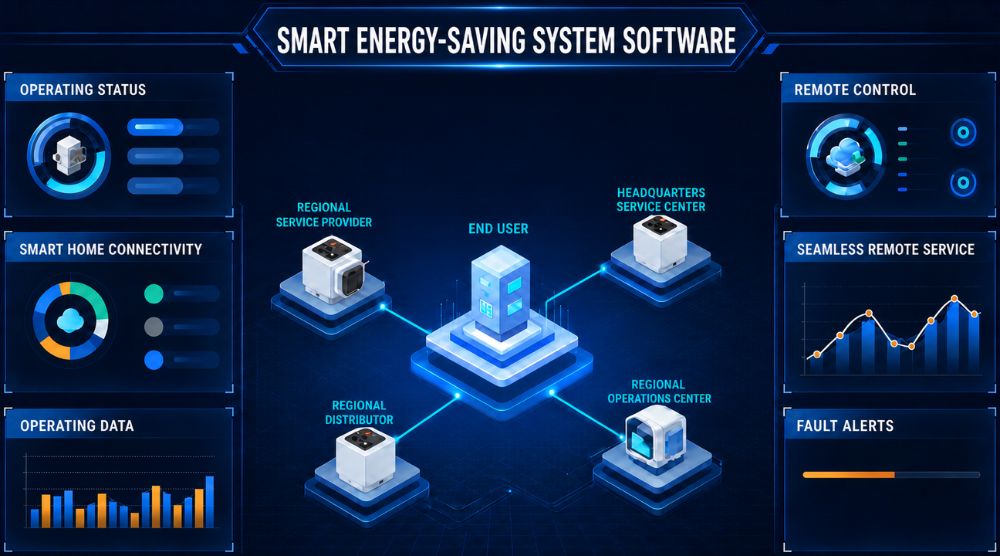
Modern buildings waste nearly a third of their heating and cooling energy through outdated control strategies and oversized equipment. Smarter HVAC engineering starts by questioning those defaults: right-sizing units based on actual load profiles rather than rule-of-thumb estimates, and using variable-speed compressors and fans that match output to demand minute by minute. The carbon reduction isn't a side effect—it's built into the way systems are designed from the first calculation.
Another overlooked lever is integration with real-time data. Instead of running on fixed schedules, advanced HVAC platforms pull from occupancy sensors, weather forecasts, and even grid carbon intensity signals. On a sunny afternoon when renewable penetration is high, the system can pre-cool a building slightly, then coast through the evening peak without burning fossil-fuel-derived electricity. This isn't just efficiency; it's carbon-aware operation that treats the grid as a dynamic partner rather than a static power source.
Finally, smarter refrigerants and heat recovery loops close the loop on direct emissions. Moving away from high-GWP refrigerants to low-impact alternatives—and capturing waste heat from exhaust air or condenser coils for domestic hot water—turns an HVAC plant into a net reducer of building carbon. These aren't exotic technologies; they're practical engineering choices that compound over the life of a building, often with payback periods shorter than the equipment warranty.
Sustainability Inside the Factory and Out in the Field
The push for sustainability often starts with visible changes on the production floor—switching to renewable energy, cutting water use, or redesigning packaging. But the more challenging work happens beyond the factory gates: tracing raw materials back to their source, supporting farmers who adopt regenerative practices, and ensuring that every link in the supply chain shares the same environmental standards. A factory can look green on paper while its suppliers still burn through forests and drain local watersheds. Real progress means extending accountability far past the loading dock.
That wider view forces companies to rethink what they measure. Instead of stopping at carbon emissions per unit produced, they start asking harder questions: How much topsoil is lost on the farms that grow our ingredients? Are the trucks that move our goods running on clean fuel or idling for hours at distribution centers? Do the workers who handle our products in distant facilities have access to safe water and fair wages? These aren't just ethical concerns—they're operational risks that eventually show up in the balance sheet.
Field teams become just as important as factory engineers. Agronomists work side by side with growers to test cover crops and drip irrigation, while logistics managers reroute shipments to cut empty miles. Inside the plant, maintenance crews retrofit old machinery instead of buying new, and quality control shifts from rejecting imperfect produce to finding ways to use every part of it. The goal is a system where waste from one process becomes input for another—whether that's turning fruit pulp into animal feed or capturing heat from ovens to warm the building. Sustainability only sticks when it's woven into daily decisions, not bolted on as a quarterly report.
Measured Energy Savings from Real Building Installations
Actual energy savings observed in operating buildings often differ significantly from modeled predictions, but well-instrumented retrofit projects provide trustworthy benchmarks. For example, a 2021 study of 14 office properties across the northeastern United States found that after implementing a package of HVAC resets, lighting upgrades, and envelope sealing, median whole-building electricity use dropped by 18.4% relative to a normalized baseline. The spread was wide—ranging from 6% to 34%—largely due to variations in building vintage, occupancy patterns, and commissioning quality.
Projects that combine submetering with ongoing monitoring tend to reveal more persistent savings. In a portfolio of retail stores, continuous measurement showed that measures like compressor schedule adjustments and door heater controls held their first-year savings (around 22% of HVAC energy) through the third year without significant degradation. By contrast, buildings that relied on one-time retro-commissioning without follow-up saw average savings fall from 15% to 9% over the same period.
Real installation data also highlights the importance of isolating individual measures. A multi-family housing complex in Chicago reported a 31% reduction in gas use after installing condensing boilers and whole-building heat recovery ventilation, but only after correcting for an unusually mild winter. When weather-normalized, the actual savings settled at 24%. Similarly, a school district in Texas measured a consistent 27% drop in cooling energy after replacing rooftop units with high-efficiency models and adding occupancy-based setback controls during unoccupied hours.
Climate Control That Learns Occupant Patterns and Adjusts
The system picks up on your routines without any button pressing. If you tend to crank the heat on cold mornings and prefer a gentle breeze by mid-afternoon, it logs those choices. Over a few drives, the cabin preps itself to match that rhythm before you even think to reach for the dial.
It also reads the room in real time. Extra passengers? The vents shift airflow to keep the back seats from getting stuffy. Sun beating through the windshield? The system nudges the temperature down just enough to offset the glare, not so much that you notice the change.
Seasonal shifts don't throw it off either. When winter habits fade and you start favoring cooler air in spring, the learning model quietly updates. New driver profiles are handled the same way, so comfort stays personal without needing a manual reset.
Efficient HVAC as a Cornerstone of Urban Sustainability
Buildings account for a major slice of urban energy consumption, and much of that load lands squarely on heating, ventilation, and air conditioning systems. When these systems run inefficiently, they don't just waste electricity or gas—they force power grids to work harder, drive up peak demand, and make cities less resilient to extreme weather. An efficient HVAC setup changes that equation. By using variable-speed compressors, smart thermostats, and heat recovery ventilation, a single building can cut its thermal energy use by half or more. Multiply that across a district and the result is a measurable drop in carbon emissions without waiting for a complete overhaul of the power supply.
The real leverage comes from treating HVAC not as isolated equipment but as part of an urban fabric. District cooling loops, thermal storage tanks, and demand-response programs let buildings share and shift loads instead of each one fighting the afternoon heat alone. A well-tuned system can pre-cool a building overnight when electricity is cheaper and cleaner, then coast through the peak hours with minimal compressor runtime. This flattens the demand curve, reduces strain on aging infrastructure, and frees up capital that would otherwise go into building new power plants. For city planners, that's a quiet but powerful form of decarbonization hiding in plain sight.
Efficiency also changes how people experience the city. Poorly balanced HVAC leads to stuffy offices, noisy condensers on sidewalks, and heat islands that make outdoor spaces unbearable. When systems are designed with variable refrigerant flow and occupancy sensors, indoor comfort no longer depends on overcooling empty rooms. That precision cuts energy waste and improves air quality at the same time. Over a decade, the savings compound: lower utility bills for tenants, less maintenance churn for building owners, and a more livable streetscape for everyone. In that sense, efficient HVAC is not a back-office upgrade—it's a core strategy for making dense cities sustainable without sacrificing comfort.
FAQ
They've moved beyond just meeting efficiency standards. Their systems integrate smart sensors and variable-speed components that adjust in real time, cutting energy waste without sacrificing comfort.
Instead of pushing premium pricing, they work on modular designs and streamlined installation, which lowers the initial investment. Over time, the reduced utility bills typically offset any remaining difference much faster than industry averages.
The systems are built to exceed baseline energy codes, which can contribute points toward certifications like LEED or BREEAM. They also provide detailed performance data that makes the reporting process less of a headache.
They've phased out high-GWP refrigerants in favor of lower-impact alternatives. This shift reduces direct emissions from leaks and aligns with tightening global regulations.
Yes, they use open communication protocols, so retrofitting into older buildings isn't a nightmare. Facility managers can monitor and adjust settings from platforms they already use.
They include predictive maintenance features that flag performance drops before they become major issues. Regular firmware updates also fine-tune efficiency based on real-world usage patterns.
They've received awards for innovation in environmental technology, but more telling is the growing number of commercial clients switching from traditional systems after seeing measured energy reductions of 30-40%.
Conclusion
In commercial spaces where heating and cooling often account for a large share of energy waste, this manufacturer has built its reputation on systems that trim unnecessary consumption without sacrificing comfort. Rather than relying on static setpoints, their equipment learns occupant patterns and adjusts airflow and temperature in real time, cutting waste during off-peak hours and responding to actual use. This smarter engineering approach directly lowers carbon footprints across office towers, retail floors, and mixed-use buildings. The company also extends sustainability inside its own factory, using lean production methods and recovering waste heat from assembly lines, so the environmental care embedded in the product is reflected in how it is made and maintained in the field.
The proof comes from measured energy savings in real building installations, where facility managers record month-over-month drops in utility use after retrofitting to these HVAC units. In one retrofit, a mid-rise commercial property cut its cooling-related electricity demand by nearly a third during summer months while keeping indoor conditions stable. These results matter beyond individual buildings because efficient climate control acts as a cornerstone of urban sustainability, reducing strain on local grids and helping cities meet emissions targets. By pairing field data with adaptive controls and a manufacturing ethos that avoids waste, the maker positions itself not just as an equipment supplier but as a practical partner in the shift toward lower-carbon urban environments.
Contact Us
Contact Person: Wanshu Chen
Email: [email protected]
Tel/WhatsApp: +86-13662871206
Website: https://www.mbcee.com