
Flame Resistant Fabric OEM: Expert Insights on Custom Manufacturing and Material Selection
2026-07-02
When it comes to flame resistant fabric OEM, the stakes are higher than just meeting specifications—it's about trust, precision, and performance in life-critical environments. Custom manufacturing demands more than off-the-shelf solutions; it requires deep material science know-how and a partner who treats your project as more than a transaction. At DROTEX, we’ve seen firsthand how the right fabric choices can redefine safety and comfort, while cutting through the noise of generic suppliers. This blog unpacks the real-world insights behind material selection, production pitfalls, and what truly separates a reliable OEM from the rest. Whether you're engineering protective gear or industrial textiles, understanding these nuances could be the difference between a product that just passes tests and one that sets new standards.
Decoding the Core: How Fiber Chemistry Shapes Flame Resistance
Flame resistance in fibers isn’t a surface treatment or a lucky accident—it’s a property etched into the very backbone of the polymer. Consider the contrast between cotton and an aramid: both are organic polymers, yet their thermal fates diverge dramatically. In aramid fibers, planar aromatic rings stack into rigid, crystalline domains. The strong covalent bonds and dense intermolecular forces demand immense energy just to break apart. When heat strikes, these chains don’t melt or flow; they reorganize into a carbonaceous char that blocks oxygen and insulates what’s left behind. It’s a molecular-level fire door, slammed shut by the same structural order that gives the fiber its strength.
Of course, polymer architecture alone doesn’t tell the whole story. Intrinsic flame retardancy often requires a chemical backup dancer. Phosphorus-containing comonomers, for example, can be woven into polyester chains, promoting char formation and starving the flame of fuel. In other systems, halogenated compounds stir into the melt, releasing radical-scavenging species at exactly the temperature where decomposition accelerates. The real genius lies in timing: the additives must activate hand-in-hand with the polymer’s degradation profile. Mismatch the two, and the fabric still burns; synchronize them, and you’ve engineered a material that confronts fire not as an afterthought, but as a fundamental design principle.
Beyond Off-the-Shelf: The Art of Custom FR Fabric Engineering
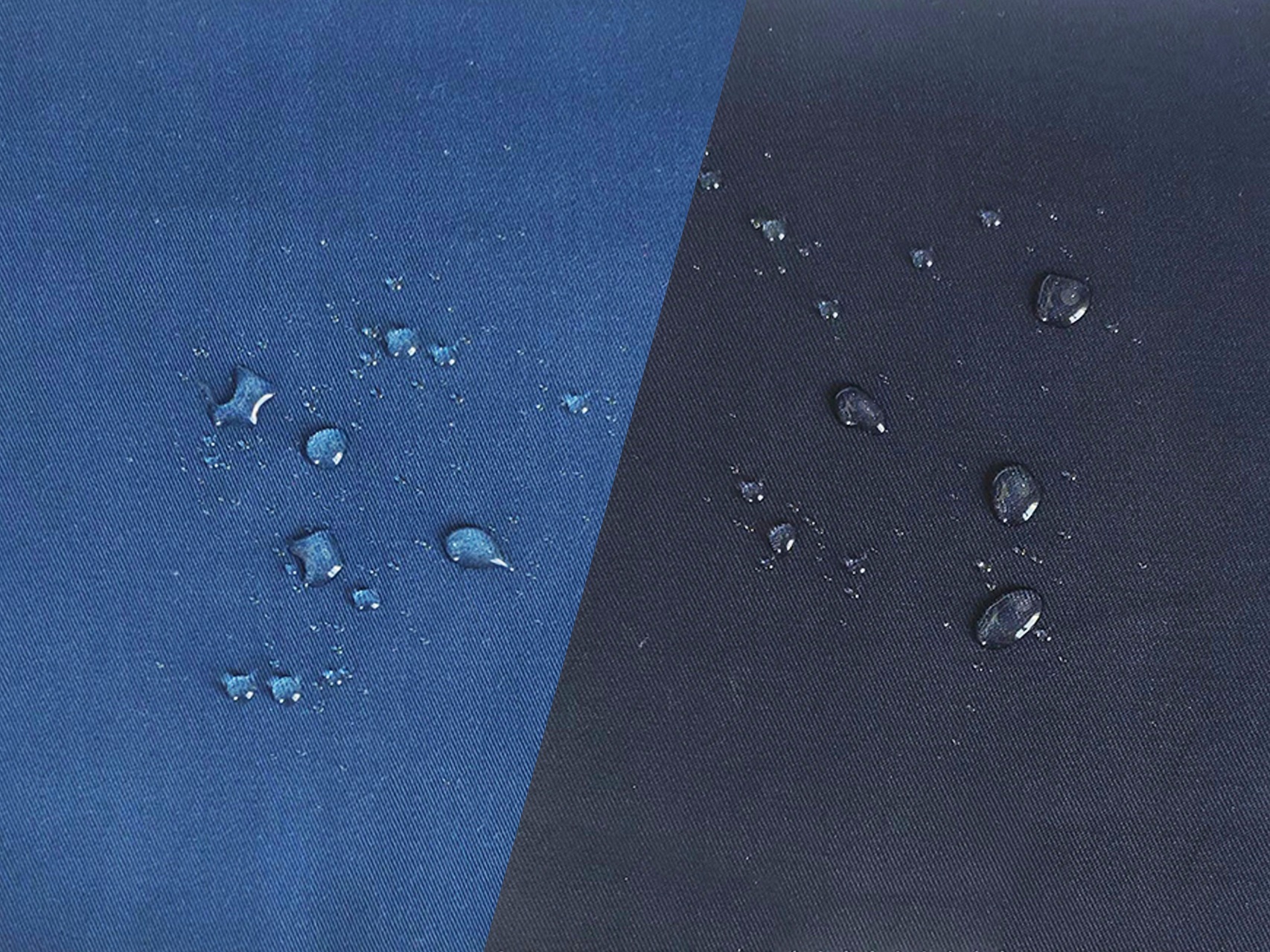
Flame-resistant fabrics aren’t born from a one-size-fits-all formula. When standard catalogs fall short, custom engineering steps in, blending material science with real-world demands. It’s where fiber blends, weave structures, and chemical finishes are calibrated not just to meet a rating, but to withstand the exact environment they’ll face—whether it’s an arc flash, molten metal splash, or chemical exposure. This isn’t about ticking boxes; it’s about crafting a second skin that protects without compromise.
The art lies in the details that don’t make the spec sheet—like how a fabric drapes after 50 industrial washes, or how it sheds sparks when a worker twists mid-action. Engineers sweat the small stuff: filament diameter, yarn twist, air permeability. They prototype, test, fail, and refine until the material performs in ways that off-the-shelf options can only envy. It’s a slow, deliberate process where comfort and durability aren’t afterthoughts but equal partners with safety.
True customization goes further, incorporating input from the people who wear the gear day in and day out. A welder might need sleeves that don’t ride up; a refinery worker might need lighter weight without sacrificing protection. These voices shape the engineering, turning a specification into a solution. The result isn’t just a fabric—it’s a purpose-built shield, woven with expertise and stitched with hard-earned knowledge.
Material Trade-Offs: Balancing Heat Protection, Breathability, and Budget
Choosing the right fabric for heat-protective clothing almost always means navigating a tricky triangle of priorities. High thermal resistance often comes from dense, heavy materials that trap air and block radiant heat—think thick aramid weaves or aluminized films—but those same qualities can turn a garment into a sweatbox. On the flip side, open-knit mesh or lightweight cotton blends let air circulate freely, which keeps you cooler, yet they offer next to nothing against high ambient temperatures or splashes. Then there’s the budget factor: advanced technical textiles that manage both breathability and protection can spike costs rapidly, making them impractical for large crews or frequent replacement cycles.
Off-the-shelf solutions frequently force you to compromise on at least one axis. A mid-range welding jacket might deliver decent spark resistance and moderate airflow, but wear it in front of a furnace all day and you’ll feel the heat creeping through the seams. Premium multilayer systems, with phase-change liners or moisture-wicking backings, do a better job of separating the two functions, yet they can easily double or triple the per-unit expense. Some operations try to split the difference by investing in high-spec outer layers and pairing them with cheap, replaceable inner shirts that handle sweat management—a practical hack that often flies under the radar of conventional procurement checklists.
The real art lies in matching the material to the specific rhythm of the work. A short-duration, high-exposure task might justify a less breathable but extremely heat-resistant aluminized apron, because the wearer won’t be in it long enough for moisture buildup to become dangerous. For extended shifts near moderate heat, a carefully selected cotton-rich blend with a looser weave can outperform pricier engineered fabrics if the primary threat is conductive contact rather than flash fire. Ultimately, the cheapest option isn't the one with the lowest sticker price—it's the combination that minimizes performance gaps without overengineering the problem, and that equation changes from one worksite to the next.
Quality That Lasts: Testing Protocols That Predict Real-World Performance
Our commitment to enduring quality begins where most product testing ends. Instead of relying solely on standard industry benchmarks, we’ve developed a suite of proprietary protocols that replicate years of everyday use in a matter of weeks. By subjecting every design to accelerated wear simulations, environmental stress chambers, and dynamic load cycles, we expose latent weaknesses long before they can surface in your daily routine. This approach ensures that our products don’t just meet theoretical specifications—they uphold their performance under the unpredictable conditions of real life.
We believe that true reliability can’t be claimed, only proven. That’s why our validation process goes beyond controlled lab environments. Our engineers incorporate real-world data collected from field usage patterns, climate variability, and user handling habits into iterative test matrices. From material fatigue analysis to full-system integration checks, every step is designed to answer one question: how will this hold up when it matters most? The result is a product line that withstands the rigors of time, not just a checklist of pass/fail criteria.
What sets our testing apart is its predictive nature. Rather than waiting for failures to occur, we actively provoke them in controlled scenarios to map out a product’s performance envelope. This allows us to refine materials, reinforce stress points, and tune mechanisms well in advance of production. When you choose one of our products, you’re not just buying a well-made item—you’re investing in the peace of mind that comes from knowing it has already survived the equivalent of years of demanding use, all before it ever reaches your hands.
Industry by Industry: Why FR Needs Are Never One-Size-Fits-All
A welding shop in Minnesota and a pharmaceutical cleanroom in North Carolina share little beyond a need for flame-resistant clothing—yet both would scoff at the idea of wearing the same gear. The arc flash threats that welders face daily demand heavy, multi-layered protection that would stifle a lab technician working with volatile solvents. Here, the hazard dictates the design: stiff leathers and aluminized weaves for radiant heat, versus lightweight, chemically inert fabrics for splash protection. Ignoring these nuances isn't just uncomfortable; it turns safety into guesswork.
Then there’s the hidden variable of wear-life. A lineman climbing poles in the Pacific Northwest contends with moisture, abrasion, and UV exposure that degrade FR properties far faster than the occasional spark. Contrast that with an electrician in a data center, whose primary concern is static dissipation alongside arc flash defense. The one-size-fits-all approach often results in garments that fail too early in harsh environments, or waste money on over-engineered protection where it isn’t needed. Smart programs map the actual work cycle—not just the hazard—to the fabric technology.
Even culture and fit can’t be overlooked. Oil rig crews often prefer lightweight FR knits that move with them during 12-hour shifts, while foundry workers accept heavier weaves for thermal insulation. When safety managers treat FR like a commodity, they get resistance—garments left in lockers, sleeves rolled up, complaints that spike during hot months. Real compliance comes when the clothing feels like it was built for the job, not for a generic safety poster. That kind of alignment only happens when you look at each industry’s patterns, not just its regulations.
Partnering Smart: What to Demand from an FR Fabric OEM
When you’re sourcing flame-resistant fabrics, the OEM you choose can make or break your product’s compliance and durability. Beyond the spec sheet, you need a partner who understands that FR performance isn’t just a coating—it’s engineered into the fiber, the weave, and the finish. Demand full transparency into their supply chain: where the base textiles come from, how they treat them, and whether their testing goes beyond the bare minimum. A reliable OEM will have in-house labs and be willing to share batch-level test reports without hesitation.
Your OEM should also bring more than manufacturing capacity to the table. Look for technical support that helps you navigate the maze of industry standards—NFPA 2112, ASTM F1506, EN ISO 11612—and tailors solutions to your specific end-use. If they can’t explain how their fabric behaves after 50 industrial launderings or in real arc flash conditions, keep looking. The right partner proactively suggests alternatives that could cut cost without compromising safety, and they stand behind their work with a warranty that feels like a promise, not a loophole.
Finally, press them on innovation and agility. Are they developing inherently FR blends that stay soft and breathable? Can they handle short runs for niche applications without a huge premium? A forward-thinking OEM won’t just sell you fabric—they’ll invest in understanding your market challenges, from evolving worker comfort expectations to sustainability mandates. Their lead times and communication style during sampling will tell you everything about what it’s like to work with them when a deadline is breathing down your neck.
FAQ
It starts with understanding the hazard environment. For flash fire, we look at NFPA 2112 compliance; for arc flash, ASTM F1506. But beyond that, you need to consider comfort, durability, and launderability. The wrong choice can lead to compliance failures or poor user adoption.
An OEM offers flexibility in weight, weave, and finish that off-the-shelf just can't match. You can engineer the fabric to meet specific performance targets while reducing excess material cost. Plus, you get direct collaboration on revisions if something doesn't work out during prototyping.
Inherent fabrics, like aramids, have flame resistance built into the fiber. They're permanent but pricier. Treated options, such as FR cotton, undergo chemical treatment that may degrade with heavy washing. For long-term industrial use, inherent often wins; for budget-conscious programs with limited wear cycles, treated can be adequate.
It's a tricky trade-off. Lighter weights improve airflow but can compromise thermal protection. We use strategic yarn blends and unique weaves to create air channels without sacrificing the protective barrier. Sometimes adding a moisture-wicking finish can also help keep the wearer cool without affecting the FR properties.
Yes, and this catches people off guard. Some dyes and prints can interfere with the FR chemistry or add fuel. We test every new color variant. It's best to work with dyes that are known to be FR-compatible and to run small-scale combustion trials before full production.
Look for transparency in their supply chain and third-party testing reports. A reliable partner will let you audit their treatment baths and weaving processes. They should also have a history of batch-to-batch consistency and be able to provide detailed technical data sheets for every lot.
Conclusion
The science of flame-resistant (FR) fabric begins at the molecular level. Fiber chemistry dictates how a material responds to heat—some char and swell to form an insulating barrier, while others release quenching gases. A skilled OEM understands these mechanisms and engineers proprietary blends, often combining aramid fibers with modacrylic or FR viscose, to meet precise safety standards without sacrificing comfort. The real art, however, lies in custom FR fabric engineering. Rather than forcing an off-the-shelf solution into a unique application, an experienced partner tailors yarn composition, weave structure, and finish chemistry to balance competing demands: heat protection, breathability, and budget. Achieving this triangle without compromise requires iterative prototyping and deep knowledge of how fiber, fabric, and treatment interact under industrial laundering or extreme conditions.
Beyond the bench, rigorous testing protocols separate durable FR performance from short-lived effectiveness. Methods like thermal manikin tests, vertical flame spread, and TPP (Thermal Protective Performance) ratings predict real-world behavior, ensuring that protective qualities endure through wear, tear, and repeated laundering. Yet no single FR solution suits every sector; oil and gas workers face flash fires, electricians encounter arc flashes, while foundry operators need resistance to molten metal splash. A forward-thinking OEM navigates these nuanced needs, providing not just a product but a partnership. When selecting a manufacturer, demand transparency in testing data, agile R&D capabilities, and a collaborative approach that treats your safety challenges as its own—because in high-risk environments, reliability in your FR fabric choice is not a luxury but a necessity.
Contact Us
Contact Person: Sandy
Email: [email protected]
Tel/WhatsApp: 86150 8310 5120
Website: https://www.frdrotex.com