

Flyknit Bag Factory: A Look Inside the Making of Lightweight, Durable Bags
2026-09-09
What makes a bag feel weightless in your hand but survive being tossed across airport floors? The answer lies not in any single material, but in how it’s made. Flyknit bag manufacturing has quietly reshaped expectations for lightweight, durable carry goods—and few factories understand this better than YONGFENG. Instead of relying on thick padding or heavy coatings, the process uses precision knitting to create structural zones that flex, breathe, and resist abrasion where it matters most. This inside look takes you through the production floor, from yarn selection to final inspection, revealing why a well-made Flyknit bag is more than just a trend. If you've ever wondered how “lightweight” and “durable” end up in the same sentence, you're in the right place.
Unwinding the Tension That Shapes a Featherlight Bag
Every featherlight bag begins its life as a web of opposing forces—stitches pulled tight so seams don't fray, panels stretched over forms until the shape holds. But what makes it truly light isn't just the ounce-count of the fabric; it's how the maker learns to release the hidden strain. The tension you can't see lives in the corner gussets, the strap anchors, the way a zipper tape wants to curl against its will. If you chase lightness only by swapping in thinner material, you'll end up with a bag that sags or tears. The real craft is in letting go of the right threads at the right moment.
Think of the bias edge of a curved pocket. Cut on the grain, it fights the sewing foot and puckers under pressure. A novice tightens every dial, sets the stitch length to micro, and ends up with a rigid seam that feels like cardboard. An experienced hand might steam that curve, finger-press it open, or even cut a tiny notch to let the fibers settle. Those micro-decisions—where to ease, where to clip, where to trust the material's own memory—are what separate a bag that floats on your shoulder from one that feels like it's holding its breath.
There's also the tension of expectation: we assume a light bag must be delicate, so we overbuild it. Extra interfacing, double-folded hems, reinforcing bartacks at every stress point. Before long, the bag is heavier than the one it was meant to replace. Unwinding that tension means asking, "What does this seam actually need to survive?" Often the answer is less than we think. A rolled hem on medium-weight nylon holds fine without fusible tape. A single row of topstitching, properly tensioned, outlasts three rows of choked, thread-heavy stitching. The featherlight bag isn't achieved by subtraction alone—it's found in the calm confidence of knowing precisely where strength must live and where it can simply breathe.
No Scissors and No Waste as a Single Spool Becomes a Bag
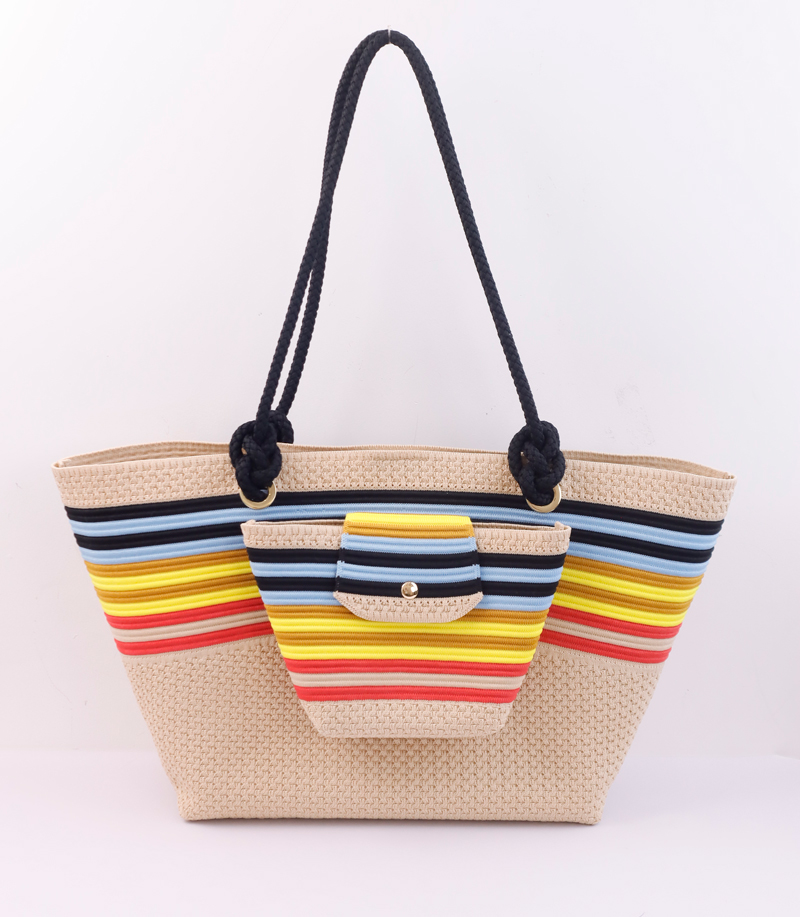
Imagine a single spool of thread that never needs cutting. As it unwinds, it naturally forms the body of a bag, loop by loop, without leaving a single scrap behind. There's no measuring, no trimming, no pile of leftover bits—just a continuous shape emerging from one uninterrupted strand.
The process feels almost like watching a spider spin its web. The spool feeds directly into the construction, each pass tightening the structure and defining the silhouette. Because nothing is removed, every inch of material serves a purpose, and the result is a bag that carries its own origin story in every fiber.
What makes this approach stand out is how quietly it challenges our assumptions about making things. We're used to waste as an inevitable byproduct, but here the absence of scissors becomes a design statement. The bag isn't just an object; it's proof that thoughtful engineering can turn a single resource into a complete, functional form with zero leftovers.
Why Durability Testing Goes Far Beyond Dropping the Bag
When most people think about durability testing, they picture a bag being tossed off a roof or slammed onto concrete. But real endurance goes far beyond that single dramatic impact. A bag that survives a drop might still fail after months of daily use, because the true enemies are quieter: zipper teeth wearing down from hundreds of open-close cycles, shoulder straps fraying under constant friction, and fabric slowly degrading from sun exposure and humidity. These accumulated stresses reveal weaknesses that no single drop test can expose.
A solid testing regimen includes repeated abrasion against rough surfaces, simulated rainfall and UV exposure to check for fading or brittleness, and mechanical arms that yank zippers and buckles thousands of times in a row. Some labs even cycle bags through extreme temperature swings, from freezing cold to desert heat, to see if glue joints crack or stitching loosens. Each of these procedures takes weeks or months, but they are what separate a bag that lasts a season from one that lasts a decade.
Equally important is testing for how people actually misuse their gear. Users overload compartments, drag bags across airport floors, and hang them from hooks that were never designed for that weight. A durability test that only follows the instruction manual misses the point. The best testing deliberately pushes bags into awkward, off-label scenarios, because true durability means staying intact not in a sterile lab, but in the unpredictable chaos of everyday life.
The Quiet Precision of the Knitting Machines Behind Each Panel
The knitting machines work with a stillness that belies their complexity. Each carriage pass draws yarn through hundreds of needles in one fluid motion, yet the only sound is a soft metallic whisper. There is no rattle of loose parts, no uneven rhythm—just a steady, near-silent cadence that comes from bearings tuned to micron tolerances and cam tracks polished to a mirror finish. This quiet is not an accident but a byproduct of precision engineering, where every moving part aligns within a fraction of a millimeter. It means the panel taking shape beneath the needles does so without micro-shocks or tension spikes, allowing the stitch formation to remain perfectly uniform from cast-on to bind-off.
That uniformity is what separates a machine-knit panel from a hand-knit one, not merely in speed but in the invisibility of variation. Human hands, no matter how skilled, introduce minute changes in yarn tension with every stitch. A well-maintained knitting machine eliminates that variable entirely. The yarn is metered through a positive feed system, so each loop receives exactly the same length of fiber. The needle beds are aligned to within a few hundredths of a degree, and the sinkers move in lockstep with the needles. The result is a fabric surface that reads as almost architectural in its consistency—row after row of identical loops, each one indistinguishable from its neighbor. It is a quiet kind of perfection, the kind you notice only when you run your hand across the panel and feel no ridges, no thin spots, no places where the yarn has been stretched or slackened.
Behind every panel lies a machine that has been dialed in through hours of incremental adjustment. The technicians who tend these machines speak less about horsepower and more about balance: the balance between yarn tension and needle gauge, between carriage speed and stitch depth, between ambient humidity and fiber lubrication. A single degree of temperature change can alter yarn friction by enough to create a visible line in the fabric, so the machines are often housed in climate-controlled rooms where the air itself is monitored. This level of care means that the final panel does not announce the machinery that made it. There is no trace of struggle, no mechanical signature. There is only a smooth surface that seems to have arrived fully formed, as though the yarn knew where to go on its own. That illusion of effortlessness is the true measure of the machine's quiet precision.
How Digital Patterns Turn Custom Orders Into Bags Fast
When a customer submits a custom order, the chosen dimensions, pocket layout, and strap length are fed directly into a digital pattern file. The software adjusts the base template on the fly, recalculating seam allowances and notches without a human redrawing anything. That eliminates the usual back-and-forth between design and production.
Because the pattern is already digitized, cutting machines read the updated file immediately. A one-off bag in an unusual size leaves the cutting table just as quickly as a standard model. There is no need to print paper patterns, tape them together, or hand-trace adjustments, which used to eat up hours.
Digital patterns also reduce costly mistakes. Since every panel is generated from the same set of rules, mismatched edges or wrong hole placements become rare. For small workshops, this means accepting last-minute changes or rush orders without derailing the rest of the queue.
The Human Checks That Reject Nearly Perfect Flyknit Bags
On the factory floor, a Flyknit bag passes through a dozen automated scanners before it ever reaches a pair of human eyes. The machines measure thread tension, weave density, and seam alignment down to the millimeter. Yet every shift, a small pile of bags sits beside the final inspection station, each one tagged with a handwritten note: loose pull near the zipper, stray fiber on the interior pocket, a knit pattern that shifts half a stitch too early. These are the bags the scanners called flawless.
The inspectors who reject them aren't looking for defects the machines can catch. They run their thumbs along the edges of the knit panels, feeling for a stiffness that signals uneven yarn tension. They hold the bag up to a window and tilt it slowly, watching how light moves across the weave for any subtle puckering. Sometimes they unzip and rezip the main compartment a dozen times, listening for a whisper of resistance that no torque sensor would flag. It's the kind of judgment that comes from years of handling thousands of nearly identical bags, learning what perfect actually feels like in the hand.
A bag that reaches the reject pile might have passed every measurable standard on the production sheet. But the human check exists precisely because perfection isn't a specification. It's a texture, a slide, a sound. When an inspector sets a bag aside, they're not just rejecting a product; they're defending a reputation built on the difference between almost right and right. And that difference is invisible to everything except a trained hand and a patient eye.
FAQ
Flyknit is a digitally engineered knitting process originally popularized in sneakers. In the bag factory, the same idea is applied to weave the entire body of a bag from a single continuous yarn, so there are no cut-and-sew seams that might fray or split over time.
Because the knitting process lets the factory place more yarn only where strength is needed and less everywhere else. A conventional bag might use several layers of fabric plus foam padding; Flyknit can integrate these zones in one thin layer, shaving off grams without losing toughness.
The durability comes from the tight interlocking loops of high-tenacity yarn and the lack of stitching holes. Stress tests at the factory involve repeated abrasion against rough surfaces and yanking the straps thousands of times, and most failures happen at hardware attachment points rather than the knit fabric itself.
Yes, and this is one of the factory's favorite parts. Since the design is fed to the knitting machines digitally, switching from a solid gray to a multicolor gradient or a geometric pattern takes just a few minutes of reprogramming, with almost no material waste from cutting odd shapes.
Knit fabric is naturally porous, so most Flyknit bags receive a post-knit coating or lamination. The factory applies a clear polyurethane membrane on the inside or a durable water repellent treatment on the outside, then tests the bags under simulated rain showers for at least thirty minutes.
Very rigid structures, like stiff laptop compartments or hard-shell cases, still need separate inserts or frames. The knitting process excels at flexible, form-fitting shapes, but it cannot easily replicate the solid, crush-proof panels found in some hard-sided luggage.
Large circular knitting machines feed yarn from overhead spools into a tubular form that is then steamed and pressed into the bag's silhouette. Workers attach zippers, straps, and handles by hand or with ultrasonic welding, while the main body stays seamless from start to finish.
It tends to be, mainly because the one-piece knit produces almost no off-cut waste. The factory also recycles yarn scraps from setup runs and has shifted some lines to use recycled polyester yarn, though the energy use of the knitting machines is still higher than simple fabric cutting.
Conclusion
Walk into the Flyknit Bag Factory and the first thing you notice is what's missing: no cutting tables, no scrap bins, no stack of half-finished panels. A single spool of yarn feeds directly into a knitting machine, where tension is constantly adjusted to give the fabric just enough give and snap. That careful unwinding is what makes the finished bag feel featherlight without turning flimsy. The machines themselves run with a quiet, almost meditative precision, each pass of the needle building a panel from the ground up. Because the bag is knitted as one continuous shape rather than cut and sewn, there is no waste and no weak seam waiting to fail.
Custom work moves through the same floor at surprising speed. Digital patterns are sent straight to the knitting machines, letting a one-off colorway or size jump into production without retooling. Yet nothing leaves the factory on speed alone. Durability testing here goes far beyond a standard drop test: bags are stretched, twisted, rubbed against rough surfaces, and loaded with weight to simulate years of daily abuse. Even after that, human inspectors take a final pass. They reject bags that look flawless to a casual eye but show faint tension shifts or knit inconsistencies under bright light. The result is a rare product: ultra-light, remarkably tough, and made with almost no waste.
Contact Us
Contact Person: Mr Deng
Email: [email protected]
Tel/WhatsApp: +86-18926872657
Website: https://www.uniyongfeng.com/