

Gas Generator Set Manufacturing Concern: Key Factors Behind Reliable Power Generation
2026-08-29
What separates a gas generator set that runs for decades from one that fails in its first season? The answer rarely appears on a spec sheet—it’s embedded in the manufacturing process itself. At Hichai Power, the key factors behind reliable power generation aren’t left to chance; they’re engineered into every unit from the first weld to the final load test.
Precision Machining That Keeps Gas Generator Sets Running Longer
Every gas generator set lives or dies by the quality of its mating surfaces and bore tolerances. A few microns of deviation in a cylinder liner or crank journal can turn a steady 1,800 rpm into a slow grind of premature wear. Shops that hold true position within 0.005 mm and verify surface roughness under 0.4 Ra aren't just chasing numbers; they're eliminating the micro-movements that chew up bearings and seals long before their rated hours.
The real payoff shows up in how a set behaves under load. Precision-honed valve guides, balanced rotating assemblies, and flatness-checked deck surfaces keep combustion pressures stable and heat transfer even. When those details are right, the unit doesn't fight itself at every stroke. Operators notice fewer hot spots, less oil consumption, and no mysterious vibration that forces an early teardown.
None of this is glamorous work. It's slow dial indicators, repeated thermal cycles, and rejecting parts that are close enough. But that discipline is exactly why some generator sets log 30,000 hours without a major overhaul while others need new heads at half that. Precision machining isn't a line item; it's the quiet reason the lights stay on.
Alloy Selection for Long-Term Reliability in Demanding Environments
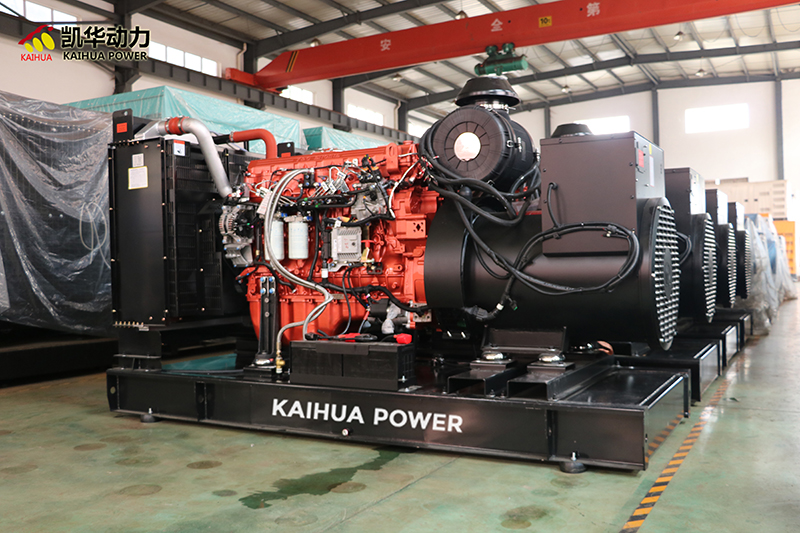
Selecting alloys for components that must survive years of uninterrupted service in aggressive settings is rarely a straightforward affair. The combined effects of corrosive media, fluctuating temperatures, and cyclic mechanical loading can quickly expose the weaknesses of a material that performs admirably in a laboratory bench test. Long-term reliability hinges on understanding how these stresses interact over time, something that abbreviated testing often fails to capture. Engineers who overlook this systemic view may find themselves replacing parts far sooner than anticipated.
One of the most common missteps is prioritizing a single impressive property—such as high tensile strength or exceptional resistance to pitting—while neglecting the alloy's behavior under the actual service conditions. For instance, a stainless steel that resists chloride attack at room temperature might suffer from sigma phase embrittlement after prolonged exposure to elevated temperatures. Likewise, an alloy with superb creep resistance could be catastrophically vulnerable to stress corrosion cracking in the presence of trace contaminants. A truly robust selection process weighs microstructure stability, passivation layer integrity, and fatigue thresholds as interconnected variables rather than isolated checkboxes.
Beyond laboratory data, field-proven performance and predictive modeling play essential roles in narrowing down candidates. Reviewing case histories from similar operating environments—whether offshore platforms, chemical processing plants, or aerospace propulsion systems—can reveal failure modes that no accelerated test will replicate. Pairing this empirical knowledge with computational thermodynamics and finite element analysis allows for a more nuanced trade-off between upfront material cost and lifecycle expenses. In demanding applications, the cheapest alloy that meets the spec sheet is rarely the most economical choice over a decade of service.
Why Multi-Stage Load Testing Matters Before a Unit Leaves the Factory
When a generator set or engine-driven package rolls off the assembly line, a single full-load run rarely tells the whole story. Multi-stage load testing steps the unit through a controlled sequence—cold start, partial load, rated load, and brief overload—so that weaknesses in fuel delivery, cooling, or voltage regulation show up before shipping. Relying on one test point leaves too many borderline conditions unproven.
Each stage stresses different components. The initial no-load phase exposes idle stability and governor response, while stepping up to 50% and 75% load reveals how the unit handles thermal expansion and fuel mapping changes. The final rated-load soak often brings hidden problems to the surface, such as loose connections that only fail once everything reaches operating temperature. Without these intermediate steps, a unit can pass a quick factory check and still fail within hours on site.
Multi-stage testing also builds a record of performance that field technicians can compare against later. If a unit behaves differently after installation, the factory baseline helps separate transport damage from latent defects. In practice, this reduces start-up delays and keeps warranty disputes from turning into long troubleshooting sessions.
Smart Governors and the Art of Stable Frequency Control
For decades, governors on synchronous generators have done the quiet work of keeping grid frequency from drifting too far. The smart governor idea builds on that legacy but replaces rigid mechanical droop settings with adaptive digital logic. Instead of a fixed response curve, these devices sample frequency multiple times per cycle, compare it against a dynamic reference, and adjust fuel or steam valves in near real time. The result is a system that can absorb sudden load swings without overshooting as much as older designs.
What separates a smart governor from a merely digital one is its ability to learn the local grid's behavior. In a plant connected to a weak network or one with high renewable penetration, frequency oscillations can be unpredictable. A smart governor uses model-free controllers, such as fuzzy logic or neural networks, to tune its droop and damping parameters on the fly. This keeps the unit's output in harmony with neighboring machines, reducing the need for manual recalibration after each disturbance. The art lies in balancing fast response against the risk of hunting—something only well-trained algorithms can manage consistently.
Field trials in islanded microgrids have shown that smart governors can maintain frequency within ±0.1 Hz during step load changes that would push conventional units past ±0.3 Hz. The key is not raw speed but coordinated foresight: by sharing voltage angle and frequency data over low-latency links, these governors anticipate a swing before it fully develops. This preemptive adjustment avoids the overshoot-and-correct cycle that often plagues droop-only systems. In practice, that means fewer generator trips, longer equipment life, and a grid that recovers from disturbances with less drama.
Cooling System Design Choices That Prevent Overheat Failures
Most overheating problems trace back to a handful of design decisions that get overlooked until a prototype fails on the bench. One of the most overlooked is airflow path management: instead of simply adding bigger fans, engineers should first seal every gap between the intake and exhaust zones. Uncontrolled recirculation lets hot air loop back into the cooler, stealing capacity without any warning. Simple baffles or foam gaskets often fix this better than a more powerful blower ever could.
Another critical choice is material and interface selection. The thermal resistance at the joint between a heat source and its heatsink commonly dwarfs the resistance of the heatsink itself. Using a phase-change pad or a well-specified thermal grease, applied with controlled pressure, can drop operating temperatures by double digits. Yet many designs still rely on a dry, uneven contact that looks fine in CAD but behaves poorly under thermal cycling.
Finally, redundancy in temperature sensing and response deserves more attention. A single thermistor placed far from the hot spot can report a comfortable temperature while a local hotspot climbs toward failure. Distributing multiple sensors and linking them to a graduated response—throttling performance first, then shutting down—prevents thermal runaway without resorting to aggressive, noisy cooling that hurts user experience.
What Remote Installations Teach About Building More Reliable Gas Generators
Remote installations expose gas generators to conditions that few urban settings ever see. Dust storms clog air intakes within hours, temperature swings stress seals and gaskets, and fuel delivered by drum often carries sediment or water. These are not theoretical concerns—they're the daily reality for mines, offshore platforms, and off-grid communication towers. So when a generator survives years in that kind of environment, it proves the design choices that actually matter for long-term dependability.
One clear lesson is that reliability comes from reducing the number of things that can go wrong during routine operation. That means oversized cooling systems that tolerate blocked radiators, electronic governors that compensate for poor fuel quality, and fewer exposed moving parts that need lubrication. Remote sites also push manufacturers to build in remote monitoring from the start. A sensor that detects rising exhaust temperature or irregular vibration can trigger a shutdown before a minor issue becomes a seized engine—essential when a technician is three days away by helicopter.
The same principles translate directly to standby and prime power generators in more accessible locations. If a unit can run unattended for months in a desert or arctic outpost, it will handle a hospital backup or a data center's continuous load without constant attention. The harshness of remote work acts as an accelerated test bed, filtering out weak designs and leaving only the engineering that keeps gas generators running when nobody is there to fix them.
FAQ
It usually comes down to how the manufacturer handles thermal stress and vibration. Sets built for harsh duty often include reinforced engine mounts, high-temperature-rated wiring, and cooling systems sized for continuous operation rather than just peak output. Factory-run thermal cycling tests catch weak points before units ship.
The alternator determines voltage stability and harmonic distortion. A poorly wound or under-insulated alternator can cause flicker and damage sensitive loads. Look for units with Class H insulation, sealed bearings, and excitation systems that hold voltage within tight tolerances during sudden load changes.
Load bank testing reveals issues that only appear under real electrical stress, like overheating connections, governor hunting, or uneven cylinder loading. Reputable plants run every set at 100% load, then step it to 110% and introduce load steps to verify recovery time and frequency stability.
Gas quality varies widely by region, so fuel trains need robust filtration, pressure regulation, and knock detection. Engines with adjustable air-fuel ratio control and condensate management tend to tolerate lower-quality gas without excessive valve wear or detonation. That flexibility prevents premature failures.
Look for accessible oil filters, drain valves, and inspection ports without removing major assemblies. Modular control panels and common parts across the product range also reduce downtime. A design review checklist should include whether routine maintenance can be done by one technician in under an hour.
Controls act as both brain and protective layer. They monitor oil pressure, coolant temperature, overspeed, and voltage imbalance, then shut down the set before damage occurs. Advanced systems also log data for trend analysis, catching slow degradation like rising exhaust temperatures before it becomes a catastrophic failure.
Cold solder joints in wiring harnesses, improperly torqued fasteners, and misaligned coupling between engine and alternator are frequent culprits. These are less about design and more about production discipline. ISO 9001-certified plants with documented torque checks and end-of-line vibration analysis tend to have fewer field failures.
Gas engines often run hotter and have different heat rejection profiles due to combustion characteristics. If the radiator, fan, and coolant flow are not matched to the engine's specific heat load, cylinder heads can crack or valves can warp. Manufacturers that conduct computational fluid dynamics modeling and hot-weather testing deliver sets that withstand high ambient temperatures.
Conclusion
Reliable power generation from a gas generator set is not the result of a single breakthrough but a series of manufacturing decisions that compound over time. Precision machining keeps tolerances tight across rotating assemblies, reducing vibration and uneven wear that silently shorten engine life. Equally important is alloy selection: components exposed to high heat, corrosive exhaust gases, or coastal humidity need materials chosen for specific failure modes, not just generic stainless steel. Before any unit ships, multi-stage load testing pushes the generator through stepped loads and transient conditions to catch weaknesses that only appear under stress. This combination of careful metalwork and deliberate material pairing forms the foundation of long service intervals.
Control and thermal management are just as critical once the unit leaves the factory. Smart governors continuously adjust fuel delivery to hold frequency within tight limits, even when load demand shifts suddenly, preventing damaging speed swings. Cooling system design has to account for more than airflow; coolant passage geometry, pump sizing, and radiator placement all determine whether a generator can run at full rated output in a hot, dusty environment without overheating. Feedback from remote installations—where maintenance visits are rare and ambient conditions are harsh—often drives the next round of design refinements, turning field failures into improvements that make the next generation of gas generators more robust than the last.
Contact Us
Contact Person: Ms. Lu
Email: [email protected]
Tel/WhatsApp: 8618917899306
Website: https://www.hichaipower.com