

Halogenated Aromatic Intermediate CDMO: Overcoming Synthesis and Scale-Up Hurdles
2026-09-26
Synthesizing halogenated aromatic intermediates at scale often feels like navigating a labyrinth of hazardous reagents and stubborn chemistry. Yet these compounds are essential building blocks for pharmaceuticals, agrochemicals, and advanced materials. The real challenge isn't just making them in the lab—it's doing so reproducibly, safely, and economically when moving from grams to kilograms. DSL Chemicals has developed a specialized CDMO approach that tackles these hurdles head-on, combining deep halogenation expertise with robust process engineering. In this post, we'll explore the most common synthesis and scale-up obstacles for halogenated aromatic intermediates and the practical strategies that turn them into manageable steps.
Selective Halogenation on Complex Aromatic Rings: Finding the Right Conditions
When dealing with complex aromatic rings, the challenge isn't just getting a halogen in place—it's making sure it lands on the right carbon without disturbing the rest of the molecule. The selectivity of halogenation depends heavily on the electronic and steric environment of each ring position. Traditional electrophilic aromatic substitution follows predictable rules for simple substrates, but once you introduce multiple substituents, heteroatoms, or fused ring systems, those rules start to fray. A halogen that would normally go ortho or para to an activating group might be redirected by a bulky neighbor or a deactivating group elsewhere on the ring. Finding the right conditions means balancing reactivity with precision, often requiring a shift from classic Lewis acid catalysts to more tailored approaches.
Temperature, solvent, and the halogen source itself all play critical roles in steering the reaction. For instance, using N-bromosuccinimide in a polar aprotic solvent can favor radical pathways under light, whereas molecular bromine with iron tribromide pushes electrophilic substitution. But complex rings often demand less obvious choices: iodine monochloride in acetic acid might give para selectivity where iodine alone fails, or a fluorinating agent like Selectfluor could bypass the harshness of elemental fluorine. Sometimes the key is slowing the reaction down—lower temperatures can freeze out the more reactive but less desired positions, allowing the thermodynamically favored isomer to dominate. Other times, adding a temporary directing group or exploiting a pre-existing heteroatom coordination can lock the halogen into an unconventional spot.
There's no universal recipe; each scaffold asks for its own screening. A pyridine ring, for example, behaves very differently from a naphthalene or an indole, and what works for chlorination might completely fail for iodination. Practical chemists often start with a small set of conditions—varying the electrophile, solvent polarity, and temperature—then monitor the isomer ratio by LC-MS or NMR. Subtle tweaks, like switching from dichloromethane to acetonitrile or adding a pinch of silver triflate, can flip selectivity from 3:1 to 20:1. The goal isn't just to find any conditions that work, but to find the right conditions that hold up on scale, tolerate the rest of the molecule, and give reproducible results without excessive purification.
Exotherm Management in Halogenated Aromatic Scale-Up
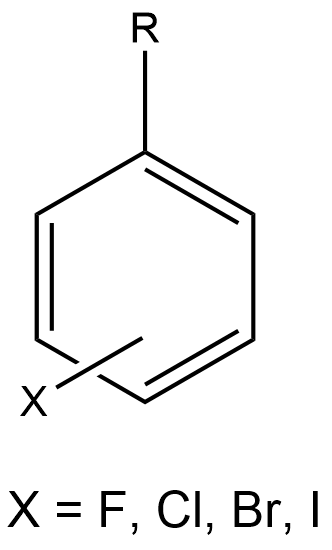
Scaling up a halogenated aromatic reaction often brings the heat profile into sharp focus, especially when the exotherm no longer behaves as a gentle drift. The presence of halogens can suppress certain decomposition pathways, yet the accumulated thermal energy still risks pooling in pockets where stirring struggles to reach. A practical starting point is mapping the heat release against the addition rate, not just the bulk temperature, because local hotspots may form well before the average reading climbs.
One approach that has proven reliable is staged addition with a tuned cooling loop, rather than relying solely on jacket temperature. By splitting the reactive component into smaller charges and watching the rate of heat output after each charge, operators can hold the exotherm within a band that avoids triggering side reactions like dehalogenation or runaway polymerization. In halogenated systems, the boiling point of the solvent often shifts under pressure, so vent sizing and relief design need to account for the extra vapor load that a brief thermal spike can generate.
At larger volumes, even a modest excess of heat per unit mass translates into a significant temperature rise because the surface-to-volume ratio shrinks. This means the cooling jacket alone may lag behind the actual reaction front. Installing an internal coil or using a reflux condenser with a defined condensation capacity can act as a second layer of heat removal. Many experienced teams also run a simple calorimetric check on a small batch before committing to full scale, confirming the maximum rate of heat generation rather than trusting predictions from bench-scale runs that never felt the same thermal inertia.
Isomer Control: Tackling Byproduct Profiles in Halogenated Intermediates
Halogenation routes toward substituted aromatic or heteroaromatic intermediates rarely stop at a single product. The halogen can land at different ring positions, giving ortho, meta, or para isomers that complicate downstream chemistry. An unwanted isomer is often more than a yield loss; it can participate in later coupling reactions, alter crystallization behavior, or force extra purification steps. Because these byproducts frequently share similar polarity and boiling points, separating them at scale is rarely as simple as adjusting a solvent gradient.
Controlling that isomer distribution begins with the character of the halogenating agent and the electronic profile of the substrate. Weakly coordinating solvents, tailored Lewis acids, and carefully chosen N-halogen reagents can shift regioselectivity without resorting to protecting groups. In other cases, a two-step sequence—halogenation followed by selective dehalogenation or isomerization—offers a more practical route to the desired intermediate than attempting a direct selective halogenation. Tracking the byproduct profile early, before the process is locked, tends to save more time than optimizing the final purification.
Handling Reactive Halogen Species: Safety Beyond the Fume Hood
The fume hood handles what you can see, but reactive halogens demand planning for what travels. Chlorine, bromine, and interhalogen compounds like iodine monochloride don't just sit in flasks; they corrode connections, permeate tubing, and accumulate in low spots. Before opening a container, check that secondary containment is actually halogen-resistant—many plastic trays craze or crack after repeated exposure. Keep a dedicated quench bath (e.g., sodium thiosulfate or bisulfite solution) within arm's reach, not across the lab, because a dropped bottle of bromine doubles its vapor hazard in the seconds it takes to cross the room.
Storage is where most reactive halogen incidents begin. Light can slowly convert stored chloroform or bromine mixtures into phosgene or HBr pressure, turning a forgotten cabinet bottle into a projectile. Store halogens away from amines, alcohols, and even some metals—aluminum and titanium can react violently with wet chlorine or bromine. Use vented caps only where appropriate, and label the bottle with the date it was opened; older containers of hypochlorite or N-halosuccinimides can build oxygen pressure and pop. Regular checks of seals and cap liners matter more than a fume hood's airflow, because a slow leak in a closed cabinet reaches your breathing zone long before the hood alarm triggers.
Emergency response for reactive halogens needs a plan that doesn't depend on the hood. If a vial of bromine or iodine monochloride shatters on the floor, pulling the sash down does nothing to stop the vapor rolling under the door. Pre-stage spill kits with inert absorbents (vermiculite, sand) and neutralizing agents, and make sure everyone knows that water is not a universal first choice—adding water to liquid bromine increases volatilization and spreads the hazard. Practice a \"leave and isolate\" drill: close the area, shut off general ventilation if safe, and wait for trained responders with self-contained breathing apparatus. The hood is a tool, not a boundary; the real safety margin comes from engineered storage, secondary containment, and rehearsed response.
From Lab Curiosity to Commercial Reality: Process Robustness in CDMO Projects
A molecule that behaves beautifully in a glass flask can turn temperamental inside a 10,000-liter reactor. Pressure drops, mixing dead zones, and thermal gradients rarely announce themselves in early development, yet they dominate late-stage outcomes. Contract development and manufacturing organizations (CDMOs) that treat scale-up as an afterthought end up chasing deviations instead of delivering batches. Robustness, in this context, means designing a process that tolerates normal operational variance without drifting out of specification—no heroics, no repeated reworks, just predictable chemistry.
The gap between a published synthetic route and a plant-ready procedure is often wider than sponsors expect. Small-scale optimizations optimize for purity and yield; commercial-scale production optimizes for reproducibility and safety. A truly robust CDMO process anticipates raw material lot variability, solvent recycle quality, and equipment limitations across multiple sites. It also builds in analytical triggers that flag subtle shifts—like a 2% change in impurity profile—before they become batch failures. This proactive mindset converts laboratory curiosity into a manufacturing asset, not a recurring source of supply-chain anxiety.
Commercial reality demands that processes work the first time, every time, under conditions that are rarely ideal. Operators change shifts, reactors age, and starting materials arrive from new vendors. Robustness means those variables do not dictate whether a product meets release criteria. CDMOs achieve this through systematic stress testing, deliberate parameter ranges rather than fixed setpoints, and documentation that captures why a limit exists, not just what the limit is. When that discipline is embedded early, the transition from R&D to commercial supply feels less like a cliff and more like a controlled handoff.
When Off-the-Shelf Catalysts Fail: Custom Solutions for Halogenated Aromatics
Standard palladium and nickel catalysts often lose activity when faced with electron-poor or sterically hindered halogenated arenes. The carbon–halogen bond, especially C–Cl and C–F, resists oxidative addition, and common ligands fail to stabilize the metal center under the harsh conditions needed. This leads to stalled reactions, dehalogenation byproducts, or complete catalyst decomposition.
Custom catalytic systems step in where off-the-shelf options stop. By pairing bulky, electron-rich phosphines or N-heterocyclic carbenes with less common metals, chemists can tune the metal’s electronic environment to tackle stubborn substrates. Bimetallic and cooperative strategies further expand the scope, enabling selective functionalization without sacrificing yield.
The result is a tailored approach that turns problematic halogenated aromatics into reliable coupling partners. Rather than forcing a general catalyst to perform, custom solutions match the ligand sphere, metal choice, and reaction conditions to the specific electronic and steric demands of the substrate—unlocking transformations that remain out of reach for conventional systems.
FAQ
The main culprit is the combination of exothermic halogenation steps and the need to hold tight regiochemical control. On a 50-liter scale, local temperature gradients can push selectivity off-spec, and workup becomes trickier because halogenated byproducts tend to co-crystallize or emulsify. A capable CDMO tends to redesign the quench and isolation sequence rather than simply enlarging the laboratory recipe.
Regioselectivity sets the entire downstream synthetic route. If bromine or chlorine lands in the wrong position, even a 2% isomer can be difficult to purge after the next coupling step. Experienced CDMOs will often tune directing groups, switch halogen sources, or adjust Lewis acid catalysts to favor the desired isomer before considering chromatographic purification at scale.
Beyond the standard concerns with corrosive halogens and hydrogen halide off-gases, many halogenated aromatics are lachrymators or skin sensitizers and some are persistent in the environment. Dedicated scrubber capacity, closed solid handling, and waste stream segregation become non-negotiable. Process safety labs also need to screen for runaway potential when halogenation is run under anhydrous conditions.
The practical approach is to front-load impurity mapping. That means identifying over-halogenation products, dehalogenation byproducts, and solvent adducts early, then adjusting stoichiometry, addition rate, or solvent polarity to push those impurities below a workable threshold. Cost control then comes from avoiding repeated recrystallizations and instead using seeded cooling or selective extraction.
LC-MS and GC-MS provide quick mass confirmation, but they rarely distinguish positional isomers. Combining quantitative 1H NMR with 13C NMR or heteronuclear correlation experiments usually resolves substitution patterns. For crystalline intermediates, single-crystal X-ray can give unambiguous proof. The real value a CDMO adds is building a method that also tracks trace isomers in the mother liquor, not just in the isolated solid.
Yes, especially for highly exothermic chlorinations or brominations where reagent accumulation in batch creates a hazard. Flow reactors offer better heat transfer and allow dangerous intermediates to be consumed immediately. A CDMO might use flow for the halogenation step itself and then return to batch for the isolation, giving a safer process without overhauling the downstream route.
One frequent pitfall is underestimating the impact of mixing on heterogeneous halogenations. Lab stir bars can create a false sense of reproducibility that disappears in a pilot vessel with different tip speed. Another is off-gas handling: a fume hood can hide the volume of HX generated, but a pilot reactor needs scrubber capacity planned from the start. Solid filtration of halogenated crystals can also be dramatically slower at scale.
Look for demonstrated competence in halogenation-specific process safety, not just general reactor time. Ask how they have handled regioselective halogenation, whether they have in-house analytical capability for isomer tracking, and how they manage halogenated waste streams. A credible partner will be able to discuss past deviations and the process changes they made as a result.
Conclusion
Scaling halogenated aromatic intermediates forces a reckoning with selectivity long before reactor size becomes the headline issue. On paper, a bromination or chlorination looks straightforward; in practice, the ring's substitution pattern, solvent polarity, and trace metal content can push the reaction toward a mess of positional isomers. Teams that succeed here treat condition screening as an iterative dialogue with the molecule—tuning Lewis acid strength, temperature ramps, and even light exposure until the desired isomer dominates. That work rarely survives contact with a pilot plant without revisiting heat flow. Exotherms from electrophilic halogenation can spike quickly, and a jacket that copes at 5 L may lag at 500 L, leading to runaway byproduct formation or worse. Managing that means redesigning addition rates, switching to continuous dosing, or altering the reagent itself to spread the heat release over a safer window. Safety also extends beyond the reactor: reactive halogen species like bromine vapor or in situ generated hypohalites demand scrubbers, material compatibility checks, and operator protocols that go well beyond a fume hood.
At the CDMO level, the real test is not a single successful batch but the ability to repeat it across campaigns, sites, and sometimes different equipment trains. Isomer profiles that drift from batch to batch often point to subtle changes in raw material quality or mixing efficiency, so process robustness requires locking down specifications for every input and mapping failure modes early. When standard catalysts—iron powder, aluminum chloride, or common zeolites—fail to deliver the needed selectivity or turnover, custom ligand-metal systems or immobilized catalysts become part of the solution, even if they add initial cost. The payoff shows up downstream: fewer purification steps, less solvent waste, and a route that can actually meet commercial demand without constant firefighting. Halogenated aromatic intermediates are unforgiving, but a CDMO that treats each hurdle as a design problem rather than a troubleshooting exercise can turn a troublesome lab reaction into a dependable manufacturing platform.
Contact Us
Contact Person: Wei Zhang
Email: [email protected]
Tel/WhatsApp: 862163529955
Website: https://www.dslchem.com