
High Evaluation APAM Anionic Polyacrylamide: Unlocking Advanced Water Treatment Performance
2026-07-05
Water treatment technology is advancing rapidly, yet the challenge of achieving both efficiency and environmental sustainability remains. Anionic polyacrylamide (APAM) has long been a workhorse in flocculation and sludge dewatering, but not all APAM is created equal. The latest high-evaluation APAM from EVO is rewriting the rules, delivering performance metrics that have caught the attention of industry specialists. What makes this polymer so effective in the most demanding water treatment scenarios? The answer lies in its molecular engineering, and it might just change how you think about water treatment chemistry.
Turbidity Tamed: Why APAM Leaves Traditional Agents Behind
Taming stubborn turbidity used to mean relying on salts or simple polymers that struggled with fine particles and shifting water conditions. They worked, but only under narrow windows, often demanding high doses and leaving behind a fragile floc that broke apart under the slightest stress. Anionic polyacrylamide, or APAM, rewrites that script by using its high molecular weight and tailored charge density to bridge suspended solids into dense, shear-resistant aggregates. The result is clearer effluent, faster settlement, and a treatment that holds up even when inflow characteristics swing unexpectedly.
What really sets APAM apart is how its flexible polymer chains reach across the water, snagging colloidal particles that traditional agents simply miss. Metal-based coagulants, for instance, rely on charge neutralization but create fluffy, water-laden flocs that compact poorly. APAM’s bridging mechanism wraps particles into tight, voluminous clusters that settle rapidly and dewater effortlessly. This means less sludge volume, reduced handling costs, and a clarity that endures—something older chemistries can’t promise without constant tweaking and supplemental aids.
Beyond performance, APAM’s gentle chemistry preserves downstream processes and equipment. It doesn’t spike conductivity or leave metallic residues that foul membranes and inhibit biological treatment. With minimal dosage demands and a wide effective pH range, it adapts seamlessly to municipal drinking water, industrial effluent, and mining tailings. That versatility, combined with lower overall chemical consumption, makes APAM not just an alternative but the logical replacement for traditional turbidity agents that have long overstayed their welcome.
Real-World Clarity: APAM’s Role in High-Stakes Effluent Treatment
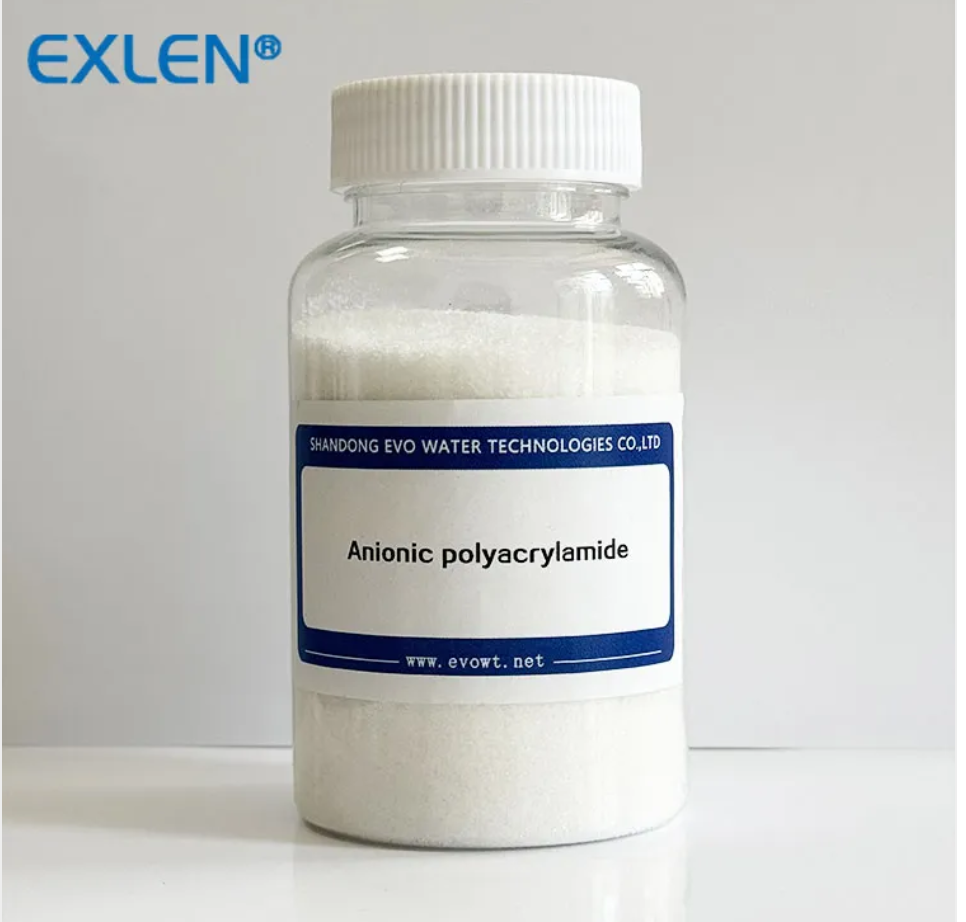
In industrial settings where effluent quality directly impacts regulatory compliance and public health, anionic polyacrylamide (APAM) proves its worth not in lab beakers but in the unpredictable flow of real wastewater. Take a large-scale textile dyeing operation, for instance. The incoming stream carries a cocktail of reactive dyes, surfactants, and sizing agents, creating a turbid mess with high chemical oxygen demand. Without effective flocculation, downstream biological treatment would choke on color and toxicity. Here, APAM steps in with a tailored molecular chain that bridges suspended particles into robust flocs, even under varying pH and temperature swings. Operators don’t need to baby the dosing; a properly selected APAM grade handles the chaos, delivering clear supernatant that keeps the entire treatment train running smoothly.
The stakes are even higher in mining, where tailings ponds and process water recycling demand relentless solid-liquid separation. At a copper mine facing water scarcity, APAM isn’t just a chemical—it’s a strategic asset. The slurry, thick with finely ground rock and residual metals, must be dewatered rapidly to recycle water back into the flotation circuit. APAM’s high molecular weight and anionic charge neutralize the positive edges of clay minerals, collapsing the colloidal barrier and releasing trapped water. Unlike rigid, one-size-fits-all solutions, the flocculant’s performance is fine-tuned through direct feedback from on-site turbidity meters and thickener torque readings. The result? A compacted underflow that’s easier to handle, and process water clear enough to reuse without fouling membranes or nozzles—proof that in high-stakes operations, real-world clarity comes from adapting to the ore body, not just the textbook.
Beyond the industrial fence, APAM’s role in emergency spill response reveals its versatility under pressure. When a food processing plant accidentally releases a slug of fat, oil, and grease into a municipal sewer, time is critical. Traditional coagulants can crumble under such organic loads, but APAM’s bridge-forming ability remains intact, sweeping through the emulsified mess to form a cohesive float that’s quickly skimmed off. This isn’t just chemical theory; it’s a practiced response where a mobile dosing unit with pre-hydrated APAM can prevent a treatment plant upset within hours. The clarity achieved isn’t just about meeting a permit limit—it’s about averting fines, protecting the receiving river’s ecology, and maintaining community trust. In these moments, APAM isn’t a commodity; it’s a problem-solver that earns its place through sheer, visible effectiveness.
Faster Settling, Sharper Results: The Efficiency Equation
In high-performance systems, the time it takes for a signal to stabilize directly shapes the quality of the final output. Whether you're dealing with a precision amplifier, a control loop, or a measurement circuit, faster settling isn't just about speed—it’s about capturing accuracy before drift, noise, or external interference have a chance to corrupt the data. This relationship forms the backbone of what many engineers call the efficiency equation: the swifter the settling, the crisper and more reliable the result.
But chasing pure speed can backfire. Pushing a system to settle too aggressively often introduces overshoot, ringing, or even instability, which muddy the very signal you’re trying to clarify. The real art lies in balancing slew rate, bandwidth, and damping to achieve a critically damped response—one that reaches its final value swiftly without oscillation. This is where thoughtful design pays off, trading brute force for finesse so that every microsecond of settling translates into genuinely sharper, actionable data.
Ultimately, the efficiency equation isn’t just a theoretical construct; it’s a practical mantra for anyone striving to extract clean results from noisy environments. By tuning system parameters to minimize settling time while preserving signal integrity, you transform a sluggish, blurred measurement into a crisp snapshot of reality. The payoff is a system that doesn’t just work faster—it works smarter, delivering clarity where others see only chaos.
Less Is More: Unpacking APAM’s Low-Dosage Advantage
APAM’s low-dosage advantage stems from its ultra-high molecular weight and tailored charge density, which work together to create robust floc bridges even at minute concentrations. Unlike conventional polymers that require generous dosing to achieve visible effects, APAM initiates rapid aggregation at just a few parts per million, dramatically cutting chemical consumption without sacrificing performance. This efficiency arises from its ability to stretch across larger distances in suspension, capturing and binding fine particles that would otherwise remain unsettled. The result is a cleaner, faster separation process that leaves less residual polymer in the treated water, a critical factor for industries facing strict environmental discharge limits.
Operators who switch to APAM often notice immediate improvements in sludge dewatering and supernatant clarity, but the real story is in the numbers: fewer kilograms of polymer per ton of solids, reduced freight and storage costs, and less wear on dosing pumps running at lower outputs. Because the polymer chain extends further and adsorbs more selectively onto particle surfaces, it avoids the common pitfall of overdose, where excess polymer actually restabilizes colloids and worsens water quality. This delicate balance allows treatment plants to dial in the minimal effective dose and hold it steady, even when raw water characteristics fluctuate, making process control simpler and more predictable.
Beyond the operational savings, the low-dosage trait aligns with broader sustainability goals by shrinking the carbon footprint of chemical supply chains. Each incremental reduction in polymer usage also reduces the volume of packaging waste and the frequency of delivery trucks arriving on site, cumulatively lowering the facility’s environmental impact. In the long run, embracing APAM’s less-is-more philosophy transforms flocculation from a brute-force chemical addiction into a refined, high-efficiency step that respects both the bottom line and the planet’s finite resources.
How APAM’s Molecular Design Masters Water Chemistry
Anionic polyacrylamide (APAM) achieves its remarkable control over water chemistry through a carefully engineered molecular architecture. The polymer backbone is punctuated with carboxylate groups that ionize in water, imparting a high negative charge density. This charge configuration allows APAM to interact with dissolved cations and positively charged particles in ways that transform the behavior of aqueous systems. Rather than simply thickening the water, these ionic groups actively manipulate the electrochemical environment, making the polymer a versatile tool for processes from flocculation to rheology modification.
In practice, the molecular weight and charge density of APAM can be tuned by adjusting the degree of hydrolysis during manufacturing. A higher proportion of anionic groups increases the polymer’s solubility and enhances its ability to neutralize suspended solids through charge neutralization and bridging mechanisms. When introduced into turbid water, the extended polymer chains stretch out due to electrostatic repulsion between like charges, sweeping across the solution and capturing fine particles into dense, settleable flocs. This dynamic interplay between chain conformation and water chemistry explains why APAM excels at clarifying wastewater, speeding up sedimentation, and improving filtration efficiency across diverse industrial settings.
Beyond particle removal, APAM’s design also addresses fluid mechanics on a microscopic level. The long-chain molecules can associate with metal ions and form transient networks that alter the viscosity and flow characteristics of water under shear. In enhanced oil recovery, for instance, this property helps push residual oil through porous rock while minimizing water channeling. The polymer’s resilience to hydrolysis and its controlled biodegradability further extend its utility, ensuring stable performance even in harsh pH or high-temperature environments. Thus, APAM’s molecular blueprint is not just a static structure but a dynamic interface that continually orchestrates chemical interactions to master the complexities of water chemistry.
Beyond Treatment: APAM’s Contribution to Eco-Friendly Operations
In an era where environmental stewardship defines industry leadership, APAM has quietly transformed how production processes coexist with nature. Its unique molecular structure enables remarkable flocculation at minimal dosage, dramatically cutting the volume of chemical sludge that would otherwise demand energy-intensive treatment and disposal. This alone translates into lower carbon footprints across wastewater management cycles. But the ecological merit extends further: APAM’s efficiency reduces the need for auxiliary chemicals, streamlining operations while shrinking the toxic load on downstream ecosystems. Engineers have observed that systems optimized with APAM often experience fewer maintenance shutdowns, indirectly preserving resources and preventing accidental releases—a win that resonates well beyond the balance sheet.
What truly sets APAM apart in eco-conscious operations is its adaptability to low-impact processing conditions. Unlike traditional coagulants that demand rigid pH control and high mixing energy, APAM maintains performance across a wider spectrum, allowing facilities to operate closer to natural water parameters. This flexibility slashes energy consumption for heating, cooling, and mechanical agitation. Moreover, the polymer’s capacity to sequester suspended solids without leaving residual monomers of concern makes treated water safer for reuse in irrigation or industrial loops, reinforcing circular economy principles without extra treatment steps. Such closed-loop integration is no longer aspirational; it’s becoming standard practice where APAM is deployed thoughtfully.
The environmental contribution of APAM is also measured in its post-use lifecycle. Research indicates that under proper biodegradation conditions, the polymer degrades into harmless molecules, mitigating concerns about long-term accumulation in soils and sediments. Forward-thinking operators pair this with upstream process tweaks—like reduced water withdrawal and improved recovery rates—to create a ripple effect of sustainability. When every drop of water treated with APAM can be safely returned to nature or reused, the cumulative impact on local ecosystems is profound. In a landscape where environmental compliance is baseline and genuine green performance is the differentiator, APAM emerges not just as a treatment aid, but as a cornerstone of responsible production.
FAQ
APAM stands for Anionic Polyacrylamide, a water-soluble polymer with negatively charged functional groups along its chain. These anionic charges make it highly effective at neutralizing positively charged particles in water, promoting flocculation and settling.
APAM enhances performance by bridging fine particles into larger, easily removable flocs, even at low dosages. Its high molecular weight and tailored charge density allow rapid clarification, reduced sludge volume, and better handling of high-turbidity or organic-laden waters compared to conventional coagulants.
High evaluation APAM refers to grades with strict quality control, ensuring consistent molecular weight, low residual monomer, and optimized hydrolysis degree. This results in faster dissolution, predictable performance, and minimal impact on downstream processes like membrane filtration or biological treatment.
APAM is widely applied in municipal wastewater treatment for primary clarification and sludge dewatering. It's also used in industrial effluent treatment for sectors like mining, paper, and textiles, as well as in drinking water plants as a flocculant aid when paired with metal salts.
APAM offers superior floc strength, lower sludge production, reduced chemical consumption, and better pH tolerance. It works effectively without significantly altering the water's pH, unlike alum or ferric salts, and can handle a wider range of particle types and concentrations.
It should be dissolved into a 0.1–0.5% stock solution using clean water with gentle agitation to avoid shear degradation. Aging the solution for 30–60 minutes ensures full hydration. Dosing is typically done inline with good mixing, and optimal dosage is determined by jar testing for each specific water matrix.
High evaluation APAM has very low acute toxicity, and the polymer itself is not readily biodegradable but is considered environmentally benign when bound in sludge. However, care must be taken to avoid over-dosing, which can cause residual polymer in effluent, and to prevent spills due to its slippery nature when wet.
Clear visual improvement in floc size and settling rate, consistent effluent turbidity below target, reduced backwash frequency in downstream filters, and lower overall sludge handling costs. Also, stable operation without frequent chemical adjustments is a strong indicator of reliable APAM performance.
Conclusion
High evaluation APAM anionic polyacrylamide is redefining advanced water treatment by delivering unmatched turbidity control that leaves traditional coagulants far behind. Its uniquely engineered molecular design interacts with suspended particles at a fundamental level, neutralizing charges and bridging solids into dense flocs that settle with remarkable speed. This efficiency isn't just theoretical—real-world applications in high-stakes effluent treatment show that APAM consistently achieves clarity standards that conventional agents struggle to meet, even under fluctuating water chemistry conditions. The result is a process where faster settling translates directly into sharper outcomes, allowing plants to increase throughput without sacrificing quality.
What truly sets APAM apart is the “less is more” principle built into its low-dosage advantage. Because of its optimized chain structure and high active charge density, minimal amounts produce dramatic effects, reducing chemical consumption and sludge generation. This not only cuts operational costs but also lightens the environmental footprint. The eco-friendly profile extends further: APAM’s efficiency means less energy spent on mixing and pumping, and the reduced sludge volume simplifies disposal. By tackling water chemistry challenges at the molecular level, APAM demonstrates that high performance and sustainability are not opposing goals—they’re integral parts of a single, forward-thinking treatment strategy.
Contact Us
Contact Person: Fiona Su
Email: [email protected]
Tel/WhatsApp: 8619963724144
Website: https://www.evo-chemical.com/