
High-speed Wire Rod Mill: Revolutionizing Steel Production Efficiency
2026-03-06
In the fast-paced world of steel manufacturing, innovation is the key to staying ahead. The introduction of high-speed wire rod mills has transformed the industry, pushing the boundaries of efficiency and precision. At GRM, we're at the forefront of this revolution, leveraging cutting-edge technology to deliver wire rods of unmatched quality and speed. Imagine a process that slashes production times while enhancing product consistency—it's not just a dream; it's our reality. Dive into this blog to discover how GRM's solutions are setting new standards and why the future of steel production looks brighter than ever.
Speed and Precision: The Core of Modern Wire Rod Mills
In today's wire rod mills, speed isn't just about moving metal faster—it's a delicate balance that integrates cutting-edge technology to maintain production flow without sacrificing quality. High-speed rolling processes allow mills to churn out wire rod at unprecedented rates, often exceeding 100 meters per second, which boosts output and reduces lead times for industries like automotive and construction. But achieving these speeds requires more than just powerful machinery; it involves sophisticated cooling systems and real-time monitoring to prevent defects and ensure the material's structural integrity. This focus on velocity transforms mills into efficient hubs that meet the demands of global supply chains while keeping energy consumption in check, proving that in modern manufacturing, going faster can also mean going smarter.
Precision complements speed by ensuring every millimeter of wire rod meets exact specifications, from diameter tolerances to surface finish. Advanced sensors and automated control systems work in tandem to measure and adjust parameters like tension and temperature, resulting in wire rod that's consistent in quality across long production runs. For example, in aerospace or medical applications, even minor deviations can compromise safety, so mills employ laser gauges and computer vision technologies to detect flaws that the human eye might miss. This meticulous attention to detail supports innovations in materials science, enabling the production of specialized wire rod for high-stress environments, and reinforces why precision isn't just an add-on but a foundational element of modern mill operations.
Together, speed and precision create a synergy that defines modern wire rod mills, driving advancements in both hardware and software. By integrating Industry 4.0 principles, mills leverage data analytics and machine learning to optimize processes in real-time, predicting maintenance needs and minimizing downtime. This holistic approach allows manufacturers to produce wire rod that's not only faster and more accurate but also more adaptable to changing market needs, from sustainable steel production to custom alloys. In essence, the core of these mills lies in their ability to evolve continuously, balancing rapid production with unwavering quality, and setting new standards for efficiency and reliability in the metalworking industry.
Boosting Output: How High-Speed Mills Transform Steel Production
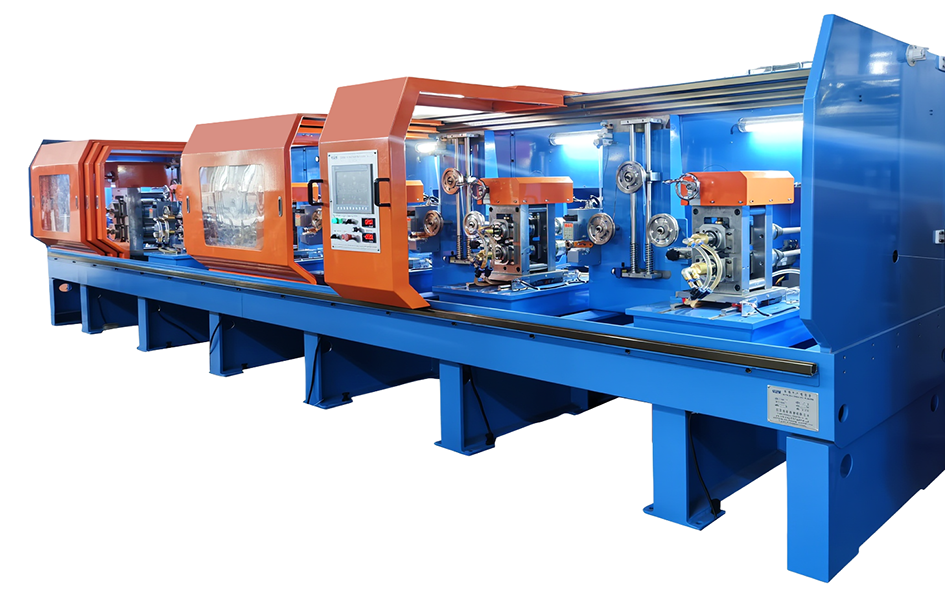
Ever wondered why modern steel production seems to race ahead with unprecedented efficiency? It's largely thanks to high-speed mills, which act as the engine rooms of the industry. Unlike traditional methods that crawl along, these advanced systems whir into action, churning out steel at rates that would have seemed like science fiction a few decades ago. By integrating cutting-edge technology and precision engineering, they not only ramp up output but also enhance the quality of every beam, sheet, and coil produced, making them indispensable in today's fast-paced construction and manufacturing sectors.
Imagine stepping into a state-of-the-art mill where the hum of machinery blends into a symphony of productivity. High-speed mills achieve their transformative effects through innovations like automated controls and real-time monitoring, which minimize downtime and optimize material flow. This isn't just about speed for the sake of it; it's a strategic overhaul that reduces energy consumption and waste, ensuring that steel plants can meet soaring demand while staying competitive on a global scale. The result? A more agile supply chain that keeps projects on schedule and costs in check.
Beyond the technical wizardry, the real story lies in how these mills reshape entire ecosystems. Small workshops and giant foundries alike are pivoting to high-speed systems, unlocking new possibilities in custom fabrication and just-in-time delivery. By pushing the boundaries of what's possible, they're not merely boosting output—they're fundamentally redefining steel's role in modern infrastructure, from skyscrapers to smart cities, proving that innovation truly is the backbone of industrial progress.
Innovative Tech Enhancing Operational Efficiency in Mills
The integration of advanced technologies like IoT sensors and predictive analytics is revolutionizing mill operations by enabling real-time monitoring of machinery and production lines. These tools help detect potential failures before they occur, reducing unplanned downtime and extending equipment lifespan. By optimizing maintenance schedules and resource allocation, mills can achieve higher throughput and lower operational costs, leading to a more agile and responsive manufacturing environment.
Artificial intelligence and machine learning are further elevating efficiency by analyzing vast datasets from mill processes to identify patterns and inefficiencies. AI-driven systems can automate complex tasks, such as quality control and inventory management, while providing actionable insights for process improvements. This not only boosts productivity but also enhances product consistency and reduces waste, making mills more competitive in a rapidly evolving industrial landscape.
Robotics and automation are also playing a crucial role, with collaborative robots designed to handle repetitive or hazardous tasks alongside human workers. This synergy improves safety, reduces labor costs, and allows skilled personnel to focus on more strategic activities. Together, these innovations foster a sustainable and high-performance mill ecosystem, driving continuous improvement and long-term growth.
Economic and Environmental Gains from Upgraded Mill Designs
Upgraded mill designs represent a pivotal shift in industrial operations, blending cutting-edge engineering with sustainable practices to unlock both economic and environmental benefits. By integrating advanced technologies such as automation, real-time monitoring systems, and energy-efficient machinery, modern mills significantly reduce operational costs while boosting productivity. For instance, predictive maintenance algorithms minimize downtime, and optimized material usage cuts waste, directly enhancing profitability. This transformation not only strengthens a company's bottom line but also positions it competitively in markets increasingly valuing efficiency and innovation.
From an environmental perspective, these upgrades are a game-changer, addressing long-standing concerns about resource depletion and pollution. Newer mills often incorporate closed-loop water systems, reducing freshwater consumption by up to 90%, and advanced emission controls that lower greenhouse gas outputs. Additionally, designs that prioritize renewable energy sources, like solar or biomass, further shrink carbon footprints. Such improvements align with global sustainability goals, helping industries comply with stricter regulations while fostering a greener reputation that resonates with eco-conscious consumers and investors alike.
Beyond immediate gains, upgraded mill designs create a ripple effect of positive outcomes, from job creation in tech-driven sectors to enhanced community health through cleaner air and water. By embracing these innovations, businesses not only secure long-term economic resilience but also contribute to a more sustainable planet, proving that progress and conservation can go hand in hand in today's industrial landscape.
Driving Industry Standards with Advanced Wire Rod Solutions
In an increasingly competitive market, the demand for precise and reliable wire rod solutions has never been higher. Our advanced wire rod offerings are engineered to meet these rigorous standards, pushing the boundaries of durability and performance. By integrating cutting-edge materials and innovative manufacturing techniques, we ensure that each product not only meets but often exceeds industry expectations, providing a solid foundation for applications ranging from construction to automotive sectors.
What sets our approach apart is a commitment to tailored solutions, rather than one-size-fits-all products. We work closely with clients to understand their specific challenges, whether it's enhancing tensile strength for heavy-duty use or improving corrosion resistance in harsh environments. This collaborative process allows us to develop wire rods that are precisely calibrated to drive efficiency and safety, ultimately helping industries achieve new levels of operational excellence.
Through continuous research and development, we're not just following industry trends—we're setting them. Our advanced wire rod solutions incorporate emerging technologies, such as smart coatings and alloy compositions, to deliver exceptional value and reduce long-term costs. By focusing on real-world applications and client feedback, we ensure that our products remain at the forefront of innovation, making it easier for industries to adopt higher standards and embrace a more sustainable, high-performance future.
Future Trends in High-Speed Steel Manufacturing Technology
High-speed steel manufacturing is on the cusp of a transformative shift, driven by the relentless demand for tools that can withstand extreme conditions. One of the most exciting trends is the integration of additive manufacturing, or 3D printing, which allows for the creation of complex geometries that were previously impossible with traditional methods. This isn't just about fancy shapes; it's enabling the production of tools with internal cooling channels, leading to drastically improved heat dissipation during high-speed machining. As a result, manufacturers are seeing longer tool life and reduced wear, which directly translates to cost savings and higher efficiency on the shop floor.
Despite the buzz around additive techniques, powder metallurgy isn't fading into the background—it's evolving. Newer methods, like the development of ultrafine or nanostructured powders, are pushing the boundaries of material properties. These advanced powders are being used to produce high-speed steels with superior hardness and toughness, often through processes like hot isostatic pressing. What sets this apart is the ability to achieve near-net-shape components with minimal material waste, making it a game-changer for industries where precision and sustainability matter equally, such as aerospace and medical device manufacturing.
Beyond material science, the industry is increasingly leaning on digital technologies to refine production. Smart sensors and real-time data analytics are being embedded into manufacturing lines to monitor everything from temperature fluctuations to particle size distribution. This data-driven approach allows for tighter control over the manufacturing process, ensuring consistent quality and reducing defects. It's a subtle yet powerful trend that's making high-speed steel production not just faster, but smarter and more reliable, paving the way for tools that perform predictably under pressure.
FAQ
It significantly increases throughput by operating at speeds up to 120 m/s, reducing cycle times and energy consumption per unit, while maintaining consistent product quality through advanced automation and control systems.
Key innovations include precision rolling stands with minimal tolerances, automated temperature control, inline quality monitoring with sensors, and AI-driven predictive maintenance to minimize downtime.
These mills incorporate energy-efficient motors, waste heat recovery systems, and reduced water usage, cutting carbon emissions and aligning with sustainable steel production goals.
They produce a range of wire rods used in construction (e.g., rebar), automotive components, fasteners, cables, and springs, with diameters typically from 5.5 to 22 mm.
Challenges include managing high-speed wear, maintaining temperature uniformity, and avoiding defects. Solutions involve durable materials, real-time monitoring, and adaptive process adjustments.
While initial investment is higher, it offers lower operational costs through efficiency gains, higher output rates, and reduced labor, leading to faster ROI and competitive pricing.
Conclusion
High-speed wire rod mills are transforming steel production by combining unprecedented speed and precision to meet modern industrial demands. With advanced technology, these mills boost output significantly while enhancing operational efficiency through automated systems and real-time monitoring. This revolution not only drives higher productivity but also sets new industry standards by integrating innovative solutions that ensure consistent quality and reliability.
Beyond economic gains from increased throughput and reduced waste, upgraded mill designs contribute to environmental sustainability by optimizing energy use and minimizing emissions. Looking ahead, future trends in high-speed steel manufacturing promise further advancements, such as AI-driven controls and sustainable practices, cementing these mills as pivotal in shaping a more efficient and eco-friendly steel industry.
Contact Us
Contact Person: Rayna
Email: [email protected]
Tel/WhatsApp: 86 -173 1474 6343
Website: https://www.grmrollingmill.com/