

Maize Grinding Machine Plant: Streamlining Your Corn Processing Operations
2026-06-21
Processing corn into market-ready flour shouldn’t feel like solving a puzzle. Yet, many operations still struggle with outdated equipment and fragmented workflows. That’s where a dedicated maize grinding machine plant makes the difference—and PINGLE has been redefining standards for years. In this post, we’ll explore how an integrated grinding solution can cut downtime, boost efficiency, and deliver the quality your customers expect. Stick around to see what truly streamlined corn processing looks like.
The New Face of Maize Milling Efficiency
The hum of a maize mill has a different tone these days—sharper, smarter. Gone are the clunky, hands-on adjustments of old; modern plants now respond to the grain's own whispers. Sensors read moisture and hardness on the fly, nudging rollers and screens into perfect sync. It’s a quiet conversation between machine and kernel that turns unpredictability into a steady, fine grind.
Where once a single operator babysat the line, now a tablet does it better. Dusty dials have given way to dashboards that map the whole process in real time, flagging a worn sieve before it ever coughs out coarse meal. This isn’t just automation layered on top of old bones—it’s a ground-up rethinking, where each component works less like a series of steps and more like a single, hungry organism.
Efficiency, of course, gets measured in profit, but it tastes best in the quality of the meal. Uniform granulation means better cooking, stronger dough, and a product that bakers can trust every bag. The new face of milling doesn’t wear grease and sweat—it wears precision, and it’s smiling.
Custom-Engineered Solutions for Your Corn Processing Needs
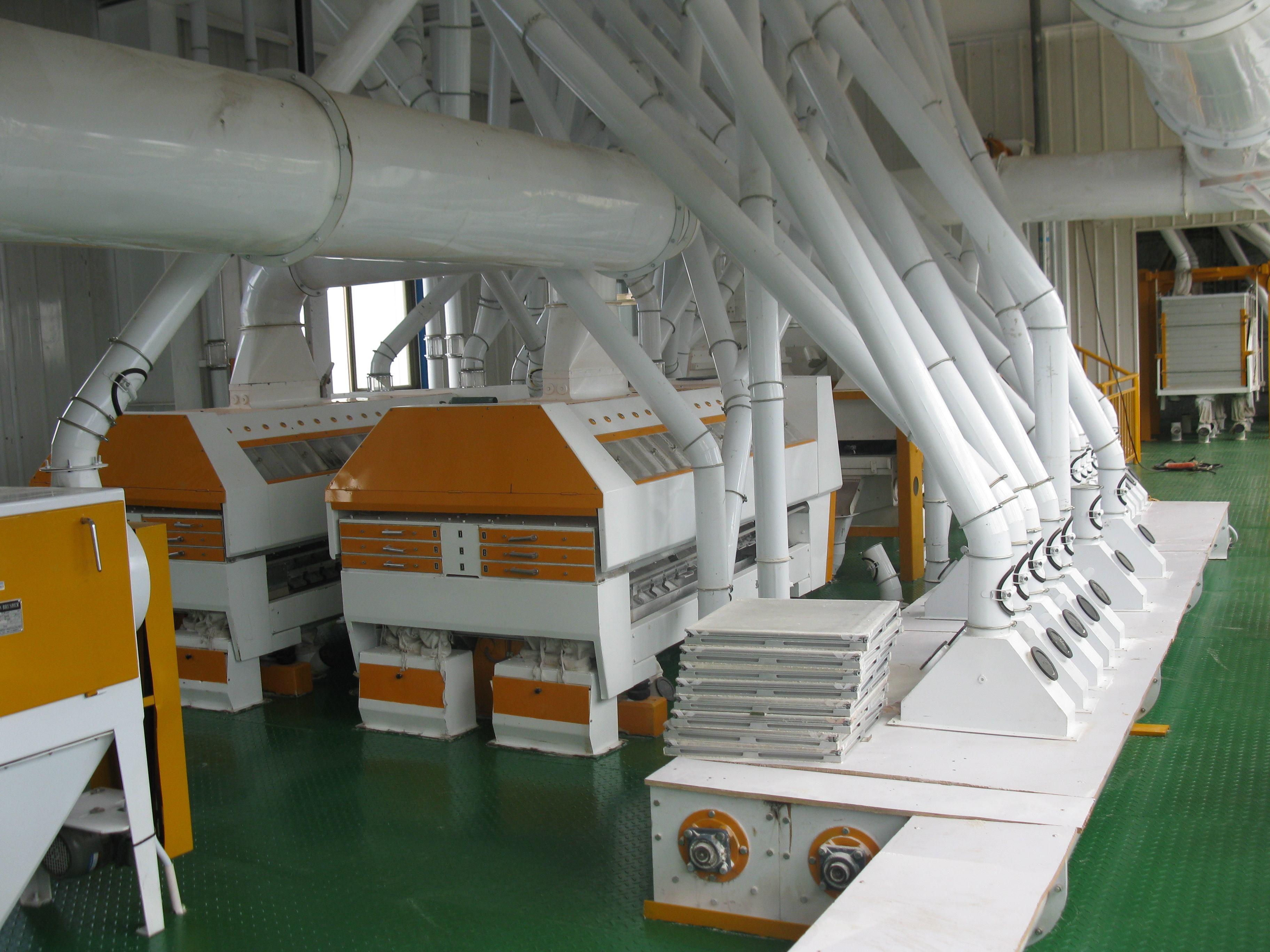
Every corn processing line comes with its own set of demands—space constraints, throughput targets, by-product handling, or integration with legacy equipment. Off-the-shelf machinery rarely fits perfectly, which is why we approach each project as a blank canvas. Our engineering team digs into your specific goals, analyzing moisture levels, particle size requirements, and downstream processes to design a solution that feels like it was built just for you—because it is.
We don’t believe in forcing your process into a standard mold. Instead, we might modify steeping parameters, reengineer degermination stages, or adjust drying profiles to match the corn variety you work with and the end-product qualities your customers expect. A custom solution could mean a uniquely configured fine grinding and sifting arrangement for specialty meals, or a streamlined layout that co-locates steeping and evaporation to recover heat and reduce footprint. It’s the kind of detailed tailoring that turns an ordinary plant into a competitive advantage.
From pilot-scale trials to full production turnkey systems, our collaborative process ensures that you’re not just buying equipment—you’re gaining a dedicated partner who speaks your language. We sweat the small stuff, like accessibility for maintenance and expansion-ready connections, so your operation stays agile as markets shift. At the end of the day, it’s about delivering a corn processing system that performs exactly as promised, with the resilience and flexibility to grow alongside your business.
From Kernel to Flour: Seamless Operations
Every grain that enters the mill carries a story of potential—one we unlock through a chain of finely tuned steps. It begins at reception, where kernels are gently screened and cleaned, shedding dust and stray hulls without bruising the precious interior. From there, they glide into tempering bins, resting under precisely controlled moisture until the bran toughens just enough for a clean separation later on.
The real artistry unfolds at the roller mills, where corrugated and smooth rolls work in sequence to shear open the kernels and gradually reduce the endosperm into a silken powder. Sifters dance above, shimmying the grist through nested sieves so each particle finds its rightful place—coarse bran, fine middlings, pure white flour. Nothing is rushed; the passage through break rolls and reduction rolls is measured, letting the natural character of the wheat come through without overheating or damaging starches.
Behind the scenes, air currents and gravity-fed spouts do much of the heavy lifting, moving stock between machines without breaking the rhythm. Our system is knit together by automation that monitors moisture, particle size, and flow rates in real time, making micro-adjustments so that from first break to final bagging, the process hums with a quiet efficiency. The result is flour that behaves predictably in the bakery—whether it’s lifting a sourdough loaf or forming a tender pastry crust—because we never lost sight of the kernel’s journey.
Advanced Technology Behind Modern Maize Grinding
Modern maize grinding has evolved from simple stone mills to highly automated systems that integrate sensor-driven monitoring and real-time adjustments. These advancements allow mills to maintain consistent particle size and texture, which is critical for product quality in food and industrial applications. By using laser diffraction and near-infrared spectroscopy, operators can instantly analyze ground maize characteristics and fine-tune roller gaps or hammer speeds without interrupting production.
Another leap forward lies in the application of energy-efficient motors and aerodynamic grinding chamber designs that minimize heat buildup and preserve the nutritional integrity of the maize. Variable frequency drives on grinding equipment enable precise control over rotational speeds, adapting to different maize varieties and moisture levels. This not only reduces waste but also cuts down on operational costs, as the machinery adjusts its power consumption based on load demand.
Advanced dust collection and closed-loop pneumatic conveying systems further enhance safety and cleanliness in modern maize grinding facilities. These systems capture fine particles at the source, recycling them back into the process or safely disposing of them, which aligns with stricter environmental regulations. Combined with predictive maintenance algorithms that analyze vibration and temperature data to forecast component wear, the technology behind maize grinding now prioritizes both sustainability and uninterrupted production flow.
Boosting Productivity Without Compromising Quality
It’s tempting to treat productivity and quality as enemies, something you have to trade off against each other like time and money. But the best teams know that real productivity isn’t about rushing—it’s about refining the way you work so that every effort moves you closer to a polished result. Instead of asking people to do more in less time, focus on removing the friction that slows work down without adding value. This could mean questioning whether that weekly status meeting still needs to be an hour long, or if a recurring report can be generated automatically rather than stitched together by hand. When you stop confusing busyness with actual output, quality stops being the first casualty of speed.
Another lever is to invest in deep work rhythms. Guard everyone’s blocks of uninterrupted time as if they were sacred. Batching similar tasks—like code reviews, design critiques, or email—reduces the cognitive penalty of constant context switching, which quietly erodes both speed and accuracy. Pair this with clear rubrics for what “good enough” looks like at each stage, so team members aren’t over-polishing drafts that still need structural feedback. The trick is to define quality early through concrete examples and checklists, not just through vague aspirations. When expectations are unambiguous, people sprint with confidence instead of second-guessing themselves into paralysis.
Finally, make it safe to flag shortcuts that would harm quality. A culture that celebrates velocity above all else often punishes the person who points out that a launch is premature. But if you publicly reward course corrections—thanking someone for catching a test case that was skipped, or for delaying a release to fix a user-facing bug—you reinforce that quality isn’t just a slogan. The result is a team that moves fast precisely because they trust the foundation they’re building on.
A Closer Look at Plant Design and Workflow Optimization
Designing an industrial plant from the ground up forces you to think about every square meter. It’s not just about where machines sit—it’s about how materials flow from receiving to shipping without backtracking. The best layouts eliminate cross-traffic and bottlenecks that quietly eat into daily output. Spending extra days sketching flow diagrams and simulating operator movements often reveals that a simple shift in conveyor placement can shave hours off weekly downtime.
Workflow optimization goes deeper than equipment arrangement. It blends lean principles with real-world operator feedback. One facility I studied cut its batch changeover time by 40% simply by relocating tool storage closer to the workstations and standardizing setup procedures. These changes look minor on paper, but they reduce the mental load on teams and make consistent output more achievable. The key is to treat layout as a living document that evolves with production demands, not a one-time blueprint.
Digital tools now let teams model entire production lines and test different configurations before pouring concrete. This virtual approach catches things that floor plans miss—like how natural light affects inspection accuracy or how HVAC placement influences dust collection. Smart plants also integrate sensor data to continuously adjust pacing, preventing the kind of gradual slowdowns that nobody notices until quarterly reviews. When plant design and workflow optimization work together, the result isn’t just faster throughput; it’s an environment where quality and safety stop being competing priorities.
FAQ
A maize grinding machine plant is a complete setup designed to process corn into various products like flour, grits, or meal. It streamlines your operations by automating the grinding, sifting, and packaging stages, which reduces manual labor, increases output consistency, and lowers production costs. With the right plant, you can scale up production efficiently while maintaining high product quality.
You can produce a wide range of maize products including fine corn flour for baking, coarse grits for porridge, cornmeal for snacks, and even specially processed ingredients for industrial use. Depending on the configuration, you can also extract germ for oil or bran for animal feed, making it a versatile solution for different market demands.
Start by assessing your current and projected daily processing volume. Small-scale plants may handle 10–50 tons per day, while large industrial setups can process over 500 tons. Consider factors like available space, power supply, and target product fineness. It’s wise to consult with manufacturers who can design a layout that matches your growth plans without overspending on underutilized machinery.
Look for plants with high-quality grinding rollers or plates, durable sieving systems, and easy-to-clean components. Efficient plants minimize dust and noise, have energy-saving motors, and include automated controls for consistent moisture and particle size. A well-designed pneumatic conveying system for material transfer reduces breakage and contamination, while modular construction allows for future expansions.
It integrates all steps—cleaning, conditioning, degermination, milling, sifting, and packaging—into a continuous, automated flow. Raw maize enters and finished products exit with minimal human intervention. Sensors and central control panels monitor throughput and quality, adjusting settings in real time. This eliminates bottlenecks and ensures that every batch meets your specifications, saving time and labor.
Yes, customization is one of its biggest advantages. You can adjust the milling intensity, sieve mesh sizes, and blending options to create unique textures and nutritional profiles. Whether you need finely ground flour for tortillas or coarser meal for traditional dishes, the plant can be tuned to your recipes. Some systems also allow for the addition of vitamins and minerals to produce fortified products.
Routine maintenance includes daily cleaning of sieves and conveyors, lubrication of bearings, and inspection of wear parts like grinding discs and belts. A preventive schedule should cover motor servicing, calibration of sensors, and replacement of dust filters. Training your operators and keeping spare parts on hand minimize downtime. Many plants come with service contracts for periodic professional check-ups.
Conclusion
Modern maize grinding machine plants are redefining efficiency, turning once cumbersome corn processing into a smooth, continuous flow. Instead of piecing together equipment from different eras, today's facilities integrate custom-engineered solutions that anticipate your exact production needs—whether you're aiming for fine flour or coarse grits. The transformation begins with advanced milling technology that handles kernels with precision, reducing waste and energy use while preserving the natural quality of the grain. Smart sensors and automated adjustments maintain consistent grind size and texture, so every batch meets the same high standard without constant manual intervention.
What truly sets a streamlined plant apart is how it connects each stage, from intake to packaging, into a single optimized workflow. Thoughtful layout design eliminates bottlenecks and cross-contamination risks, while real-time monitoring lets you spot and resolve issues before they slow you down. This holistic approach boosts productivity without cutting corners—quality remains uncompromised because the system itself is built to uphold it. The result is a plant that feels less like a collection of machines and more like a unified operation, ready to scale up as demand grows, all while keeping day-to-day corn processing refreshingly straightforward.
Contact Us
Contact Person: Jiakuo Wu
Email: [email protected]
Tel/WhatsApp: +86-13011566087
Website: https://www.pinglemachine.com