

Metal Buckle Supplier: A Practical Guide to Quality, Customization, and Lead Times
2026-09-13
Sourcing metal buckles sounds straightforward until you're stuck between a supplier who promises premium quality but misses deadlines, and another who ships fast but sends inconsistent castings. The gap between a sample and a full production run is where most supply chains quietly unravel. Kingming has spent years closing that gap, and this guide distills what we've learned into practical steps: how to evaluate material integrity, what customization really requires, and why lead times fluctuate. If you're tired of vague answers and want a supplier who treats hardware as a critical component rather than an afterthought, keep reading.
Checking Material Claims Before You Commit
A label that says “100% organic cotton” or “recycled polyester” isn’t proof on its own. Before you commit to a purchase or a supply decision, ask for the actual test reports, fiber composition certificates, or mill declarations that back up the claim. If the paperwork is vague, heavily redacted, or only refers to a “representative sample,” treat that as a warning sign rather than a formality.
Cross-check the claim against the product’s physical characteristics. A fabric described as pure linen but with a suspiciously soft, stretchy hand feel may be blended with synthetics. Similarly, a metal part advertised as stainless steel should show no rust spots and should match the grade stated on the spec sheet. Small mismatches between what’s promised and what you can observe often point to larger gaps in documentation.
Finally, verify the certifier itself. Not all certification logos carry the same weight, and some are little more than marketing badges. Look up the issuing body, confirm the certificate number is active, and see if the brand or factory has a history of warning letters or failed audits. Taking thirty minutes to check these details before you sign a contract can save you from expensive returns, compliance headaches, and damaged trust later.
Designing a Buckle That Won't Die on the First Use
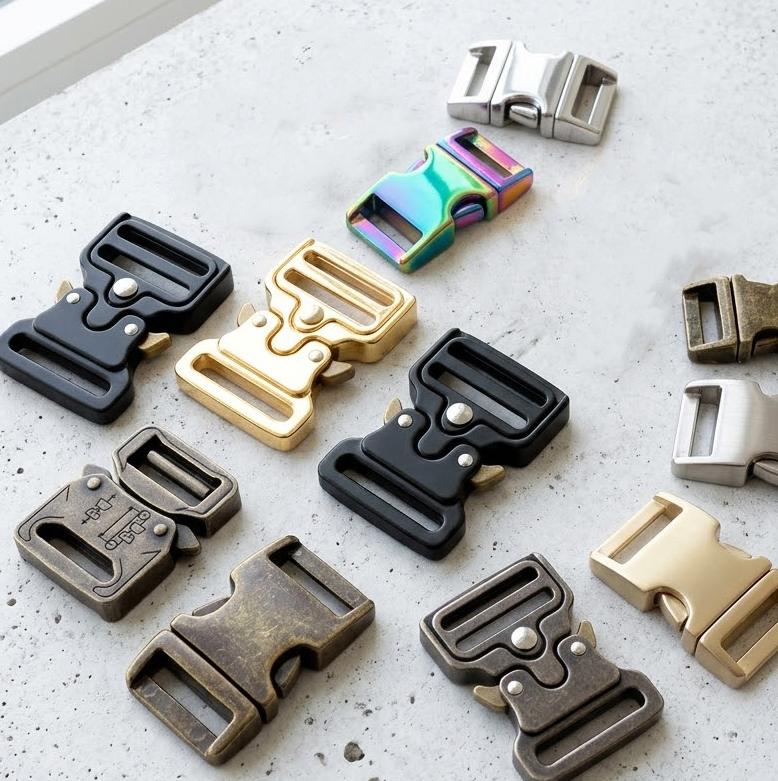
Most buckle failures come down to a single overlooked detail: the way load transfers through the latch. Instead of relying on a thin metal tongue that bends after a few hard pulls, the design should spread stress across a wider, interlocking surface. A dual-stage engagement—where the male end first hooks, then seats into a secondary recess—prevents accidental release while still allowing one-handed operation. This kind of geometry doesn't just feel sturdier; it actually changes the failure mode from sudden snap to gradual wear, which is far easier to spot before it becomes a problem.
Material choice is where many designs quietly give up. Injection-molded plastic might look fine on a spec sheet, but repeated flexing near the hinge creates micro-cracks long before visible damage. Switching to a glass-filled nylon with a slight radius at every internal corner removes the sharp stress risers that invite fatigue. For the spring mechanism, a short, thick coil made from stainless steel—not music wire—holds its tension after thousands of cycles, and it's less likely to corrode when the buckle gets wet or dirty.
Finally, the real test isn't a static pull; it's the sideways twist and jerk that happen when someone yanks a strap free in a hurry. A good buckle should survive being stepped on, dropped on concrete, and left in a hot car. That means adding a small amount of intentional flex in the frame so it can absorb shock without cracking, and designing the release tab so it can't be accidentally snagged by clothing or gear. If you can bend it by hand and feel a slight give, that's not a weakness—it's the difference between a buckle that dies on the first use and one that outlasts the strap it's attached to.
Sampling and Prototyping Without the Usual Delays
Waiting weeks for a physical sample can stall even the most promising design. When a manufacturer keeps standard tooling on hand for common connectors, enclosures, and mounting brackets, you can request a functional prototype in days instead of months. That shift lets your team test fit, feel, and basic performance early, catching issues before they become expensive revisions.
Short lead times also change how you approach iteration. Instead of locking a drawing and hoping for the best, you can order two or three slight variations of a part and compare them side by side. The feedback loop tightens, and the usual back-and-forth about tolerances or surface finish gets resolved in a single week rather than across several procurement cycles.
What often gets overlooked is the soft benefit: momentum. When a sample arrives quickly, engineers stay engaged with the project, and stakeholders see tangible progress. That steady pace reduces the temptation to cut corners or accept a mediocre design simply because the timeline was too tight to wait for a better option.
What Factory Floor Conditions Reveal About Your Order
Walk onto a factory floor and you can read a lot before anyone shows you a sample. The way materials are stacked, whether aisles are clear, the presence of calibration stickers on tools—these details hint at how your order will be handled. A crowded, dimly lit floor with mixed inventory often means scheduling chaos and rework hiding around the corner.
Temperature, noise, and air quality matter too. Workers who can't hear each other over unguarded machines or who are sweating through shifts in unventilated rooms are more likely to make mistakes. On the other hand, a floor with marked workstations, labelled bins, and visible quality checkpoints tends to produce consistent output, because the process itself enforces order.
You can also spot how seriously a factory takes your deadlines. If maintenance logs are current and spare parts are organized, the line is less likely to stop mid-run. If tooling is rusted or cables run across walkways, delays become someone else's problem to explain later. None of this shows up in a quote, but it will show up in your shipment.
Negotiating Lead Times Without Empty Promises
When customers press for shorter lead times, the instinct to say yes just to close the deal often backfires. An unrealistic promise might buy a moment of relief, but the fallout from a missed deadline costs far more in repeat business and reputation. The first step is knowing your true capacity—not just the theoretical maximum but the pace you can sustain when a machine breaks down or a supplier runs late. That honest baseline is what makes negotiation possible.
Instead of reacting to pressure with a flat refusal, frame the conversation around trade-offs. If a buyer wants a two-week delivery and your standard is four, ask what they can adjust: a partial shipment, a simplified design, or a later date for the full order. This shifts the discussion from 'can you do it?' to 'how can we make this work for both of us?' Such an approach keeps promises grounded in reality, because every concession you offer is something you can actually deliver.
There will be times when no compromise satisfies the other side. That's when you say no clearly, without hedging or vague language, and explain the risks of rushing: quality defects, overtime costs, or missed dependencies downstream. A credible no, backed by specifics, often earns more respect than a hollow yes. Over time, this consistency builds a reputation for reliability, and customers learn that your lead times mean something.
The Hidden Costs in Custom Metal Buckle Orders
Many buyers compare per-unit prices and never see the tooling bill until the quote arrives. A custom metal buckle usually means cutting a new die or mold, and that one-time charge can be anywhere from a few hundred to several thousand dollars depending on size, detail, and relief depth. If the design changes after the mold is made, you often eat that cost and pay for a second mold. Setup fees for casting, stamping, or laser engraving are also common and rarely mentioned in the first price breakdown.
Minimum order quantities quietly raise the real cost. The factory may quote a great price at 1,000 units, but if you only need 300, you either pay for 1,000 or accept a per-piece surcharge that doubles or triples the unit cost. Leftover inventory then becomes your storage problem. Surface finishes add another layer: electroplating, antique brushing, enamel fill, or PVD coating are usually billed separately, and plating prices can shift with metal markets, so a quote may not be locked. Small runs often carry a low-quantity finishing fee on top of the base buckle price.
Revisions, testing, and logistics are the final hidden costs. Every tweak to the logo, thickness, or prong shape after tooling starts may mean a mold modification charge or an entirely new mold. If the buckles need lead-content or tensile-strength testing, the lab fees and any failed-batch scrap are typically yours. Shipping, import duties, and special packaging—like individual poly bags or hang tags—get added after the fact. Always ask for a line-item breakdown of tooling, unit price, finishing, testing, and freight, and confirm which charges are refundable before you approve the sample.
FAQ
Beyond basic quality, a great supplier proactively flags potential issues with your design, offers material alternatives when costs spike, and keeps you updated on production milestones without being asked. Look for someone who asks about the end use of the buckle, not just the specs.
Ask for a pre-production sample and check the edges for burrs, the consistency of the plating color, and whether the prong or clasp moves smoothly. If possible, request a salt spray test report for corrosion resistance. Tiny flaws in a sample almost always become bigger problems at scale.
Most suppliers can do engraving, embossing, or a raised logo mold, but the clarity depends on the buckle size and metal type. Send vector artwork and specify the exact placement and depth. Expect to pay a one-time mold fee, and always approve a physical sample before production starts.
For a new mold, allow three to five weeks for tooling and sampling, then another three to four weeks for mass production. Stock buckles can ship in one to two weeks. Rush orders are possible, but they often sacrifice quality control steps, so only use them if you have no other option.
Work with a supplier that keeps common buckle molds on hand, approve digital proofs within 24 hours, and avoid last-minute design changes. Pre-paying for materials or scheduling production during a supplier's low season can also shave off a week or more.
Most factories set MOQs around 500 to 1000 pieces for custom molds because the setup costs are high. Some smaller workshops will do 200 to 300 pieces but at a higher unit price. If you only need a handful, consider semi-custom options like stock buckles with laser engraving.
Zinc alloy is affordable and casts detailed shapes easily, brass offers a premium feel and good corrosion resistance, and stainless steel is the toughest but harder to mold. Iron is cheap but rusts quickly unless heavily plated, so avoid it for outdoor gear or bags.
Request client references, ask about their main export markets, and check if they have any third-party audit reports. A video call showing their production line and sample room tells you a lot. Be wary of suppliers who promise very low prices and extremely fast delivery at the same time.
Conclusion
The first place to lose money on a metal buckle order is assuming the supplier's material claims are true. Ask for mill certificates and, when the budget allows, run an independent alloy check on a random sample before signing anything. A buckle that snaps on its first use usually fails because the design ignored stress concentration at the hinge or the plating was too thin for the intended environment. Give your supplier clear load and finish requirements up front, not just a photo from a competitor's catalog. Sampling shouldn't take a month. A serious factory can turn around a functional prototype in ten to fifteen days if you accept a few cosmetic flaws on the first round and focus only on fit and strength.
Walk the factory floor before placing a repeat order. Look for organized tooling, labeled plating tanks, and workers handling small parts with gloves—not bare hands. These details predict your order's consistency better than any glossy audit report. When a salesperson quotes a lead time, push for a stage-by-stage breakdown: die casting, polishing, plating, assembly. Vague promises hide bottlenecks in surface finishing. Hidden costs usually appear after you've committed: mold amortization split across too few pieces, special packaging, or secondary grinding to fix casting lines. Ask for a line-item quote before paying a deposit, and keep a buffer in your own timeline for the inevitable rework at the plating stage.
Contact Us
Contact Person: Jamie Zeng
Email: [email protected]
Tel/WhatsApp: +86 13728219269
Website: https://www.kmhardware.com