

OEM FPV Racing Drone Motors: Choosing the Right Power for High-Performance Builds
2026-11-26
Most FPV pilots learn the hard way that raw motor specs don’t win races. A 2207 stator, a high KV rating, or a beefy bell can all fall flat if the power curve doesn’t match the frame, props, and pack you actually fly. That’s where OEM FPV racing drone motors get interesting—small changes in winding, air gap, and balancing change how the quad carries speed through hairpins and recovers from dives. This guide digs into what matters when selecting that power, and how Retek fits into builds that demand repeatable performance.
Reading Stator Dimensions Like a Pit Mechanic
A stator doesn’t hand you a spec sheet. You have to pull the numbers off the metal itself, and that takes the same kind of eyes a pit mechanic uses when a car rolls in hot. You’re not just taking a measurement—you’re checking for taper, ovality, and wear patterns that only show up under a good light. The caliper or bore gauge becomes an extension of your hand, and you learn to trust the feel of a snug fit more than any digital readout.
Start with the big three: outer diameter, inner bore, and stack length. But don’t stop there. A real mechanic checks slot depth at three points around the circumference and compares the readings. If the numbers drift by even a few thousandths, the stator has been machined unevenly or has heat distortion. Use a micrometer for the lamination stack, not just the housing. And when you slip an inside micrometer into the bore, rotate it slowly—the high and low spots will tell you if the core was pressed in crooked.
The trick is reading the friction. A perfectly round stator will let the gauge glide with a consistent drag. If it grabs at one point and falls loose at another, you’re holding an egg-shaped bore. Write down every number, but also mark the tight spots on a quick sketch. That’s what a pit mechanic does with tire temps—the pattern matters more than any single reading. Once you’ve got the full picture, you know whether that stator goes back in service or straight to the scrap bin.
Voltage Sag and KV Choices Most Pilots Overlook
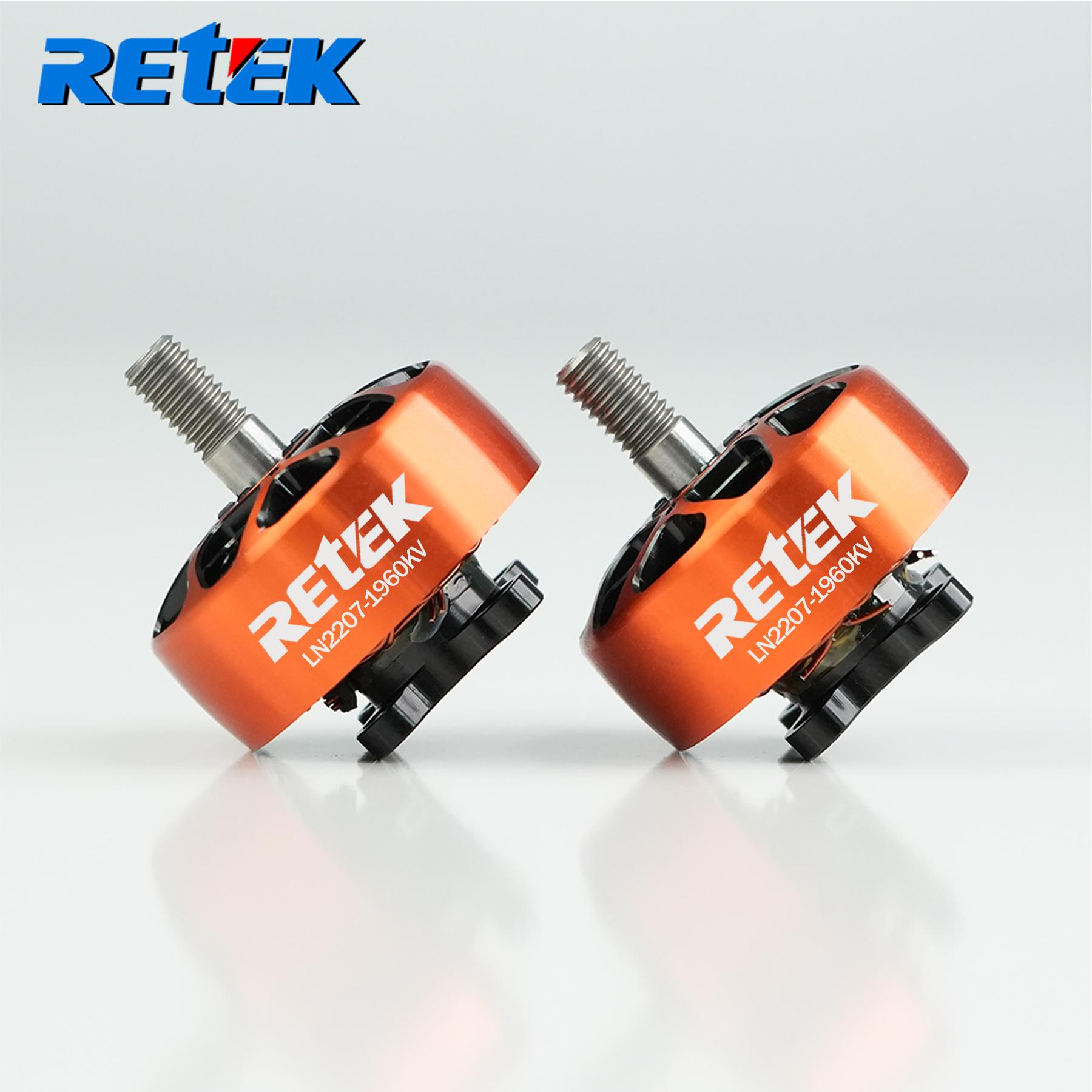
Many pilots fixate on peak thrust or top speed and completely miss how voltage sag reshapes the whole flight envelope. A pack that reads 25.2V on the bench can dip under 21V within seconds of hard throttle, and that drop isn't just a number—it changes motor timing, cooling behavior, and how the flight controller interprets your throttle curve. If you're picking KV based on manufacturer charts taken at a steady 4.2V per cell, you're already flying a different setup than the one you planned.
The overlooked part is that lower KV isn't always the safer bet once sag enters the picture. A 1700KV motor on a sagging six-cell pack might actually underperform a well-supported 1900KV setup because the higher KV winds are better at converting available voltage into usable RPM when the pack is stressed. Pilots who chase efficiency by dropping KV often end up flying deeper into the sag zone, pulling more current to compensate, and heating the pack even faster. The loop feeds itself.
Before settling on a KV choice, log voltage under full load for at least ten seconds—not a quick punch-out. Then decide what RPM you actually need in that sagged state. Some pilots are surprised that a smaller prop on a higher KV motor keeps voltage more stable than a big prop on a lower KV motor, simply because the current spike is shorter and shallower. Matching KV to sustained sag voltage, not resting voltage, is where most setups quietly fall apart.
Thrust Numbers That Matter More Than Peak Watts
Most spec sheets lead with peak watts because that number looks big and impressive. But wattage tells you how much power goes in, not how much useful force comes out. Two motors can draw the same current, yet one delivers far more usable thrust simply because its impeller, duct, or blade geometry is shaped to move air rather than fight it.
Look instead at thrust measured in real conditions, especially after the first minute of use. Continuous thrust and the curve that shows how force holds up as heat builds will reveal more than any momentary peak figure. A motor that briefly spikes and then sags under load feels weak in the hand, while one with modest peak numbers but flat, repeatable thrust does the actual job.
Pay attention to grams or newtons per watt at your typical throttle setting, not just the headline maximum. That ratio shows whether the system turns electrical energy into motion efficiently. It also matters how thrust feels through the throttle range: early, predictable response beats a late surge that only appears at full power and disappears seconds later.
Why Lighter Bells Change Cornering Before Top Speed
Most of the benefit shows up at the first steering input rather than on a long straight. A lighter bell sits at the outer edge of the rotating assembly, where even a small reduction in mass cuts the gyroscopic force the rider has to push against. That means the bike drops into a corner with less bar pressure, holds a lean angle without constant correction, and changes direction in a series of esses with noticeably less effort.
Top speed only tells part of the story because heavy bells store energy once they are spinning fast. During corner entry and mid-corner, that stored energy resists changes in lean and direction. Removing mass from the bell reduces that stabilizing resistance, so the front wheel feels more willing to turn in and the rear does not lag behind when you flick from one side to the other.
The payoff arrives before the throttle is pinned on the exit. With less rotating mass out at the bell, the chassis settles earlier, the line tightens without fighting the bars, and the transition from trail braking to acceleration feels cleaner. By the time top speed becomes the focus, the lighter part has already done its main job through the turn.
Thermal Limits and Demagnetization Risks at Full Throttle
Running a motor at full throttle pushes winding temperatures well past the point where most insulation systems begin to soften. The copper losses climb with the square of the current, so a brief burst of maximum torque can raise the hot-spot temperature by thirty to fifty degrees within seconds. Unless the cooling path has enough thermal mass to absorb that spike, the enamel on the windings starts to degrade long before the external case feels hot to the touch. Repeated full-throttle pulls on a warm day can easily push the stator into a range where the insulation life drops from years to hours, even if the controller never flags an over-temperature fault.
Heat is only half the story. Permanent magnets lose coercivity as temperature rises, and a strong demagnetizing field at full throttle arrives exactly when the magnets are weakest. In a surface-mounted rotor, the combination of high stator current and elevated magnet temperature can nudge the operating point past the knee of the demagnetization curve. The result is not a sudden failure but a subtle loss of torque that grows worse with every hard run. Once the rotor has been partially demagnetized, the motor draws more current to produce the same output, which accelerates heating and pushes the magnets further down the same path.
Designers often protect against this by derating the continuous current and placing temperature sensors in the end windings, but those safeguards do not always capture what happens during a ten-second full-throttle burst. The real risk lives in the thermal lag between the copper, the lamination stack, and the magnet surface. A sensor buried in the housing may read ninety degrees while the magnet edge has already crossed one hundred and forty. For anyone pushing a drive to its advertised peak, the practical advice is to watch the trend rather than the trip point: if the motor needs more current after several hard accelerations to reach the same speed, the magnets are already telling you something.
What Your Motor OEM Should Already Know About Your Frame
The frame drawings rarely tell the whole story once welding fixtures and paint booths get involved. A motor OEM should know which mounting faces are machined after fabrication and which are left as-welded, because a few tenths of a millimeter across the bolt pattern can turn a clean motor housing into a stressed structural member. If the frame team has not measured actual production parts, the OEM is effectively guessing at the bearing alignment and seal load the motor will inherit.
Local stiffness at the mounting lugs matters more than the overall frame weight or tube diameter. A motor can pass every bench test and still excite a frame resonance under partial throttle or regen braking if the OEM does not know the first bending mode of the installed assembly. The useful information is not a single stiffness number; it is a frequency sweep of the bare frame with the battery mass in place and a realistic clamp load on the bolts.
Thermal behavior is another gap. The frame is not just a bracket; it is part of the motor's heat sink and sometimes a galvanic partner. An OEM should know the contact area that actually transfers heat after powder coat, the expansion mismatch between an aluminum shell and steel inserts, and whether the mounting hardware will hold preload after repeated hot-cold cycles. Small details like a zinc-flake coating on the bolts can prevent fretting and loosening long before they show up as warranty claims.
FAQ
Most racers start with a stator around 2207 or 2306 for 5-inch props. You want enough torque to snap the quad out of corners without carrying extra copper and iron that blunts response. Bearing quality and air gap consistency matter more than a flashy peak thrust number.
Not always. High KV gives top-end RPM on lighter props, but it also raises current draw and heat. On tight tracks, a slightly lower KV motor with more aggressive prop pitch can feel punchier because it recovers RPM faster after hard directional changes.
Check that the factory can hold the winding pattern and magnet grade you actually specified. Ask for a sample batch and measure resistance across all motors. Small variances show up as oscillation or one motor running hot under load.
On 6S, a 2207 motor around 1700-1900KV is a solid middle ground. The higher voltage lets you drop KV while keeping the same RPM, which reduces current for a given thrust. You get cooler electronics and fewer voltage sag issues during hard punchouts.
At the bell and stator, grams matter. A heavy motor makes the quad feel floaty and slower to correct. Dropping 10 grams per corner can be noticed in split-S entries and wall proximity. That said, going too light with thin bells invites failures on gate hits.
Bench thrust doesn't account for transient response. If the stator is oversized for the prop or the magnets are cheap, the motor needs longer to spin up and down. On a racing line that's mostly throttle blips, responsiveness beats a static thrust curve.
Match the ESC headroom to current spikes, not just rated continuous current. Use a low-ESR capacitor at the battery lead, keep motor screws away from windings, and choose props that let the motor reach its intended RPM range. A motor that never unloads builds heat fast.
Conclusion
Choosing an OEM motor for a racing quad rarely comes down to a single spec on a datasheet. Stator volume sets the torque ceiling, but reading those numbers like a pit mechanic means checking not just the printed width and height, but the air gap, lamination stack consistency, and how much copper actually fills the slots. A 2207 may outperform a 2306 on certain props simply because the taller stator handles heat rejection differently at sustained throttle. Voltage sag changes this picture fast: a 4S pack that dips to 12.8V under load makes a 2450KV motor behave nothing like its static RPM math suggests, so matching KV to real pack voltage and race gate exit speeds matters more than chasing a headline KV figure. On paper, peak watts grab attention, but thrust at 30, 50, and 70 percent throttle tells you how the quad pulls out of a hairpin or recovers after a failed gap. Lower rotating mass in the bell often shows up first as sharper direction changes, not higher top speed, because less inertia lets the flight controller change prop speed faster.
Heat is the quiet killer. Full-throttle punchouts push stator temperatures past the point where weaker magnets begin losing field strength, and repeated cycles can permanently demagnetize a motor that still looks fine on the bench. That is why an OEM partner should already understand your frame's arm resonance, prop clearance, and typical weight distribution before recommending a wind. A motor that tests great on a stand may sit on a frame node that amplifies vibration into yaw twitches or cooks the rear motors unevenly. The right choice balances stator geometry, realistic battery sag, mid-throttle thrust, bell weight, and thermal headroom for how your pilots actually fly.
Contact Us
Contact Person: Sean
Email: [email protected]
Tel/WhatsApp: +86-13338694967
Website: https://www.retekmotion.com