

OEM Plastic Packaging: A Complete Guide to Custom Solutions for Your Brand
2026-09-07
Every product deserves packaging that works as hard as the brand behind it. But off-the-shelf plastic containers rarely tell your story—or protect your goods the way they should. That's where OEM plastic packaging changes the game, and Sanrong Packaging has spent years perfecting custom solutions that don't just hold products; they elevate them. From material selection to mold design, every detail matters. Ready to see what your brand has been missing? This guide walks you through everything you need to know before your next packaging decision.
When Stock Packaging Falls Short: The Case for Custom
Off-the-shelf boxes rarely match the actual dimensions of what you are shipping. A slightly oversized carton leaves room for products to shift, forcing you to add crumpled paper or air pillows just to keep items from knocking around. That extra filler is not free, and it does not always prevent crushed corners or scuffed surfaces when a package gets tossed onto a conveyor. Custom sizing strips out that slack so the product sits snugly, cutting material waste and reducing damage claims before the parcel even leaves your facility.
Then there is the impression left on the person opening the package. Generic brown boxes arrive looking identical to thousands of other deliveries, so the unboxing moment becomes forgettable. A custom-printed mailer or a die-cut insert can carry your colors, typography, and a small note that makes the reveal feel intentional. That kind of detail turns a routine shipment into a quiet brand statement without shouting.
Operationally, custom packaging tends to simplify things after the first design round. Pick-and-pack teams spend less time hunting for the right void fill, shippers avoid paying to move empty space, and customers are less likely to receive a box that looks like it lost a fight. The upfront investment is real, but for products with odd shapes, fragile components, or a brand worth protecting, the switch usually pays for itself in fewer replacements and stronger repeat orders.
Selecting Plastic Grades That Match Your Brand’s Promise
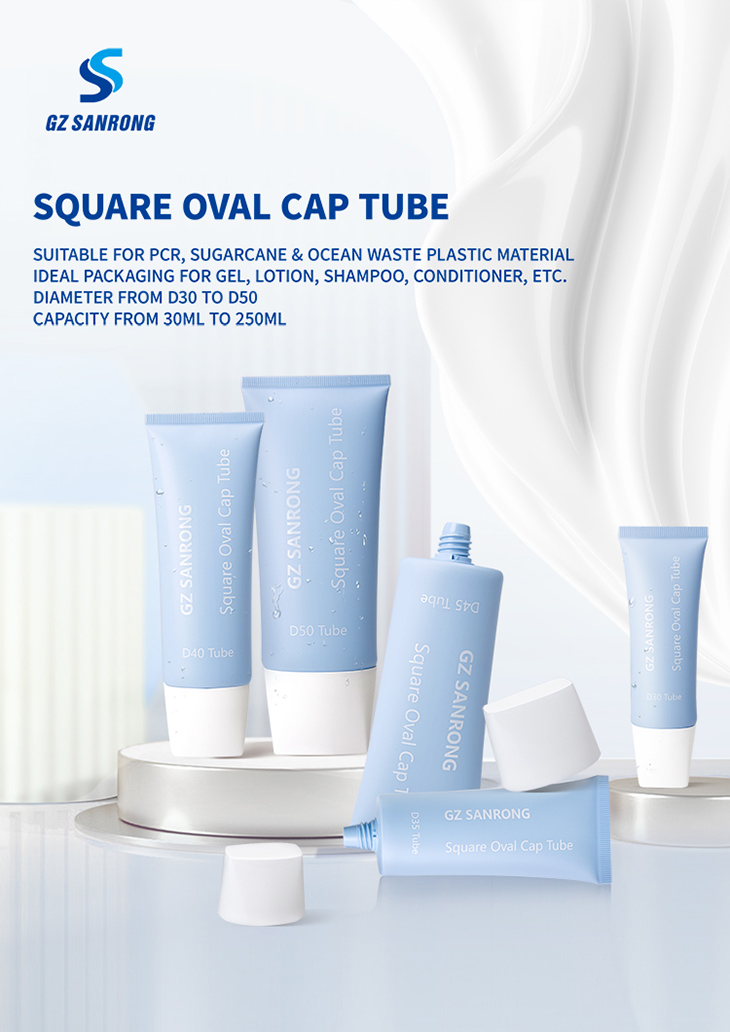
Choosing a plastic grade is rarely just an engineering decision—it's a direct reflection of what your brand claims to deliver. If your promise is rugged outdoor performance, a generic polypropylene won't hold up against impacts the way a glass-filled nylon or high-impact copolymer will. On the other hand, a premium skincare line that emphasizes purity and clarity needs PETG or acrylic with excellent chemical resistance and optical properties, so the packaging doesn't haze or degrade after months on a shelf.
Consistency is where many brands slip. A single impressive sample from a supplier proves little if the next production run feels different to the hand or snaps at a different force. Locking in a specific grade means more than picking a resin family—it requires controlling melt flow, additive load, and even colorant compatibility. Those subtle shifts can alter tactile feedback, hinge life, or the perceived quality of a closure, eroding trust that took years to build.
Sustainability claims demand particular care. A grade with 30% post-consumer recycled content might sound aligned with an eco-friendly promise, but if it runs poorly on your tooling and generates excessive scrap, the net environmental benefit disappears. The right match often involves testing how recycled content affects dimensional stability, odor, and processability, then selecting a grade that holds up without forcing your production team into constant adjustments. Otherwise, the brand's promise becomes a marketing label rather than a material reality.
Designing for Both Shelf Impact and Durability
A package that grabs attention on the shelf often does so through bold color, unusual shapes, or tactile finishes—yet those same choices can become liabilities the moment a carton is stacked, slid, or shipped. One practical approach is to treat the outer surface as a system rather than a single graphic layer. For instance, pairing a scuff-prone matte finish with a raised spot varnish on high-contact edges preserves visual depth while adding a sacrificial barrier. Similarly, soft-touch coatings feel premium but can pick up oils from repeated handling; choosing a formulation with higher cross-link density keeps that velvety feel without turning grimy after a week on the shelf.
Durability also hinges on how the structure resists compression and impact. Flimsy tuck flaps or shallow glue seams are often the first points of failure, even when the printed surface looks fine. Adding folded reinforcement tabs inside the corners, or switching to a slightly heavier board with a higher edge crush rating, can prevent the bowed side panels that make a package look tired on the shelf. Drop testing from realistic heights—including the awkward, tilted impacts that happen when a box slides off a conveyor—reveals weaknesses that visual inspections miss. The target is a package that still looks crisp after being handled, restocked, and carried home, not one that only photographs well in a studio.
What Actually Happens During Production: A Step-by-Step Preview
Production rarely starts with the dramatic hum of machinery everyone imagines. First, the team walks the floor with a pre-production checklist, checking that raw materials match the approved samples and that every station has the right tools within arm’s reach. A single missing torque bit or a batch of slightly off-spec plastic can stall the line before it ever moves.
Once the line fires up, the first few units get treated as sacrificial prototypes. They are pulled aside for a first-article check, where dimensions, weld penetration, and even the angle of a label are compared against the control board. Adjustments happen in real time, often with a toolmaker hovering over the fixture, shaving down a stop by half a millimeter until the result feels repeatable.
What surprises most people is how much of production is quiet verification, not constant motion. In between the stamping, soldering, or sewing, workers log small measurements, swap out worn bits, and flag anything that looks subtly off. By the time the finished goods are packed, every unit has passed through more hands and checks than the original drawing ever anticipated.
The Budget Line Items Most Brands Forget to Ask About
Most budget templates roll out the same tired line items: creative fees, paid media, production, maybe a small contingency. But the costs that quietly eat margins are the ones nobody thought to ask about until the invoice shows up. Usage rights renewals for talent or music often expire long after launch, and the bill arrives when the campaign is already behind you. Then there's asset versioning—turning one master file into twenty regional cuts with localized supers, closed captions, and format conversions that somehow never made the original scope.
Another invisible line is accessibility compliance. Retro-fitting video players, color contrast, alt text for every product image, and screen-reader testing isn't optional once legal reviews begin, yet it rarely appears in initial estimates. Translation and transcreation get treated as a single flat rate, but idioms, cultural references, and right-to-left layout shifts multiply the cost fast. If the brand operates in multiple markets, that overlooked line can double the production budget before a single ad goes live.
Storage and asset management are the quiet recurring fees. Cloud hosting for high-res campaign files, metadata tagging, digital rights management, and version history retention all add up monthly but are usually absent from annual planning. Add in platform-specific technical adaptations—interactive GIFs versus video, dark mode variants, six-second cutdowns for different placements—and you have a serious gap. Plainly asking vendors for a full list of what we're not seeing before signing can reveal these hidden costs.
From Prototype to Unboxing: Lessons from Live Projects
Moving from a rough prototype to a finished product ready for unboxing is rarely a straight line. In live projects, the most surprising lesson is how much physical constraints dictate the final design. A foam mockup that feels great in a meeting can turn awkward once real materials, weight distribution, and manufacturing tolerances come into play. One hardware team we followed discovered that the snap-fit clips which worked perfectly in 3D-printed form would shatter under injection-molded stresses, forcing a complete redesign of the enclosure just six weeks before launch. Unboxing is more than opening a box—it's the moment all those hidden compromises become visible to the user.
Another hard-won insight is that user feedback changes meaning at each stage. During prototype testing, people forgive rough edges and focus on the core idea. But by the time you reach packaging and retail, expectations shift entirely: the unboxing experience itself becomes a feature. Live projects teach you to treat packaging not as an afterthought but as the first physical touchpoint. We watched a startup iterate through eleven box designs after realizing that a too-tight lid caused users to shake the product out aggressively, damaging the finish. Small details—tear strips, foam inserts, even the sound of the lid lifting—turn out to matter as much as the product inside.
Perhaps the biggest lesson is that documentation and handoff are where prototypes often die. A working prototype may be held together with tape and hope, but production requires drawings, tolerances, and test reports that nobody enjoys creating. Live projects show that teams which treat the journey from prototype to unboxing as a series of small, shippable increments—rather than a single heroic leap—consistently deliver better results. You learn to celebrate not the finished gadget, but the boring spreadsheet that made it repeatable.
FAQ
It means a manufacturer produces packaging based on your exact specifications—size, shape, threading, wall thickness, logo placement, even custom color compounds. You aren't limited to catalog stock. The factory runs your dedicated molds or adapts near-net shapes to match your product, so the container fits your filling line and shelf presence from day one.
PET is the go-to for clarity and impact resistance, often used in beverage and personal care bottles. HDPE offers excellent chemical resistance for household cleaners and supplements. PP works well for caps and closures because it withstands repeated flexing. For creams or viscous products, softer LDPE squeeze tubes or bottles feel better in hand. Choosing by product chemistry and barrier needs is more reliable than picking by looks alone.
If your volume is under 10,000 units a year or you need to validate a market quickly, a stock or shared mold with custom labeling and color can be smart. Custom tooling makes sense once you have steady volume, a unique shape requirement, or a branded silhouette that differentiates you on shelf. The upfront tooling cost often pays back through better fill efficiency and lower piece price at scale.
For stock containers with custom decoration, MOQs often start around 5,000 to 10,000 pieces. Fully custom molds may require 50,000 pieces or more to make the tooling investment work. Lead times vary widely: stock packaging can ship in two to four weeks, while new tooling plus production often runs eight to fourteen weeks. Planning production two quarters ahead avoids rush fees and air freight surprises.
Yes, if you focus on material reduction first. Lightweighting the wall or redesigning the neck can cut resin use and lower cost per unit. Post-consumer recycled PET and HDPE are now available at close to virgin material pricing for many colors. Mono-material pumps and closures simplify recycling. Since these changes happen at the tooling and compounding stage, they are cheaper to integrate early than to retrofit later.
A heavier base, soft-touch matte finish, or a precise snap-fit closure adds perceived value. Subtle tapering in the silhouette, embossed logos, and consistent wall thickness contribute more than loud colors. Even the neck finish matters: a smooth, well-finished thread prevents leakage and feels quality when opened. Premium feel usually comes from tight tolerances and tactile surfaces, not extra decoration.
Request a detailed mold trial report and signed samples before mass production. Agree on acceptable defect levels for scratches, short shots, and dimensional variation. Third-party inspection during and after production catches issues before shipping. Building a relationship with a single point of contact at the factory helps because packaging problems often come from miscommunication about tolerances or decoration placement, not from bad equipment.
Conclusion
Stock packaging often looks like the fastest option until a brand realizes the dimensions, finish, or plastic grade simply won't hold up under real-world use. Custom OEM plastic packaging changes that equation. It starts with selecting a resin that matches what you actually promise—flexible LDPE for squeeze tubes, rigid PET for crystal clarity on shelf, or post-consumer HDPE for a quieter eco story. The design stage has to balance shelf impact with durability, because a container that clouds after filling or cracks in transit undermines the whole launch. That's why production previews matter more than most teams expect—mold trials, wall thickness checks, and drop tests expose weaknesses long before a full run begins.
Then there are the budget line items that slip through early conversations—tooling amortization, minimum order quantities, liner compatibility, and freight based on how efficiently the containers nest. Real project experience shows prototypes rarely survive first contact with the filling line unchanged; cap torque, label adhesion, and sealing surface all need fine-tuning, and those adjustments often surface only after a pilot run. The brands that get unboxing right treat OEM plastic packaging as a chain of small, informed decisions—not a one-time purchase—where each choice from resin to closure supports the next, and where a little extra attention to the hidden details pays off in fewer returns and a stronger shelf presence.
Contact Us
Contact Person: Alex Wu
Email: [email protected]
Tel/WhatsApp: 86-20-37965868
Website: https://www.gzsanrong.com/en.html