

OEM Specialty Fasteners Guide for Modern Manufacturing
2026-10-13
Specialty fasteners rarely get the attention they deserve in OEM planning, yet they're often the first point of failure when tolerances drift or materials underperform. This guide takes you beyond standard catalog picks and into the practical choices that keep modern manufacturing lines moving. From custom threading to corrosion resistance, we'll cover the critical factors—and show how Peak Fasten helps engineers turn tight specs into dependable parts.
How Micro Fasteners Enable Miniaturization Without Compromising Strength
Shrinking a product usually means every component gets weaker—at least that’s the assumption. Micro fasteners break that rule. By pairing high-strength alloys like titanium or precipitation-hardened stainless steel with cold-forming processes, manufacturers can produce screws and bolts under 1 mm in diameter that still hold torque values comparable to larger counterparts. The key isn’t just the material, but how the grain structure is worked during forming, which adds strength without adding size.
Thread geometry matters just as much. Standard thread profiles waste space and create stress risers when scaled down. Micro fasteners often use truncated or radiused root designs, along with finer pitches, to distribute load more evenly across the tiny engagement zone. Some designs even move the drive feature to the tip or use hexalobular recesses that allow higher tightening torque before cam-out, so you can achieve a secure clamp without enlarging the fastener head.
Then there’s the issue of installation. A micro screw is useless if it strips during assembly. Specialized surface treatments—such as thin-film lubricants or nickel-fluoropolymer coatings—reduce friction without building up thickness, preventing galling in stainless-to-stainless joints. The result is a class of fasteners that lets designers shrink enclosures, medical implants, and wearables while maintaining joint integrity that was once thought impossible at this scale.
Designing for Disassembly: Specialty Fasteners in Circular Manufacturing
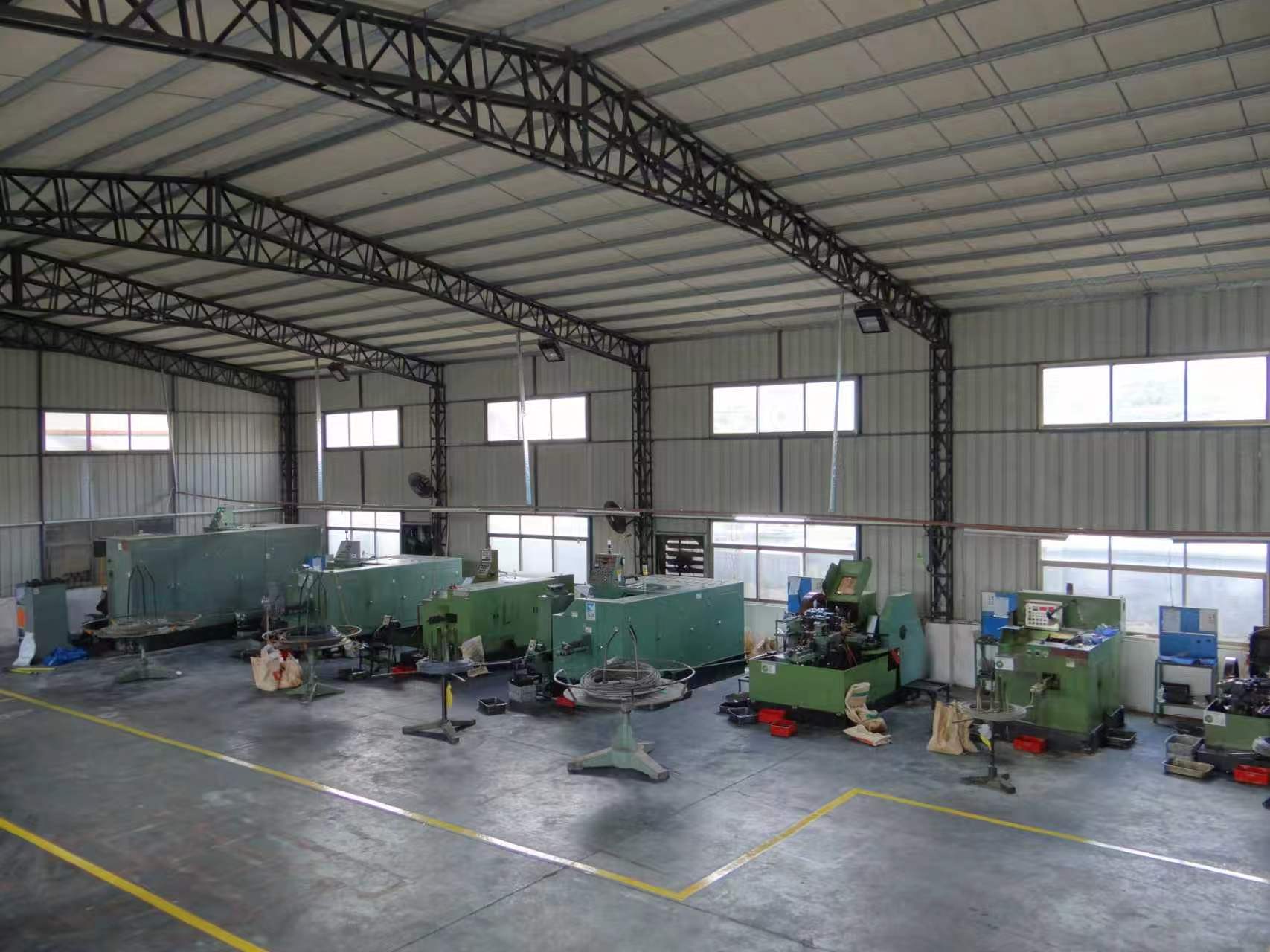
Specialty fasteners quietly decide whether a product ends up as a pile of mixed scrap or as a set of cleanly separated materials. In circular manufacturing, the goal is not just to hold parts together, but to let them go without damage when the time comes. Snaps, magnetic couplings, and threaded inserts with custom breakaway features replace permanent adhesives and rivets. The result is a product that can be taken apart in minutes, not hours, and whose components retain enough value to re-enter the supply chain.
The trick lies in matching the fastener to the expected lifespan and the number of disassembly cycles. A snap-fit may work for a device serviced once, while a bayonet mount or a captive screw suits something refurbished repeatedly. Designers often add visual cues, such as color-coded heads or exposed release tabs, so that anyone with basic tools can see where to start. This shifts the burden away from specialized labor and toward intuitive, foolproof separation.
Cost remains the usual objection, yet the economics change once you count avoided landfill fees, recovered material value, and the ability to resell refurbished modules. Specialty fasteners may cost more per unit, but they often eliminate glue stations, curing time, and destructive teardown. In a truly circular setup, the fastener is not a commodity; it is a carefully designed interface that protects both the product's integrity and its future usefulness.
From CAD to Custom Cold Heading: Accelerating Prototype Timelines
The shift from a finished CAD model to a custom cold heading setup often compresses prototype delivery by two to three weeks, but only when the design file moves straight into tooling review instead of cycling through general quoting. Once the part geometry is shared, the heading supplier can begin forming simulation and die layout work within a day. For many threaded and shouldered fasteners, a functional cold headed sample lands on an engineer’s desk in eight to twelve working days, not the six to eight weeks typical of traditional machined prototypes.
A practical reason this works is that cold heading prototypes carry the same grain flow and work-hardened structure as volume production parts. Test results for tensile, fatigue, and torque are therefore reliable early, without the usual hand-off delay between a shape-only prototype and a process-capable sample. The CAD model drives the heading sequence directly—upset, extrude, head, trim—so underfill and folding risks get caught on the computer before a single die blank is cut.
The faster loop also changes how teams handle revisions. A dimension tweak or a radius change can be rerun through forming simulation the same afternoon, and tooling adjustments follow without restarting a new quoting cycle. That iterative freedom lets designers test multiple head shapes or material tempers in parallel, which rarely fit the old prototype calendar.
Managing Thermal Expansion in High-Temperature OEM Assemblies
Thermal expansion isn’t a single number you can pull from a datasheet and forget. In high-temperature OEM assemblies, joints, housings, and fasteners all move at different rates once the system climbs past a few hundred degrees. A steel bolt in an aluminum flange may hold perfectly at room temperature, but by 400°C that same pair can lose preload or gall during disassembly. The practical fix usually starts with mapping the actual thermal gradient across the assembly, not just the peak furnace or exhaust temperature, because the hottest zone dictates which clearance, slot, or flexure needs to give first.
Material pairing does more work than most design reviews give it credit for. Matching coefficients of thermal expansion between a ceramic insulator and a nickel alloy housing is rarely possible, so the assembly needs a deliberate compliance path. Slotted mounting ears, bellows couplings, and spring washers tend to outperform tighter tolerances once thermal cycling begins. A useful rule of thumb is to let one end of a long component float axially while the other end sets the reference plane; otherwise, even a 0.2% length change can turn a precision fit into a cracked boss or a seized guide pin.
Fastener strategy changes at temperature, too. Standard torque specs assume room-temperature friction and modulus, neither of which survives a sustained 600°C soak. High-temperature OEM assemblies often benefit from reduced preload targets, anti-seize compounds rated for the actual peak, and periodic re-torque intervals after the first thermal break-in cycle. Capturing that break-in shift is far cheaper than field failures from galled threads or relaxed joints.
The Real Cost of Vibration Loosening – and How Engineered Threads Prevent It
Vibration loosening doesn't announce itself with a bang. It starts as a subtle loss of clamp load, then shows up as misalignment, fretting marks, or unexplained noise. By the time a bolted joint fails, the real costs have already stacked up: emergency downtime, overtime labor, replacement parts, and sometimes collateral damage to nearby components. Maintenance teams often respond by retightening the same fasteners again and again, but that only treats the symptom. The underlying issue is that standard thread geometry, under cyclic side loads, allows the nut to back off incrementally.
Conventional 60-degree threads rely on friction between mating flanks to hold preload. Under vibration, especially transverse vibration, microscopic slip occurs at the thread interface. Once that slip starts, even a properly torqued fastener can lose tension within thousands of cycles. Common locking aids like spring washers, nylon patches, or chemical threadlockers may slow the process, but they do not eliminate the relative motion that drives self-loosening. In many applications, these add-ons create a false sense of security while the joint slowly walks toward failure.
Engineered threads attack the problem at the source. Designs such as wedge-locking threads alter the thread profile so that the nut's load flank wedges against a ramp on the bolt thread when tension is applied. Instead of relying solely on friction, this geometry redirects transverse forces into an increase in radial locking force, making it mechanically difficult for the nut to rotate loose. As a result, clamp load remains stable even under severe vibration, reducing unplanned maintenance, extending service intervals, and eliminating the hidden costs that ordinary threads quietly accumulate.
Bridging Aerospace Tolerance with Automotive Volume Production
In aerospace, every micron matters. In automotive, every second counts. Merging these two worlds isn't about compromise—it's about redefining what precision means at scale. The tolerance stacks that keep a jet engine stable at 40,000 feet don't naturally survive a moving assembly line churning out a car every minute, yet the demand for such crossover is rising as vehicles become more electrified, connected, and safety-critical.
The real challenge isn't just technical; it's cultural. Aerospace engineers treat variability as an enemy to be eliminated. Automotive production engineers treat variability as a constant to be managed. Bridging the gap requires a new breed of manufacturing cells where in-line metrology, adaptive tooling, and real-time process correction operate at automotive speed but with aerospace-grade traceability. Think of it as teaching a Formula 1 pit crew to rebuild a satellite transponder without slowing the race.
What emerges is a hybrid discipline: fault-tolerant processes that accept minor deviations and self-correct before they accumulate, paired with data architectures that log every calibration and every adjustment. The result isn't just a parts list—it's a production philosophy that lets a steering column meet the same confidence interval as a wing spar, without asking the factory floor to hold its breath.
FAQ
Specialty fasteners address specific assembly constraints—unusual thread pitches, tight clearances, captive features, or environmental sealing—that commodity fasteners cannot handle without compromise. They are usually produced to tighter dimensional tolerances and may integrate multiple functions like locking, sealing, or grounding into a single part, reducing part count.
Start with the end-use environment: temperature range, chemical exposure, galvanic interaction with mating materials, and mechanical load. For high-temperature corrosive settings, nickel alloys or precipitation-hardening stainless steels often outperform standard 300-series stainless. Coatings like zinc-nickel or ceramic-based finishes add protection without altering fastener strength.
Provide the exact installation and service conditions: joint stack-up dimensions, torque or clamp load requirements, access limitations for tools, expected vibration or thermal cycling, and any regulatory standards. Sketches or 3D models with critical features marked help the manufacturer quote accurately and avoid design iterations.
They let designers use thinner or dissimilar materials without sacrificing joint integrity. Features like flanged heads, self-tapping threads for composites, or titanium alloys cut grams per joint while maintaining clamp retention. The right fastener can replace multiple components or allow a smaller hole, preserving structural strength in weight-critical assemblies.
Ask for complete material certifications, lot traceability from raw stock to finished part, in-process dimensional inspection data, and evidence of process control for heat treatment and plating. For safety-critical applications, PPAP (Production Part Approval Process) documentation and first-article inspection reports are non-negotiable.
Identify which features genuinely improve function versus those added by habit. Testing prototypes in the actual assembly can reveal whether a simpler geometry or standard material will work. Collaborating with the fastener supplier early in the design phase often uncovers lower-cost alternatives that meet the same performance requirements.
Demand for multi-functional fasteners that integrate sealing or electrical conductivity, additive manufacturing for low-volume complex geometries, and digital inventory systems that link fastener usage data to production planning. There is also growing interest in bio-based or recyclable coatings driven by sustainability targets.
Conclusion
Modern OEM fastening has moved well beyond picking a screw from a catalog. When designs shrink, micro fasteners step in with cold-headed geometries and specialized alloys that preserve clamp load in packages barely visible to the naked eye. Prototyping no longer waits weeks for tooling; direct CAD-to-custom cold heading compresses first-article lead times to days, letting engineers iterate thread forms, under-head fillets, and drive recesses without committing to production volumes. In high-temperature assemblies, matched coefficients of thermal expansion across fastener, substrate, and joint prevent the creep and preload loss that quietly degrade exhaust, battery, and power electronics connections.
Vibration loosening carries a price tag far beyond re-torque labor. Engineered thread profiles and prevailing-torque features attack the root cause, keeping joints secure without chemical adhesives that complicate service. Design for disassembly then becomes practical: specialty fasteners with captive features or reversible locking elements support circular manufacturing, where components come apart cleanly for refurbishment or material recovery instead of heading to scrap. Finally, the gap between aerospace precision and automotive scale is closing. Suppliers now hold micron-level tolerances on high-volume cold heading lines, so a single fastener platform can serve both a satellite bracket and a million-unit EV program without full revalidation.
Contact Us
Contact Person: Mason Lv
Email: [email protected]
Tel/WhatsApp: +86 13027998452
Website: https://www.peakfastentech.com