

Silicon Carbide Ceramic Vendor: How to Choose the Right Supplier for Demanding Industries
2026-10-03
Choosing a silicon carbide ceramic vendor isn't like buying standard industrial parts. In demanding industries—semiconductor, aerospace, energy, chemical processing—the wrong supplier can mean premature wear, thermal shock failure, or a shutdown you can't afford. This guide breaks down what to look for beyond the data sheet: raw material sourcing, sintering control, machining precision, and after-sales engineering support. We'll help you separate genuine capability from bold claims. As a manufacturer that serves these exact markets, HUAYI TECH understands that a ceramic component is only as good as the process behind it.
Purity levels that separate premium SiC from the rest
When it comes to silicon carbide, the difference between a material that performs flawlessly in high-stress applications and one that fails prematurely often comes down to a fraction of a percentage point. Premium-grade SiC typically boasts impurity concentrations below 100 parts per million, with the most critical contaminants—nitrogen, aluminum, and boron—controlled to levels that keep the crystal lattice nearly defect-free. This level of cleanliness isn't just a number on a certificate; it directly influences thermal conductivity, electrical resistivity, and the material's ability to withstand repeated thermal cycling without microcrack formation.
Manufacturers who push for the highest purity don't simply rely on standard sublimation processes. They employ multiple purification stages, including high-temperature halogen treatment and repeated recrystallization, to strip out trace metals that can act as recombination centers. The result is a material where carrier lifetime remains predictable, allowing engineers to design power devices with tighter tolerances. In contrast, lower-tier SiC might still meet nominal specs but will exhibit wider variability in breakdown voltage and higher leakage currents under reverse bias—problems that surface only after weeks of field operation.
What separates the best from the rest is not just the final purity reading but the consistency across every batch. Premium suppliers monitor impurity levels at each growth run, adjusting the feedstock and process parameters to hold the same tight distribution month after month. This reliability means a power module built with such SiC won't suddenly shift its switching behavior because a hidden batch of slightly dirtier material slipped through. For industries where a single device failure can cascade into system downtime, that assurance is worth the premium price.
Questions to ask about sintering and densification
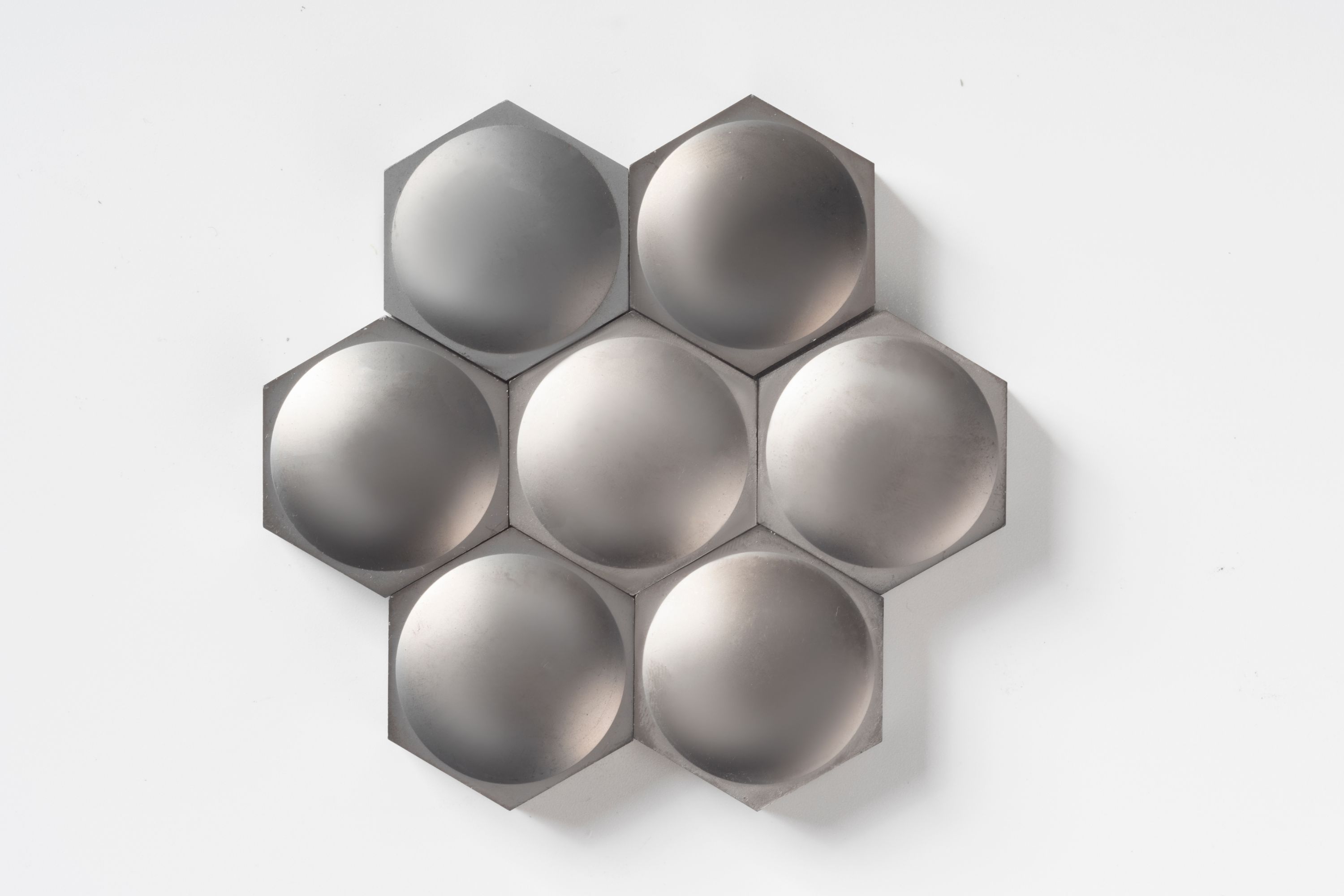
When evaluating sintering and densification outcomes, the first set of questions should probe how particle size distribution and green density interact with the firing schedule. Ask whether the peak temperature is high enough to activate bulk diffusion without triggering exaggerated grain growth, and whether the ramp rate allows binders and residual moisture to escape before pore closure begins. A useful follow-up is how the atmosphere—oxidizing, reducing, or inert—alters vacancy concentration and surface energy, since that often dictates whether densification stalls at 92% or climbs past 97%.
It’s also worth interrogating the pressure-assisted variants, if any. For hot pressing, spark plasma sintering, or sinter forging, ask how applied stress changes the dominant densification mechanism from grain boundary diffusion to creep or plastic flow. A sharper question is whether the measured shrinkage anisotropy matches the stress field, because uniform shrinkage can hide uneven pore elimination near the die walls. Finally, connect the microstructure to the property target: have you asked what residual porosity threshold is acceptable, and whether closed porosity alone will degrade fatigue life or thermal conductivity beyond your limit?
Why certifications alone won't guarantee consistency
A certificate hanging on the wall says you passed a test on some Tuesday afternoon. It doesn't say anything about how you handle a broken codebase at 2 a.m., or whether you'll still follow the same review checklist when the deadline is breathing down your neck. Consistency is a habit, not a credential. You can ace every exam and still merge sloppy work on a random Friday because you're tired or distracted.
Real consistency comes from repetition and personal systems, not from a framed piece of paper. It shows up when you write the same kind of commit messages whether the task is boring or exciting, when you run the same tests before every push without someone reminding you. Certifications might introduce you to best practices, but they can't force you to practice them daily.
Plenty of certified professionals cut corners when no one is watching. The paper proves knowledge at a single moment; it doesn't predict your behavior over hundreds of small decisions. If you want dependable work, you look for people who have built routines, survived messy projects, and still cared about the details on a slow Wednesday afternoon.
Custom geometries without hidden design compromises
Every curve, angle, and joint in our designs is shaped to your exact specifications—without the usual trade-offs that come with off-the-shelf components. We reject the idea that custom geometry must mean weaker stress points, awkward transitions, or compromised material integrity.
Our process starts with a direct conversation about your load cases and spatial constraints, then moves into iterative proofing where finite element analysis and real-world testing run in parallel. That way, the final geometry isn't just custom on paper—it holds up under the same scrutiny as any standard part, often better.
The result is a structure that fits your assembly perfectly and still meets every performance threshold you'd expect from a production-grade design. No hidden shortcuts, no last-minute redesigns, just geometry that works as good as it looks.
Lead times that reveal a supplier's true capacity
Short lead times often get praised as a sign of agility, but they can also hide the fact that a supplier is simply running below full utilization. When demand is soft, almost anyone can turn orders around quickly. The real test comes when you push a supplier with a sudden volume spike or a complex change request. A supplier that only looks fast during quiet periods hasn't proven much about its actual capacity to handle your peaks.
Watch what happens to quoted lead times as your order patterns shift. A supplier with genuine excess capacity will hold steady or even shorten timelines when you increase volume, because they have underused shifts or flexible lines waiting. In contrast, a supplier already near its ceiling will start stretching dates, splitting deliveries, or quietly outsourcing parts of the work. Those lengthening lead times are not just a scheduling inconvenience; they are a clear signal that the supplier's true capacity is being exposed.
A reliable way to read this is to compare lead times across different order sizes and seasons. Ask for a quote on a small pilot batch and then on a full production run. If the gap between those two lead times is large, the supplier likely lacks the ability to scale efficiently. Also, request reference data from their slowest month and their busiest month. Suppliers who are honest about capacity constraints will show you where their real limits lie, letting you plan around them instead of being surprised later.
Long-term partnership signals beyond the first quote
Price is what opens the conversation, but it rarely predicts how a supplier behaves when your production line is down on a Tuesday afternoon. The real signals of a long-term partner show up in the unglamorous moments: a buyer asks for a last-minute spec change and the supplier responds with two options instead of a complaint; a shipment gets delayed and you hear about it before you have to chase. These aren't polished sales tactics—they're operational reflexes built over years of working through problems together.
Look for the quieter markers too. Does the supplier proactively share raw material lead times that might affect your orders next quarter? Do they ask about your end customer's experience, not just purchase order accuracy? A quote can promise capacity, but only a partner demonstrates it by remembering that your fifth order always needs faster turnaround than the first. That memory, and the willingness to act on it, is worth more than any negotiated discount.
FAQ
Ask for density, flexural strength, and grain size distribution from actual production lots, not just spec sheets. A trustworthy vendor will provide traceable batch records and third-party test results. Compare those numbers against your own requirements, and run a small pilot batch if the risk is high.
Request data from similar applications, but don't rely on it blindly. Design a short accelerated test that mimics your worst-case temperature cycling and corrosive exposure. A vendor with real expertise will help you interpret the results and may suggest a different grade or surface treatment.
Reaction-sintered, pressureless-sintered, and hot-pressed SiC all behave differently in terms of porosity, strength, and cost. For high-purity or high-stress uses, pressureless-sintered or hot-pressed material often wins, but reaction-sintered can be fine for less demanding parts. Make the vendor explain why their chosen method fits your application.
Precision grinding, polishing, and laser marking matter a lot when parts must fit tightly or withstand cleanroom handling. Ask about achievable tolerances, surface roughness, and whether they use in-process measurement. A supplier that treats machining as an afterthought will cause alignment and assembly headaches later.
Look for evidence of statistical process control, such as control charts for critical dimensions and material properties. Ask how they handle non-conforming batches and whether they keep full traceability from powder to finished part. A quick plant walkthrough can reveal more than any audit checklist.
It depends on your volume and complexity. Large vendors offer capacity and stability, but smaller specialists often adapt faster to custom shapes, tight tolerances, and unusual material grades. If your design is still evolving, a smaller shop with strong engineering support may save you more time than a giant with rigid processes.
Cheaper quotes sometimes hide lower density material, higher impurity levels, or looser dimensional control. You may end up with parts that fail early in the field, leading to downtime, re-validation, and replacement costs that dwarf the initial savings. Always get samples and compare total cost of ownership, not just unit price.
Conclusion
Selecting a silicon carbide ceramic vendor for demanding industries requires looking beyond glossy brochures. Purity is the first real differentiator: premium SiC typically exceeds 99.5% alpha-phase content, with tightly controlled levels of free silicon, carbon, and metallic impurities that directly affect high-temperature strength and corrosion resistance. Ask specific questions about sintering methods—pressureless, hot pressing, or reaction bonding—and how densification parameters are monitored. A supplier who can discuss sintered density, grain size distribution, and pore morphology in detail is far more credible than one hiding behind generic statements. Certifications like ISO or AS9100 indicate a quality management system exists, but they do not guarantee batch-to-batch consistency. Request actual data from recent production runs, including SPC charts or lot traceability reports, to verify that the vendor's process control matches its paperwork.
Custom geometries often reveal hidden design compromises. A competent vendor will conduct a design-for-manufacturability review before quoting, flagging undercuts, sharp corners, or wall thickness variations that could lead to cracking or warping. Do not accept a supplier who promises any shape without asking about shrinkage allowances and machining tolerances. Lead times also tell a story: extremely short promises may indicate stocked generic parts rather than made-to-order precision, while excessively long ones can expose weak furnace capacity or poor scheduling. Look for a vendor who provides a realistic timeline with milestone updates and has backup sintering capacity. Finally, long-term partnership potential shows up in technical responsiveness, willingness to share failure analysis data, and investment in R&D—not just in a low initial quote. A supplier who asks about your operating environment and suggests material grade alternatives is likely one you can trust for years.
Contact Us
Contact Person: Junting Leo
Email: [email protected]
Tel/WhatsApp: +86 18615009766
Website: https://www.huayimaterial-china.com/