

Stand-Up Pouch Filling Machine Supplier Evaluation Checklist for Packaging Success
2026-11-16
Choosing the right stand-up pouch filling machine supplier can make or break your packaging line. With so many options on the market, how do you separate reliable partners from costly mistakes? A structured evaluation checklist is essential—covering everything from machine flexibility and material compatibility to after-sales support. At Wanying Machinery, we understand that packaging success starts with the right supplier decision. This guide walks you through the key criteria to assess, so you can invest with confidence and keep your production running smoothly.
Match the Machine to Your Pouch Styles and Film Materials
Before settling on a packaging machine, take a close look at the exact pouch styles you plan to run. Stand-up pouches with zippers, flat three-side seal pouches, spouted pouches, and quad-seal bags each place different demands on film handling, sealing pressure, and jaw design. A machine built primarily for simple pillow pouches may struggle with gusseted bottoms or require frequent changeovers when you switch to a zipper format. The more varied your pouch portfolio, the more you benefit from modular tooling and quick-release forming sets that let you move between styles without retiming the entire line.
Film material is equally critical. Thin, high-slip laminates behave differently than stiff foil or recyclable mono-material films. Machines with precise tension control and temperature profiling handle heat-sensitive films without distortion or seal wrinkles. If you are moving toward paper-based or compostable structures, you need sealing jaws that deliver consistent heat at lower dwell times, since these materials have a narrower processing window. Matching the machine’s sealing technology to the film’s melting point and coefficient of friction prevents waste, leakers, and downtime caused by film tracking errors.
Rather than treating pouch style and film type as separate checkboxes, evaluate them together. A machine optimized for heavy foil quad-seal bags will likely overpower a lightweight recyclable stand-up pouch unless the controls allow fine adjustments. Ask for trial runs using your actual films and pouch dimensions, not generic samples. Observe how the machine handles film splice points, static buildup, and seal bar release. The right fit shows up in steady-state production: consistent seal integrity, clean pouch geometry, and minimal operator intervention across every format you expect to pack.
Look Beyond Rated Speed to Practical Changeover Times
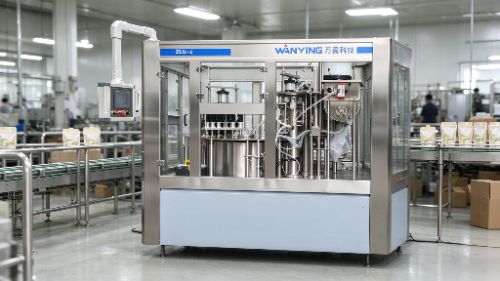
A machine's maximum rated speed often dominates the spec sheet, but it rarely reflects what happens on a real production floor. Once you factor in material loading, label roll swaps, cleaning, and adjustments for different product sizes, the headline number can shrink by a surprising margin. Instead of chasing the highest speed, ask how long a typical format change actually takes and how much of that process can be done while the line keeps running.
Short changeover times tend to reward you far more than an extra few meters per minute. A line that can switch from one product to another in under ten minutes without tools or specialized staff may easily outperform a faster machine that sits idle for half an hour between jobs. Look for quick-release guides, stored recipes, and accessible change parts that reduce the need for fine-tuning after every switch.
When evaluating equipment, time a complete changeover from the last good piece of one run to the first good piece of the next. Include the awkward realities: leftover materials, misaligned sensors, and operators who are still learning. That measured gap, repeated across dozens of small batches, often matters more to your weekly output than the rated speed printed in the brochure.
Test Seal Strength and Fill Accuracy With Your Own Products
Pack a few pouches with the same product you intend to run, then squeeze each one along the seal for thirty seconds. A weak seal usually shows up as a slow leak, a greasy edge, or a split when you flex the corner. If the package survives a rough squeeze but fails when dropped from waist height, your sealing temperature or dwell time might be the culprit.
Fill accuracy gets easier to judge when you use your actual product instead of a stand-in. Tare the empty pouch, fill to your target weight, and repeat the process at least ten times without changing your rhythm. Record the range, not just the average. A spread wider than one or two grams often points to inconsistent product flow, not a bad scale.
Test again after the product has sat for a few hours, since moisture migration and oils can weaken an initially strong seal. Run your finger along the inside edge and look for residue that slipped into the seal area during filling. This kind of delayed check catches problems that a quick pass right after sealing will miss.
Dig Into Support Response Times and Spare Parts Logistics
Look past the glossy support portal and ask for raw numbers: average first response time over the last twelve months, broken down by severity level, and the median time to actual resolution. A vendor that promises a fifteen-minute phone answer but takes three days to send a field technician is not giving you useful uptime. Ask who handles the 3 a.m. emergency call and whether there is a local engineer on rotation, because those details reveal more than any published SLA chart.
Spare parts logistics can make or break a repair window, so push for concrete stocking locations and shipment cutoffs. “Global parts network” means nothing unless the specific modules your equipment uses are sitting in a depot within a few hours of your site. Find out whether standard delivery is next-day or three-to-five business days, who pays for expedited freight when a line is down, and whether the vendor holds safety stock for legacy machines. Downtime usually costs far more than a courier fee, so get parts availability written into the contract with actual penalties.
Put response time and parts logistics together by running a tabletop failure drill or asking for three real customer timelines from the past quarter. A vendor can quote a two-hour response target and still lose a full day waiting on a capacitor from another region. Request the average elapsed time from initial ticket to confirmed equipment restart, and listen for hesitation when you ask about parts that are no longer in production. That combined view is where support promises either hold up or quietly fall apart.
Compare Total Ownership Costs, Not Just the Initial Quote
A tempting low sticker price often hides years of accumulated expenses. Maintenance schedules, energy consumption, replacement parts, and even the cost of downtime can dwarf the savings you thought you secured. Smart buyers map out every foreseeable cost over the equipment's expected lifespan before making a decision.
Contract terms and support services quietly shape the real figure. A vendor might charge less upfront but lock you into expensive proprietary consumables or limited warranty coverage. Compare how each option handles repairs, software updates, and operator training—those recurring line items reveal the truth behind the initial handout.
Depreciation and residual value deserve equal attention. Two machines with similar purchase prices can differ wildly in resale potential after five years of use. Check historical resale data, fuel efficiency under typical workloads, and the availability of third-party service networks. Only then does the genuine cost of ownership come into focus.
Ask for Customer References and Run a Pilot Batch
Before committing to a new supplier, ask for contact details of two or three current customers—ideally ones with similar order sizes or product requirements. Call them and ask about more than just delivery dates. Find out how the supplier handled a late material shortage, whether they flagged quality issues early, or if they adjusted production schedules without being prompted. Real conversations surface details that polished testimonials leave out.
Next, set up a pilot batch using the exact specifications you plan to order at scale. That means the same raw materials, the same production line if possible, and the same inspection checklist. Keep the trial small enough to limit risk, but large enough to reveal bottlenecks. Agree upfront on what “success” looks like: defect rate, lead time, packaging condition, and communication response times.
Treat the pilot as a working session, not a pass-fail test. Share feedback immediately and ask the supplier to explain any deviation. A supplier that welcomes reference calls and a structured pilot typically has nothing to hide—and that confidence usually carries into the full production run.
FAQ
Skip the glossy brochure and ask how many installations they've done with your exact pouch style—flat bottom, side gusset, or spouted. A supplier that has only built machines for simple three-side-seal pouches will struggle with zipper alignment or bottom fold stability. Ask for at least two customer references in your product category, then call them and ask what broke in the first six months.
Request a paid sample run using your own rollstock and product. Make sure the supplier records seal temperature, dwell time, and pressure for each of your films. Pay attention to how they handle heat-sensitive materials like recyclable mono-PE, which seals at a much narrower window than PET/AL/PE laminates. If they hesitate or only offer a video demo, that's a red flag.
Zipper opening detection, static control for lightweight powders, and the ability to fine-tune the bottom gusset fold. Many machines look great at a show but fail in production because they don't have sensors to stop filling when a pouch hasn't opened properly, or they can't maintain seal integrity when ambient humidity changes. Ask about the specific sensors on the sealing station and whether the parameters can be locked per recipe.
More than you think. A machine is only as good as the technician who shows up at 2 a.m. Ask about average response time, where spare parts are warehoused, and whether remote diagnostics are included. Get the names of three current customers and ask how long they waited for a critical part. If the supplier doesn't have a local service partner or charges extra for phone support after the warranty, walk away.
Under 20 minutes for a well-designed machine with toolless format parts, but don't trust the brochure number. Time it yourself during a demo with an operator who has never touched the machine. The real test is whether the recipe system automatically adjusts temperatures, fill volumes, and seal pressures without manual trial and error. If the supplier says 'it depends' without showing you a repeatable procedure, keep looking.
Insist on complete electrical and pneumatic schematics, a detailed spare parts list with part numbers, and validated IQ/OQ/PQ templates. Also ask for a maintenance log recommendation and calibration certificates for load cells and temperature controllers. Machines without proper documentation become very expensive paperweights when your maintenance team can't troubleshoot a simple sensor fault.
Filling liquids, powders, granules, and sticky pastes each creates different challenges. A supplier that understands viscous products will include drip-free nozzles, slower retraction, and easy cleaning of product contact parts. If they've only handled free-flowing granules, they'll underestimate the buildup on seal jaws from oily snacks or the dust from fine powders. Ask directly for a reference with a product similar in viscosity and particle size to yours.
Absolutely. A factory acceptance test with your actual packaging materials and product is the cheapest insurance you can buy. It reveals issues like pouch curling, poor registration, or insufficient seal strength before the machine ships. Ask to witness the test in person or via live video, and don't sign off until the machine runs at 80% of the agreed speed for at least two hours without intervention.
Conclusion
Evaluating a stand-up pouch filling machine supplier goes far beyond a spec sheet. Start by confirming the equipment can handle the exact pouch styles and film materials you run today—zipper formats, spout options, metallized films, and sealant layers all behave differently under heat and pressure. A machine that works beautifully with one laminate may struggle with another, so this is not a detail to gloss over. Equally important is the gap between rated speed and real-world changeover time. A filler that hits impressive cycles per minute but takes an hour to switch between pouch sizes will quietly erode your line efficiency, especially if you run short batches or frequent SKU changes. Before committing, run your own products through the system and measure seal strength, fill accuracy, and drop-test performance. Third-party demos with ideal materials rarely predict what happens with your specific powders, sauces, or granules.
Beyond the machine itself, dig into how the supplier behaves after the sale. Ask pointed questions about support response times, on-site service availability, and how they manage spare parts inventory—waiting three weeks for a heating element or forming collar can halt production entirely. Compare total ownership costs rather than just the initial quote; energy consumption, change parts, maintenance contracts, and expected wear components often shift the picture dramatically once you calculate a five-year operating budget. Finally, request customer references who run similar products and, if possible, arrange a pilot batch with your own packaging materials. That real-world run will expose weaknesses that no brochure or sales call can reveal, giving you the confidence to choose a partner rather than just a vendor.
Contact Us
Contact Person: Tyson
Email: [email protected]
Tel/WhatsApp: +8613396971296
Website: https://www.wanyingmachinery.com