

Top 10 Solar Carport Mounting System Companies in China You Should Know
2026-09-16
Choosing a solar carport mounting system in China can feel like digging through a pile of spec sheets, hoping the next one won't buckle under snow or typhoon winds. We've narrowed the field to ten manufacturers that consistently deliver, and among them, Egret Solar stands out for its no-nonsense structural engineering and flexible customization. Whether you're planning a residential canopy or a commercial parking array, the list ahead gives you a practical starting point—without the marketing fluff.
The Manufacturing Muscle Behind China’s Carport Mounting Sector
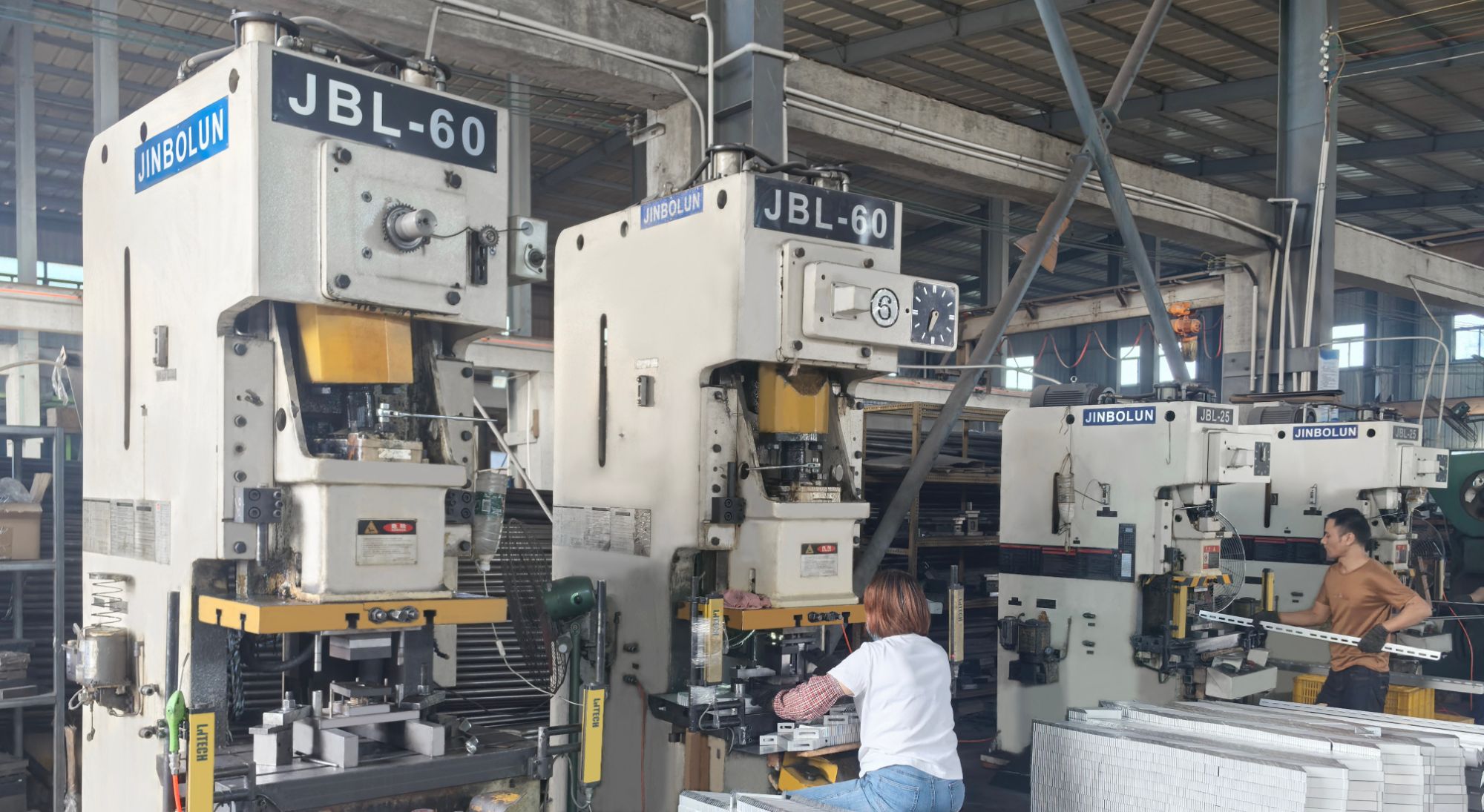
The carport mounting industry in China leans on a dense network of specialized factories clustered across Hebei, Shandong, and Jiangsu. These regions host not just final assembly plants but also the supporting cast: steel coil suppliers, precision stamping shops, hot-dip galvanizing lines, and fastener makers. Because every step happens within a short trucking distance, lead times shrink and design changes don’t get stuck waiting on overseas components.
Many production floors have moved well past manual welding. Automated laser cutters and robotic welding cells now handle the load-bearing rails and connection brackets, holding tolerances that were difficult to hit a decade ago. In-house galvanizing and powder coating lines give manufacturers direct control over corrosion resistance, with coating thickness routinely checked against international testing standards before shipment.
The sector’s real advantage lies in its adaptability. A single facility might switch from residential carport brackets to commercial-scale mounting structures within the same week, adjusting steel thickness or adding stiffeners to meet regional wind and snow load requirements. That blend of flexible production planning, local raw material access, and proximity to major container ports keeps delivery schedules dependable even when order volumes spike.
Structural Details That Separate Durable Carports from the Rest
Most carports look identical from a distance, but the ones that survive hailstorms and decades of sun exposure share a hidden language of reinforcement. Instead of relying on generic box-store brackets, durable designs use gusseted corner plates and double-bolted beam connections that resist twisting under wind uplift. The base plates are usually thicker—often 1/4 inch or more—and are welded to the posts rather than merely screwed on, preventing the slow loosening that turns ordinary shelters into rattling hazards.
Another telltale sign is how the roof purlins and rafters are spaced. Cheap units might space them five feet apart to save steel, but a long-lasting carport keeps that distance under four feet, sometimes down to three, so the sheet metal doesn’t oil-can or tear at the screw holes. Galvanized coating thickness also matters: look for G90 or heavier, not the thin G30 layer that starts rusting at the first scratch. The difference shows up years later, when the durable carport still has straight lines and the bargain one sags in the middle like a tired hammock.
Finally, pay attention to how the structure handles water and wind at the edges. Durable carports often include a slight roof overhang—six to twelve inches—so rain drips away from the side panels instead of running down the framing. You’ll also see diagonal bracing in both the roof plane and the side walls, not just a few token rods. That triangulation creates a self-stiffening frame, meaning the carport doesn’t rely on the sheet metal itself for stability. If the manufacturer hides those details or won’t show you a cross-section, it’s usually because they skimped on the parts you can’t see.
How Chinese Suppliers Cut Lead Times Without Cutting Corners
A fastener factory in Ningbo cut its lead time from 22 days to 9 days by rearranging the shop floor, not by rushing jobs. They moved thread-rolling machines next to the cutting stations, so a batch no longer waited on a pallet for the forklift to cross two buildings. That physical change removed nearly a full day of internal handling per order.
Other suppliers attack lead time at the material stage. A Shenzhen electronics enclosure maker now keeps pre-cut aluminum sheets in common thicknesses on a rolling rack beside the CNC area. When an order arrives, the operator picks the sheet and starts within an hour. They still inspect every batch, but the wait for the mill delivery is gone. It is a buffer stock strategy, not a quality shortcut.
A third lever is honest bottleneck visibility. Instead of hiding delays until the shipping date, several factories in Dongguan run a simple daily board—physical or in WeChat—that lists the true status of each order at cutting, plating, assembly, and test. The salesperson sees a jam at anodizing before the customer does, and can shift a small batch to an alternate line. Lead times shrink because problems surface early, not because corners get cut.
Aluminum, Steel, or Hybrid: Material Choices with Real Field Impact
Field crews quickly learn that the spec sheet only tells half the story. Aluminum saves weight and resists corrosion in coastal or high-moisture environments, but it dents easily when tools slip or hail hits hard. Steel, by contrast, can shrug off rough handling and abrasive contact, yet it demands regular coating inspections unless you enjoy chasing rust blooms after every wet season.
Hybrid designs attempt to split the difference, often pairing a steel backbone with aluminum skins or mounting points. The real impact shows up during installation and emergency repairs: steel often needs heavier lifting gear and welded patches, while aluminum can be field-fixed with rivets and basic hand tools. Thermal movement also plays a role. Long aluminum sections expand and contract noticeably, so joints need extra slack, whereas steel holds its shape better under wide temperature swings.
What Overseas Solar Developers Say About Working with These Firms
Feedback from developers in Europe and Latin America tends to circle around the same themes: these firms answer emails, stick to lead times, and don't disappear after the contract is signed. One project manager in Spain put it bluntly: "The panels arrive when they say they will, and the mounting hardware actually matches the drawings." That kind of reliability matters more than flashy brochures when you're juggling permits and grid connection deadlines.
On the technical side, several developers mentioned how the engineering teams walk through shading analyses and inverter compatibility without making you feel like a nuisance. A Chilean firm working on a 40 MW site noted that the support staff helped adapt the racking design to a rocky hillside instead of pushing a standard kit. "It felt like they wanted our plant to perform, not just to ship containers," the lead engineer said. A few also praised the straightforward warranty process, where one call replaced a faulty optimizer within a week.
Not every review is glowing. A developer in Greece commented that the initial quoting process could be slow if you ask for non-standard panel sizes, and another in Texas wished for more local warehouse stock. But the underlying pattern is clear: overseas developers keep coming back because these firms treat a project as a long-term partnership, not a one-off sale. When the inverters are humming and the kilowatt-hours start flowing, that's the kind of reputation that spreads word-of-mouth.
From Standard Kits to Custom Engineering: Where the Top Ten Excel
The gap between a catalog part and a working system is where most suppliers stumble. The top ten in this space have learned to treat standard kits not as the final answer, but as a starting point—something to tweak, rework, or completely replace depending on the job. They keep a wide inventory of proven modules, yes, but their real value shows when a client brings a non-standard footprint, an odd voltage requirement, or a harsh environment that would void the warranty on an off-the-shelf unit. Instead of pushing back, they pull the design team into the conversation early.
Custom engineering at this level is less about flashy one-offs and more about knowing when a standard part can be adapted versus when it must be built from scratch. That judgment, built over hundreds of projects, separates the top ten from a long tail of catalog resellers. Clients notice the difference: fewer field failures, shorter installation windows, and a single point of contact who actually understands the logic behind the modification. The best suppliers document every custom change so it can be repeated, which turns a one-time fix into a reliable option for future orders.
FAQ
A handful of names keep surfacing in project discussions: Xiamen Grace Solar, Mibet Energy, Solaracks, Antaisolar, Clenergy, Versolsolar, Kseng Solar, Sunforson, Universe Solar, and Powerway. Each has carved out a niche, whether through aluminum alloy designs, pre-assembled parts, or aggressive export footprints.
Focus on structural engineering reports, wind and snow load certifications, and whether the supplier has handled projects in your climate zone. Also check if they offer custom waterproofing channels or integrated cable management, since those details separate polished installs from headaches.
Many suppliers now use dual-layer drainage rails and reinforced purlins rated for high snow loads, often up to 1.6 kN/m2 or more. Some designs include waterproof trays that double as cable conduits, which reduce leak risks and speed up installation.
Yes, most leading companies produce adjustable clamps and rail spacings that accept panels from 400W to 700W and beyond. You can often request custom engineering drawings for oversized or bifacial modules at no extra charge before ordering.
They typically combine in-house aluminum extrusion, robotic welding, and large-scale galvanizing lines under one roof. That integration lowers cost per watt and shortens lead times, but you should still audit quality control rather than assume consistency.
Yes, many suppliers offer column extensions and adjustable base plates that accommodate slopes up to 5-10 degrees. For existing asphalt lots, they often recommend ground screws or ballasted foundations to avoid cutting through the pavement.
Look for ISO 9001 for quality management, along with product testing reports from TUV, SGS, or equivalent bodies for structural integrity. For projects in Europe or North America, ask for CE marking or UL 2703 compliance where applicable.
Top players usually provide installation videos, 3D CAD models, and remote engineering support via WeChat or WhatsApp. Some maintain regional warehouses in Europe or the Middle East for replacement parts, which can cut downtime significantly.
Conclusion
China's solar carport mounting sector isn't just about volume; it's about integrated production capabilities. The leading ten companies control key processes in-house—roll forming, punching, hot-dip galvanizing, even anodizing—so tolerances stay tight and quality doesn't hinge on scattered subcontractors. This vertical integration is what separates durable carports from flimsy copies: reinforced base plates, pre-assembled purlin connections, drainage-friendly channel designs, and corrosion-resistant coatings tested for coastal and high-humidity sites. At the same time, these firms have learned to compress lead times without skipping steps. They keep buffer stock of common profiles, use modular tooling for rapid changeovers, and run parallel QC checks rather than waiting for end-of-line inspection. The result is a supply chain that can ship a standard carport kit in weeks, not months, while still meeting project-specific wind and snow load calculations.
Material choice often becomes a field decision. Aluminum suits rooftop or residential carports where weight matters and aesthetics count; steel remains the default for utility-scale structures facing heavy panels and high wind zones; hybrid designs pair steel columns with aluminum rafters to balance cost and corrosion resistance. Overseas developers repeatedly note that the best suppliers don't just sell metal—they read the site. They ask about soil conditions, local permitting, even the type of vehicles to be parked before proposing a layout. From standard kits with labeled parts and simple bolted connections to fully custom engineering with 3D drawings and static reports, the top ten cover the spectrum. What clients tend to highlight is responsiveness: design changes land within days, and factory videos or live inspections are offered without being asked. That practical, engineering-first approach is why these manufacturers keep showing up on shortlists beyond China.
Contact Us
Contact Person: Leite
Email: [email protected]
Tel/WhatsApp: (+86)13666072898
Website: https://www.egretsolars.com/