

Top Aluminum Pilot Boat Models for Reliable Harbor Operations
2026-08-24
Harbor operations don't forgive shortcuts—especially when it comes to pilot boats. Aluminum models have become the backbone of reliable marine services, offering the right balance of toughness and agility. With Allheart's focus on dependable marine solutions, we've looked closely at the top aluminum pilot boat models that consistently perform under pressure. If you're serious about keeping your harbor running smoothly, this roundup is your starting point.
What Pilot Boat Operators Should Know About Aluminum Hull Endurance
Aluminum hulls on pilot boats face a unique mix of pounding from wake crossings, constant docking impacts, and long hours in corrosive salt spray. The endurance of these hulls isn't just about plate thickness—it hinges on how well the welding, stiffener spacing, and coating system work together under repeated flexing. Many operators only notice trouble when hairline cracks appear near chines or around the engine beds, which are classic signs that fatigue life was underestimated during design.
A practical check that gets skipped too often is monitoring the areas where the hull plating meets structural members like frames and bulkheads. Because aluminum has no fatigue limit, every stress cycle—no matter how small—eats into the metal's lifespan. Operators who log rough-sea hours and hard landings can extend hull endurance by scheduling dye-penetrant inspections on suspect welds after heavy weather seasons, rather than waiting for an annual survey. Small cracks caught early are usually a quick weld repair; ignored, they propagate fast in a high-vibration environment.
Another underappreciated factor is galvanic corrosion at dissimilar metal connections, such as stainless steel fasteners or bronze through-hulls. Even high-grade marine aluminum will sacrifice itself if the isolation isn't perfect, thinning the hull from the inside out while looking fine on the outside. Smart operators insist on regular insulation checks and avoid stray-current leaks from onboard electronics. In the end, aluminum hull endurance is less about the alloy choice and more about disciplined inspection routines and respecting the material's limits under cyclic loading.
How Engine Room Choices Keep Harbor Pilots on Schedule
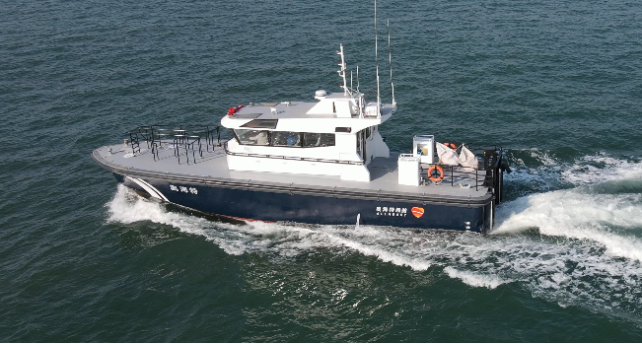
Engine room decisions shape whether a pilot boat meets its boarding window. A chief engineer who keeps the main engines warm, rather than cold-starting at the last moment, gives the pilot a predictable acceleration curve when time matters. Fuel viscosity, coolant temperature, and clutch engagement are all adjusted before the harbor pilot steps aboard, so the run from dock to rendezvous point doesn't waste minutes.
Not all choices are obvious. Some pilots prefer direct-drive diesels for instant throttle response, while others lean on controllable-pitch propellers that hold speed without constant RPM changes. The real difference comes from how the engine room balances generator load against propulsion demand during tight maneuvers. Shifting hotel loads to a shaft generator at the right moment leaves more power for a sudden astern bell, keeping the schedule intact.
Redundancy also plays a quiet role. A worn fuel filter or a lagging turbocharger rarely stops a vessel, but it can shave a knot off the approach speed. Engineers who track trend data and swap marginal components before they degrade prevent those small losses from stacking up. That margin is often what allows a pilot to catch a ladder on the first pass instead of circling for a second try.
Small Deck Details That Prevent Serious Injuries During Night Boardings
After the sun drops, the difference between a safe boarding and a trip to the ER often comes down to a handful of small deck details. Low-profile LED strips tucked under handrails and along the outer edges of steps do more than look sharp—they cast just enough light to define the path without wrecking your night vision. Pair those with a strip of photoluminescent tape along the coaming and any raised hatches, and the whole layout reads clearly even when the moon isn't cooperating.
Another overlooked safeguard is texture. A uniform non-skid pattern feels fine in daylight, but at night your feet need a change in feedback to sense an edge. Adding a slightly coarser grit around ladder wells, step nosings, and boarding gates creates a tactile warning that doesn't rely on sight. Throw in a well-placed grab rail at the exact point where a person shifts weight from dock to deck, and you've removed the biggest single cause of nighttime slips—those awkward half-steps in the dark.
Why Waterline Plating Thickness Differs Among Top Builders
The difference starts with how each yard reads the same rulebook. One builder may add a larger corrosion margin because their hulls spend years in warm, high-salinity water, while another keeps plate thickness close to the minimum requirement and leans on a more aggressive coating schedule. It is not that one approach is superior; rather, the starting assumptions about operating conditions and maintenance intervals are rarely identical.
Workshop capability also shapes the number. Thicker waterline plates resist impact and abrasion but are harder to roll to a smooth curve and add weight. A yard with long experience in cold-forming heavy plate may choose a thicker single skin, while another builder prefers a thinner plate with additional stiffening to control distortion during welding. These choices often trace back to past warranty claims or the preferences of a lead naval architect.
Material sourcing and owner requirements complete the picture. A builder with access to a wider range of plate stock can avoid jumping to the next standard thickness, while another may adjust because of delivery lead times or cost. Ice class, frequent port maneuvers, or a charterer with a history of minor groundings all push the waterline plating upward. What looks like inconsistency among top builders is really a set of deliberate, experience-driven trade-offs.
Holding Station in a Crosswind Without Losing Time
A steady crosswind turns station-keeping into a quiet contest between drift and correction. The usual error is chasing every gust with sharp, repeated inputs—that burns fuel, frays nerves, and costs time. Instead, set a slight upwind bias and use small, deliberate power or rudder adjustments to counter the average wind vector, not each individual puff. Let the craft settle around a stable reference point rather than fighting to stay exactly on it.
Timing matters more than force. In a crosswind, the moment you feel the drift begin is the moment to apply a brief, measured correction, then ease off before the gust fades. This rhythmic pulse—push, relax, repeat—keeps you within a tight circle without sawing at the controls. Keep your eyes on a fixed landmark abeam or slightly upwind; if that angle stays constant while distance changes, you're still losing ground. Use that visual cue to adjust your cadence, not your intensity.
Finally, separate station-keeping from heading. In many craft, pointing the nose or bow into the wind is the most efficient way to hold position, but that can conflict with your intended route or docking approach. Instead, maintain a crab angle that balances crosswind drift against forward thrust, and let the vehicle's orientation be a tool, not a goal. When you stop correcting for heading and start correcting for position, you hold the station without losing time to unnecessary maneuvers.
What Five Years of Saltwater Service Reveals About Aluminum Pilot Boats
After five years in continuous saltwater duty, the most telling sign on these aluminum pilot boats isn't widespread corrosion but rather how localized attack patterns develop around weld heat-affected zones near the waterline. Hull thickness readings remain within 90 percent of original specs across most plates, yet sacrificial anode consumption has run roughly a third faster than initial estimates, forcing a rethink of anode placement at the next dry docking. Pitting where stainless steel fittings meet the aluminum deck has also emerged, a classic galvanic couple that requires more frequent isolation barrier replacement than the maintenance manual suggests.
The antifouling paint system tells a more uneven story. Bow sections and thruster tunnels lose coating quickly from impact and turbulence, exposing bare aluminum that fortunately forms a stable oxide layer and resists deep corrosion. However, seawater trapped in the stern cradle recesses and around the pilot ladder hinges has triggered crevice corrosion, so crews now flush those voids with fresh water after every shift and apply a flexible sealant every few months. It's a simple fix, but one that wasn't obvious until the fifth year of accumulated exposure.
Operationally, aluminum behaves differently from steel in ways that matter daily. A hard knock against a buoy produces a sharp dent and a cracked weld rather than the energy-absorbing deformation steel would show, but repairs are far quicker: cut out the damaged section, weld in a fresh plate, and the boat is back in service within a day. Five years of logs show no structural fatigue failures despite the constant slamming in short, steep seas. The overall conclusion is that aluminum pilot boats can handle saltwater service extremely well if designers avoid enclosed crevices, isolate dissimilar metals, and owners accept a slightly more hands-on inspection routine than with traditional steel hulls.
FAQ
Models like the Safehaven Marine Interceptor 48 and Gladding-Hearn's Chesapeake class have earned a strong reputation. They combine durable welded aluminum hulls with responsive handling, so pilots can transfer safely even when the water gets choppy inside the breakwater.
Aluminum takes bumps from floating debris and pier contact without cracking the way fiberglass can. It also keeps weight down on deck for better fuel burn and allows easier hull repairs between shifts, which matters when the boat is in near-constant use.
A deep-vee or warped hull that softens the ride, generous rub rails, wide side decks for boarding, and a low center of gravity all help. On well-regarded models, you also see redundant navigation electronics and engines positioned for quick servicing.
Most harbor-focused pilot boats fall between 40 and 60 feet. That gives enough stability to hold steady alongside a ship, while still being nimble enough to weave through traffic and dock in tight slips. The exact length depends on how far offshore the pilot station sits.
Yes, names like Safehaven Marine, Gladding-Hearn, Metal Shark, and Silver Ships come up often. They tend to build semi-custom boats with enclosed wheelhouses and hulls proven in rough inshore conditions, which is what harbor pilots care about most.
Most top models cruise comfortably between 20 and 30 knots. That's usually enough to get a pilot out to a waiting ship without burning excessive fuel or making the ride punishing when there's a stiff chop.
Look closely at hull thickness and weld quality, boarding platform layout, engine access, and how the boat handles at slow speed alongside a ship. A boat that can't hold station smoothly at idle will make transfers more dangerous, no matter how fast it goes.
Absolutely. Builders regularly adjust cabin height, fendering, engine packages, and deck layouts to match a port's unique pilot boarding arrangements or climate. That flexibility is one reason aluminum remains the go-to material for these working boats.
Conclusion
Aluminum pilot boats earn their keep through hull designs that shrug off the punishing routine of harbor work. Builders who understand endurance focus on plate thickness at the waterline, where corrosion and impact stress concentrate; not every yard treats this the same way, and the differences become obvious after five seasons of saltwater exposure. Boats with properly matched alloy grades and welded stiffening show only cosmetic wear, while thinner sections or poor drainage invite pitting and costly weld repairs. Seasoned operators learn to read a hull's fatigue points before purchase—look hard at chine intersections, spray rails, and the transom corners. That kind of scrutiny beats any glossy brochure.
Below deck, engine room decisions directly affect whether a pilot transfer happens on time. Redundant fuel filtration, easy access to raw-water strainers, and sensible placement of sea chests let crews handle routine maintenance without delaying a run. Up top, small deck details matter more than most buyers expect. Handrails positioned for a natural grip during a rolling night boarding, non-skid that stays effective when wet, and step lighting that does not destroy night vision all prevent serious injuries. And when a pilot boat must hold station in a crosswind while the pilot climbs a ladder, bow thruster response and hull shape make the difference between a clean hold and a wander that wastes minutes. The best models integrate these features without turning the deck into an obstacle course.
Contact Us
Contact Person: Benny Hu
Email: [email protected]
Tel/WhatsApp: +8618354225697
Website: https://www.allheartmarine.com/