

Top Garage Gym Machines for a Complete Home Strength Setup
2026-08-20
Your garage isn't just a parking spot—it's a blank canvas for serious strength work. But with limited square footage and endless equipment options, choosing the right garage gym machines can feel like a puzzle. That's where a focused setup makes all the difference: the best pieces deliver full-body results without overcrowding your space or your budget. In this guide, we'll break down the top machines that turn a basic garage into a complete home strength setup—from versatile power racks to compact cable systems. And if you're ready to invest in gear that's built to last, Yingruis offers robust, space-efficient solutions that serious lifters trust. Let's explore how to build a garage gym that works as hard as you do.
A Power Rack Deserves the First Spot on Your Garage Floor
Most people start their home gym with a treadmill or a set of dumbbells, but that’s backwards. A power rack anchors the entire space. It doesn’t need to be the most expensive piece—just the first one you commit to before clutter creeps in.
Once the rack is in place, everything else falls into line around it. Bench? Slides right in. Barbell? Rests on the hooks. Plate storage? Bolted to the back. You stop guessing where things belong because the rack gives the room a center of gravity.
More importantly, it sets the tone for what this garage is actually for. Not storage. Not a parking spot for the car you never drive. A power rack says you train here. Put it down first, and the rest of your setup has no choice but to follow.
Pick a Barbell That Can Outlast Your Newbie Gains
Newbie gains are fun because the strength comes fast, but that rapid progress will punish a cheap bar. A department-store barbell might feel fine when you're deadlifting 135 pounds, yet once you creep past three plates, the shaft starts to bend, the knurling wears smooth, and the sleeves stop spinning. Instead of upgrading every year, buy a bar that can handle double your current max. Look for a minimum tensile strength around 190,000 PSI and ask about the warranty. A lifetime guarantee against bending is a strong signal the manufacturer expects the bar to survive more than just your first training cycle.
Focus on the details that matter for longevity. A bare steel bar gives excellent grip but needs oiling to prevent rust, while hard chrome or cerakote finishes trade a little bite for low maintenance. If you do Olympic lifts, needle bearings in the sleeves will keep the plates rotating smoothly; for powerlifting, bronze bushings are more durable and still spin plenty. Check the knurl depth too—medium to aggressive mountain-style knurling won't disappear after a year of chalk. And don't ignore the center knurl: some squat bars have none, which is fine, but a deadlift bar should have enough to bite into your shirt.
Finally, resist the urge to buy the cheapest 20 kg bar you can find. A proper barbell is a one-time purchase if you pick right. Standard diameter (28-29 mm) and length (220 cm) matter for plate fit and rack compatibility, and loadable sleeve length should be at least 16 inches. Test the spin before buying—hold the sleeve and give it a flick; a smooth, quiet rotation with no wobble indicates quality machining. If you're still squatting with a bar that has visible rust pits or a permanent bend, retire it. Your joints and your future PRs will thank you for choosing a bar that outgrows your newbie phase and sticks around for the long haul.
Adjustable Dumbbells: The Compact Workhorses You'll Actually Use
Most home gyms drown in gear that ends up as clutter, but adjustable dumbbells sidestep that trap by replacing an entire rack with a single pair. Twist a dial or slide a pin and you've got five to fifty pounds in each hand, which covers everything from lateral raises to heavy goblet squats. That quick-change mechanism matters more than you'd think—when the adjustment takes two seconds, you actually keep moving instead of losing momentum hunting for the next fixed pair.
The real sell is the footprint. A full set of traditional dumbbells eats up a wall and a chunk of floor, while an adjustable pair tucks under a desk or in a closet corner. You don't need a dedicated room; a hallway, balcony, or even a spot next to the couch becomes a viable training space. That convenience removes the "no room" excuse permanently.
Build quality has caught up to the concept. Older models rattled or felt flimsy, but today's versions use steel plates and locked cradles that feel stable through rows, presses, and lunges. They're not the cheapest option up front, yet compared to buying fifteen pairs of fixed weights—plus the space to store them—they pay for themselves in both dollars and square footage. If you're tight on space but serious about strength work, this is the one piece that earns its keep.
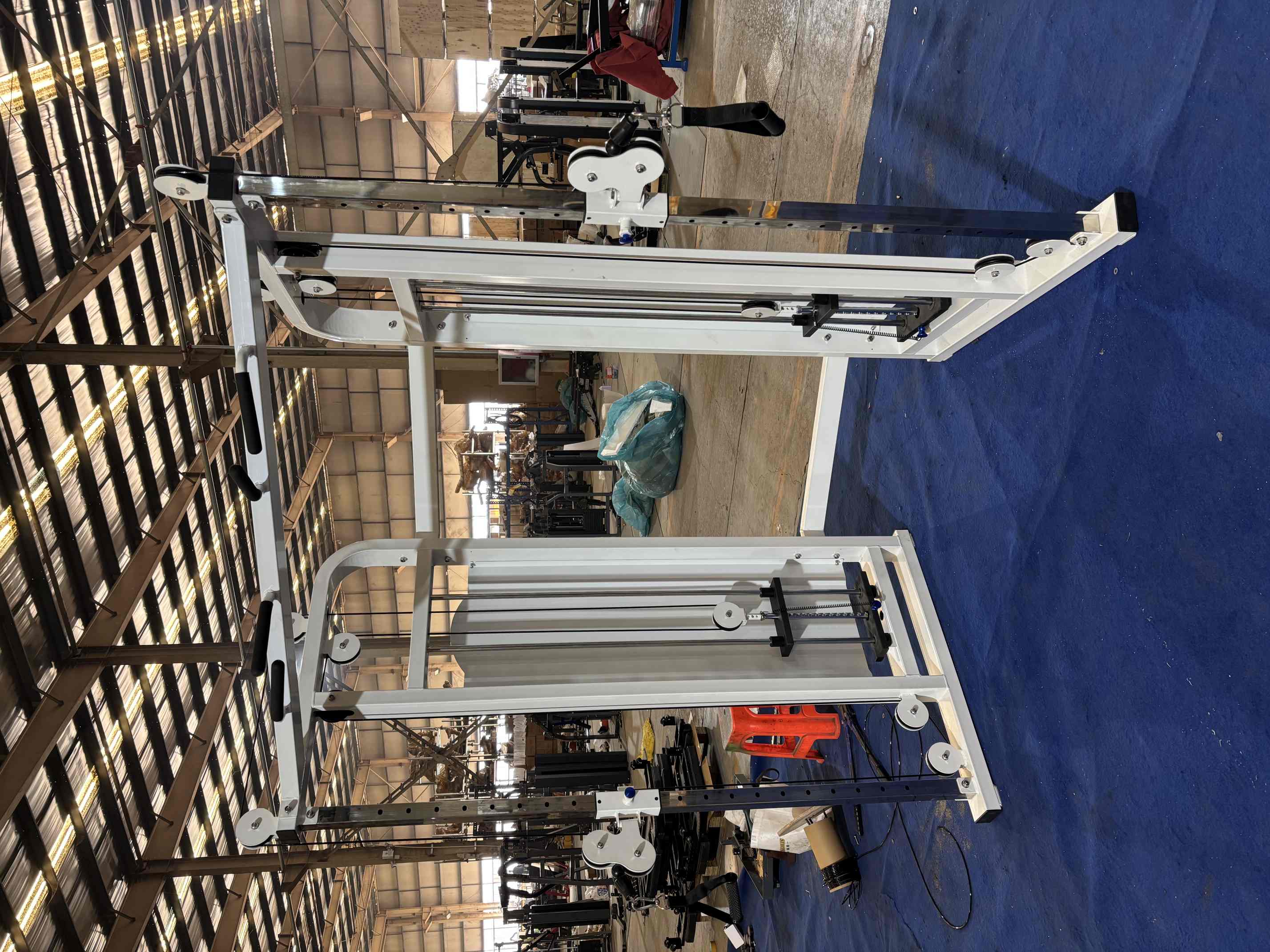
Cable Machines Add Resistance Free Weights Can't Match
Free weights live and die by gravity. A dumbbell only pulls straight down, so the load you feel changes drastically as your limb angles shift. Cable stacks sidestep that entirely—the pulley keeps tension on the muscle from the first inch to the last, no dead spots. Try a lateral raise with a dumbbell and the bottom feels weightless; hook it to a low cable and the delt is working before your hand even leaves your hip.
The adjustable pulley height is where cables really pull away. You can set resistance at knee level, chest height, or overhead and push or pull through angles free weights simply can't replicate. Rotational chops, face pulls, and single-arm cross-body presses all become natural movements instead of forced compromises. That freedom trains your body in the diagonal and twisting patterns it actually uses outside the gym.
Cable stacks also make intensity techniques almost too easy. Swapping a pin takes a second, so drop sets, rest-pause work, and eccentric overload don't require racking and re-racking plates. You can chase a muscle to failure and then immediately back off, keeping every rep honest without losing position.
Get a Bench That Handles Incline, Decline, and Everything Between
Most flat benches lock you into one angle, and that single position quietly limits how much you can actually build across your chest and shoulders. A bench that adjusts for incline and decline opens up movements that hit different muscle fibers, so you are not just pressing the same pattern week after week. You get to shift the emphasis on the fly, which matters more than adding another plate to the bar.
Look for a bench with a seat that moves with the back pad, not one that stays fixed while the back tilts. That small detail keeps your hips from sliding and lets you push through a full range without bracing yourself against the pad. The best ones give you a handful of locked positions from a slight decline to a steep incline, and each notch should feel solid, not like it might drop when you rack a heavy dumbbell.
Rather than buying two separate benches or skipping decline work altogether, get one that covers the whole map. The extra adjustment takes seconds, but it keeps your training from going stale and gives your joints a break from the same groove. A bench that handles every angle is basically a full upper-body station in a footprint that still fits against the wall when you are done.
Bumper Plates Aren't Just for Olympic Lifters Anymore
Walk into almost any gym today and you'll hear the telltale thud of rubber plates hitting the platform. Once reserved for weightlifters in singlet-clad training halls, bumper plates have quietly become a staple for everyday lifters. The reason is simple: they let you drop a barbell from overhead or chest height without destroying the floor, the bar, or your neighbor's eardrums. CrossFitters, powerlifters working on explosive pulls, and even casual lifters practicing hang cleans now grab bumpers without a second thought.
But the appeal goes beyond safety. Because all bumper plates share the same diameter regardless of weight, your setup stays consistent for deadlifts, rows, and Olympic-style movements. That means a 10-pound plate sits at the same height as a 45, so the bar starts at the same position every rep. For anyone learning to move a barbell fast or simply wanting a quieter home setup, bumpers have shifted from niche equipment to a practical default. No chalk, no singlet required.
FAQ
Start with a sturdy power rack. It anchors everything—squats, bench press, pull-ups, and you can add a pulley attachment later. Skip the cheap ones; you want 11-gauge steel and a pull-up bar that doesn't wobble.
A functional trainer with dual weight stacks. It handles cable crossovers, rows, lat pulldowns, tricep pushdowns, and dozens of angles. If you only have room for one big piece, it's the closest thing to an entire gym.
Fold-back racks or wall-mounted rigs are your friend. Pair one with an adjustable bench, a barbell, and rubber mats. Keep a pair of adjustable dumbbells under the bench. That covers every major lift without needing a two-car space.
Usually not for a garage. A good power rack with a barbell lets you squat and deadlift heavy enough. If you have extra square footage or knee issues, a compact leg press can earn its spot, but buy it last.
A loaded carry yoke or a set of heavy sandbags. They build grip, core, and conditioning in ways machines don't, take up little space, and cost a fraction of a cable machine.
Absolutely. Squat, bench, deadlift, overhead press, rows, and you're hitting every muscle group. Add a pull-up bar and some bands for accessory work. It's the classic setup for a reason—it just works.
Look at the gauge of steel, the hole spacing on the rack, and the warranty on moving parts. Read reviews from people who've had it for over a year. Also measure your ceiling height—garage ceilings often sit lower than you think.
Wipe down bars and metal parts with a light oil every few weeks. Use rubber mats to keep moisture off the floor. If your garage gets freezing, avoid machines with hydraulic cylinders—stick to steel and cables.
Conclusion
Few pieces earn their floor space quicker than a power rack. It anchors the whole setup, giving you a safe place to squat, press, and pull heavy without a spotter, plus a built-in chin-up bar and plate storage if you choose wisely. Once the rack is sorted, don't cheap out on the barbell. A good bar with dual knurl marks and a decent tensile strength rating will outlast your first few years of strength gains and still feel balanced when you graduate to heavier loads. For accessory work and space savings, adjustable dumbbells are hard to beat—they replace an entire rack of fixed pairs and let you jump from warm-up to working weight in seconds instead of hunting for the right handle.
Cable machines add a completely different resistance curve that free weights can't match—constant tension through every inch of a movement, ideal for flyes, pushdowns, rows, and lateral raises without needing a dozen specialty bars. Pair that with an adjustable bench that locks securely at multiple angles for incline, decline, and flat work, and you suddenly have a full-body training environment in maybe 150 square feet. For anyone still thinking bumper plates are just for Olympic lifters, think again. They're quieter, gentler on a garage floor, and far easier to handle when you're doing deadlifts, power cleans, or even just loading and unloading a bar by yourself. A set that starts at 10 or 15 pounds and goes up in standard pairs will cover nearly every barbell movement while keeping noise down and your concrete intact.
Contact Us
Contact Person: Owen Wu
Email: [email protected]
Tel/WhatsApp: 86-15376736259
Website: https://www.yingruisfit.com/