

Top Knife Gate Valve Selections for Demanding Applications
2026-07-22
When it comes to handling tough media in demanding industrial settings, not just any valve can stand the pressure—literally. Knife gate valves are a go-to for slurries, viscous fluids, and solids-laden flows, but finding the right one for extreme conditions requires a closer look at design and materials. In this post, we’re diving into top knife gate valve selections that deliver reliable shutoff and long service life, even in the harshest applications. Among the standout names, THT brings engineering precision that meets the challenge head-on. Read on to discover which features matter most and why these valves make a difference where failure isn’t an option.
What Makes a Knife Gate Valve Stand Up to Tough Environments
Knife gate valves are built for the worst conditions—think abrasive slurries, thick sludge, and high-solids flows that would clog or destroy conventional valves. Their secret lies in a sharp, beveled gate that slices through material, sealing tight even when debris is packed against the seat. Unlike standard gate valves, the knife edge doesn't just wedge through; it cuts, clearing its own path and reducing wear on sealing surfaces.
Beyond the blade, these valves often feature robust body designs with replaceable seats and heavy-duty packing that can be serviced without dismantling the entire pipeline. Materials like stainless steel or hardened alloys resist corrosion and erosion, while specialized coatings add another layer of defense. This combination of a self-clearing gate and rugged, easily maintained construction is what lets knife gate valves hold up where others fail.
Stem Sealing That Actually Lasts in Abrasive Slurries
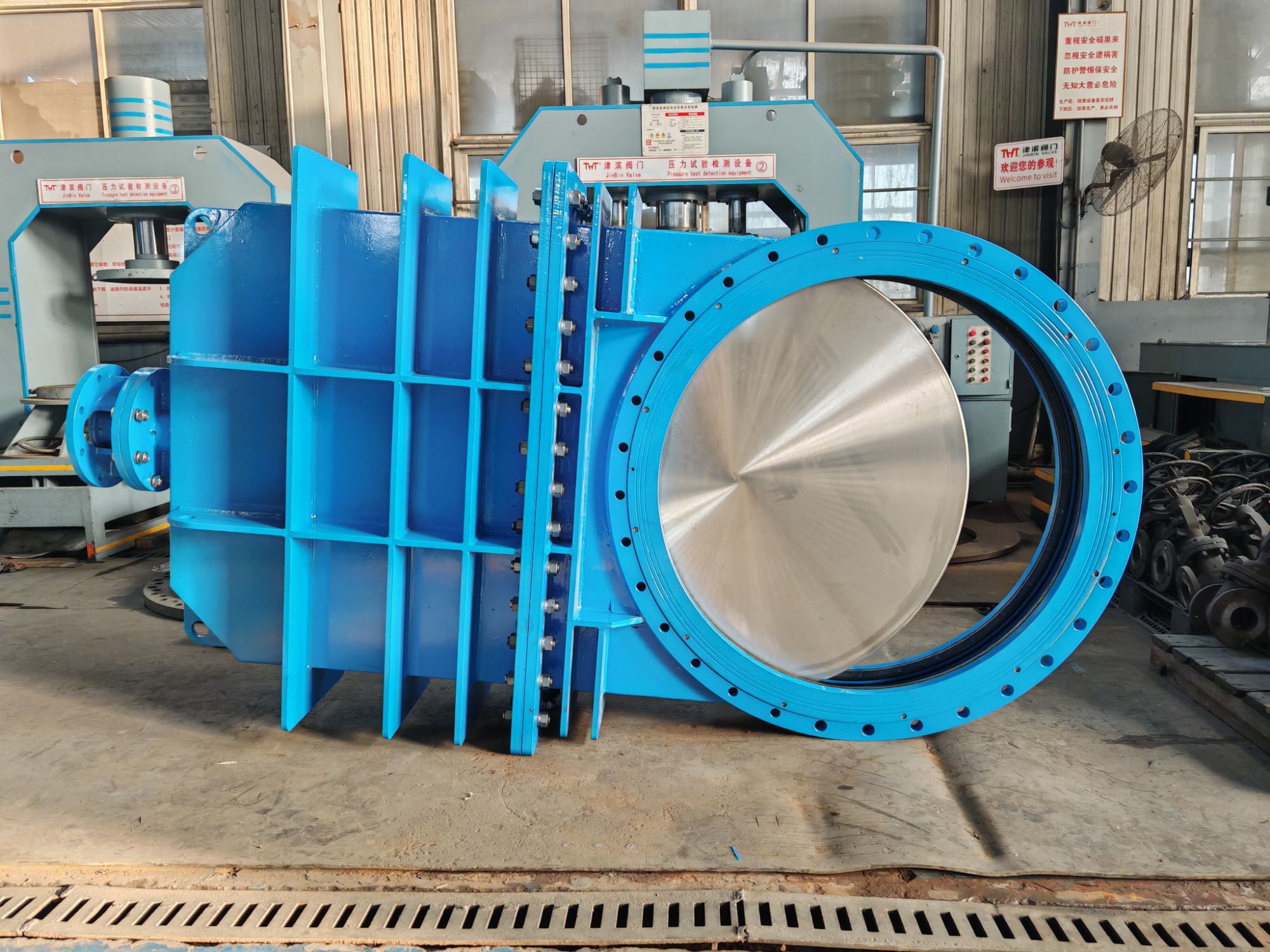
Valve stem sealing in abrasive slurry services has long been a notorious weak point. Traditional gland packings often fail within weeks as hard particles work their way between the stem and packing, carving grooves that lead to persistent leaks. The constant movement of the stem, combined with the scouring action of solids, rapidly degrades even high-performance graphite or PTFE blends. Operators are forced into frequent adjustments and repacking, resulting in unplanned downtime and safety hazards.
Instead of fighting abrasion with harder, more rigid materials, a smarter approach uses a dynamic sealing geometry that actively excludes particles. Advanced polymer lip seals, engineered with a hydrodynamic profile, create a low-friction barrier that deflects solids away from the shaft during every stroke. A secondary scraper ring, positioned upstream, sweeps the stem clean before the main seal engages. Combined with a lubricant reservoir that continuously replenishes the sealing interface, this system maintains integrity even in dense, fast-moving slurries.
Material selection is equally critical. Ultra-high-molecular-weight polyethylene (UHMWPE) and specialized elastomers like hydrogenated nitrile (HNBR) offer the toughness needed to resist cutting without sacrificing flexibility. These materials absorb impact energy from particles rather than cracking under load. When coupled with a live-loaded gland follower that compensates for wear automatically, the result is a stem seal that truly holds up under conditions where others disintegrate. Field data from mining and dredge operations shows seal life extending from weeks to over a year, dramatically reducing maintenance costs and environmental risks.
Blade Design Choices for Thick and Sticky Media
Handling thick, sticky materials starts with blade geometry. A steep rake angle helps slice through viscosity rather than bulldoze it, but too aggressive a cut can cause rapid wear or chipping. Balancing sharpness with durability often leads to a micro-bevel or a honed edge that resists deformation while still penetrating cleanly. For pastes and gels, a blunt-tipped blade with a gradual taper spreads the load evenly, preventing the material from climbing up the tool and stalling the process.
Material choice for the blade itself matters more here than in low-viscosity applications. Carbon steels hold a fine edge but corrode quickly in acidic or moisture-heavy mixes, so stainless alloys or tool steels with higher chromium and vanadium content become the default. Coatings like titanium nitride or DLC can reduce adhesion and abrasion, but they add cost and may not bond well to every substrate. Many opt for a polished finish instead, which minimizes drag and makes cleanup simpler between batches.
Beyond the blade, the way it moves through the media changes everything. A stationary blade in a rotating mixer relies on shear and turbulence, while an oscillating or reciprocating blade creates pulsed flow patterns that break up lumps and prevent dead zones. Speed adjustments need careful tuning—too fast, and you whip in air, altering texture; too slow, and the material simply pools. Some processes pulse the blade position itself, slightly altering the gap between blade and vessel wall to temporarily increase local shear without overheating the batch.
Body Materials to Handle Corrosive Process Fluids
Selecting the right body material is crucial when dealing with corrosive process fluids, as the wrong choice can lead to rapid degradation, leaks, or even catastrophic failure. Engineers often turn to high-performance alloys like Hastelloy or duplex stainless steels, which offer a balance of strength and resistance to a broad range of chemical attacks. For less demanding environments, PTFE-lined carbon steel provides a cost-effective barrier, though it may limit temperature and pressure capabilities.
Beyond standard material charts, real-world performance hinges on subtle factors such as fluid velocity, impurities, and localized corrosion mechanisms like pitting or stress corrosion cracking. A material that works flawlessly in one plant might fail prematurely in another due to minor variations in process conditions. This is why many experienced engineers keep a log of actual field data, supplementing lab tests with operational insights to refine their selections over time.
In some niche applications, non-metallic options like PVDF or ceramic composites are gaining traction, especially where metallic components would either contaminate the fluid or succumb to aggressive acids. These materials can be molded into complex shapes and often eliminate the need for corrosion inhibitors, simplifying system design. However, their mechanical limitations require careful evaluation against pressure spikes or thermal cycling.
Actuation Strategies When Manual Operation Isn't Enough
In complex industrial environments, manual valve actuation often falls short when speed, precision, or safety is paramount. Automated actuation systems step in where human reaction times can’t compete, using electric, pneumatic, or hydraulic power to deliver exact positioning within milliseconds. This shift isn’t just about replacing physical effort; it’s about embedding decision-making logic directly into the process, allowing critical adjustments to occur the moment process variables drift outside acceptable ranges.
Remote actuation becomes indispensable when manual access is restricted by hazardous conditions, such as extreme temperatures, toxic atmospheres, or high radiation zones. By integrating fail-safe mechanisms and position feedback, these systems ensure that even if communication is lost, the valve will default to a predetermined safe state—often closed or fully open—preventing uncontrolled releases or equipment damage. This level of reliability is achieved through redundant power supplies and signal paths, tested rigorously before deployment.
In scenarios where process demands fluctuate unpredictably, adaptive control algorithms enhance actuation strategies by learning from operational patterns. Rather than relying on static set points, the system adjusts valve positions dynamically to optimize flow, minimize wear, and reduce energy consumption. This approach transforms actuation from a simple on-off function into a strategic tool for extending asset life and maintaining process integrity even when manual oversight is intermittent or completely absent.
Real-World Installations That Broke the Standard Mold
In the middle of a bustling city square, a team of artists suspended a cascade of mirrored shards from a forgotten pedestrian bridge. Passersby initially dismissed it as construction debris, but as sunlight hit the fragments, the entire alleyway dissolved into a shimmering river of reflected light. The installation wasn't meant to be looked at—it was meant to look at you, fragmenting every observer into a dozen fleeting versions of themselves against the urban backdrop.
Deep inside an abandoned subway tunnel, someone lined the walls with thousands of vintage clocks, each set to a different time. The relentless ticking created a disorienting rhythm that amplified the space's natural echoes. Commuters who accidentally wandered in found themselves caught between the mechanical heartbeat and the distant rumble of active trains, unsure if they'd stepped into an art piece or a glitch in the city's own memory.
A residential neighborhood woke up one morning to find all their street signs replaced with hand-painted wooden replicas bearing poetic, nonsensical directions—'Nowhere in Particular' and 'Back the Way You Came.' The project stayed up for weeks because no one could figure out whether to report it as vandalism or a gift. It reorganized the community's daily navigation into a quietly playful argument about who gets to name the paths we walk.
FAQ
Knife gate valves are widely applied in industries handling thick fluids like slurries, wastewater, and dry bulk materials. Their sharp-edged gate slices through media, making them ideal for pulp and paper, mining, chemical processing, and power plants where conventional valves would clog or wear quickly.
For high-pressure duties, look for a reinforced body and a robust packing gland that can handle the stress. Metal-seated designs with a heavy-duty yoke and a buried gate guide often perform better. Always check the pressure-temperature rating charts and consider a secondary sealing system if the pressure spikes are frequent.
Stainless steel bodies and internals, often 316 or duplex grades, resist many acids and chlorides. For extreme corrosion, consider valves with Hastelloy trim or lined bodies using PTFE or rubber. The choice depends on the chemical concentration and operating temperature, so matching the material to the exact media is crucial.
Valves with a replaceable elastomer seat or a metal seat with a hard-facing overlay, like Stellite, last longer in abrasive conditions. A purge port to flush the seat area can also help. Opt for a design where the gate fully retracts out of the flow path to minimize seat wear when the valve is open.
Bidirectional knife gate valves are engineered to seal against pressure from either direction, using a symmetrical seat and a gate that maintains contact regardless of flow. Unidirectional valves only provide a tight shut-off when the pressure is from one side. Bidirectional designs are more versatile for pipelines where flow direction might reverse, but they often cost more and may require more maintenance.
Regularly greasing the stem and checking the packing for leaks prevents stem seizure. In abrasive services, inspect the gate and seat for scoring and replace wearable components before they fail. Flushing the valve after operation clears away residue that can harden. Keeping the actuator torque within limits also avoids gate distortion and seat damage.
Metal seats handle temperatures beyond what elastomers can withstand without softening or degrading. They maintain a reliable seal up to 1000°F or more, whereas rubber or PTFE seats fail much earlier. Metal seats also resist thermal cycling better, but they may require a higher seating force to achieve a tight shut-off.
Focus on a heavy-duty body that can withstand impact, a gate made of hardened stainless steel with a beveled edge for cutting through settled solids, and a full-bore design to prevent clogging. A robust packing system that can handle gritty particles without leaking is essential, along with easy seat replacement to minimize downtime. Look for valves with a locking mechanism and optional position indicator for safety.
Conclusion
In the most punishing industrial settings, a knife gate valve proves its worth through a combination of rugged design and material innovation. A heavy-duty body casting paired with a precision-ground gate slice through thick, sticky media without hesitation, while hard-faced seating surfaces shrug off the constant assault of abrasive slurries. The true backbone of reliability lies in the stem sealing; advanced packing systems with multiple compression rings and purge ports keep grit out and process fluid in, extending service life even when valves cycle thousands of times under high pressure. For corrosive environments, material selection becomes critical—duplex stainless steels, nickel alloys, or fully lined bodies put chemical attack in check, ensuring the valve remains a steadfast barrier against aggressive flows.
Beyond static resilience, the right actuation method transforms a manual valve into a smart, responsive asset. Electric, pneumatic, or hydraulic operators take over when handwheels become impractical, delivering precise control and fail-safe modes for critical isolation duties. Real-world installations tell the story best: a wastewater plant that eliminated chronic seat leakage by switching to a bidirectional knife gate with a deflecting cone, or a mining operation that doubled packing life by adopting live-loaded gland systems in their thickener underflow lines. These selections don't just meet specifications—they rewrite the standard mold, proving that thoughtful engineering directly translates to uptime and profitability in the most demanding applications.
Contact Us
Contact Person: Su Zhang
Email: [email protected]
Tel/WhatsApp: +86-25219206
Website: https://www.tht-valve.com/