

Top Switch Cabinet Designs for Reliable Power Distribution
2026-07-21
In today's power-hungry world, reliable distribution is non-negotiable—but did you know the right switch cabinet design can make all the difference? From modern modular innovations to rugged classic builds, the market is bursting with options. But what truly sets a top-tier cabinet apart? At Chang Song, we've seen how smart engineering prevents costly downtime. This guide unpacks the standout designs that combine safety, efficiency, and adaptability, ensuring your system stays bulletproof. Ready to discover which designs are reshaping the industry?
Beyond Standard Enclosures: The Rise of Modular Switch Cabinets
Standard enclosures once dominated the landscape, offering rigid boxes that forced engineers to compromise on space, cooling, and cable routing. But as power densities climbed and customization became a daily demand, those one-size-fits-all solutions began to crack. Enter the modular approach: a system built around interchangeable components that snap together like building blocks. Instead of designing around a fixed metal shell, teams now assemble cabinets from standardized frames, side panels, and mounting profiles that can be scaled up or reconfigured on the fly. This isn’t just about flexibility—it’s about eliminating weeks of lead time and oversized packaging that ships a lot of empty air.
The real shift happens during integration and on-site installation. With modular cabinets, busbars, breakers, and control wiring can be pre-mounted in smaller, manageable sub-frames that roll in through narrow doorways and get locked into place without heavy lifting or drilling. Field modifications become trivial: add a new vented door, snap in an extra cable gland plate, or extend the frame sideways when a project scope creeps. That adaptability is rewriting installation scripts in data centers, renewable energy sites, and industrial plants where downtime is measured in thousands per minute. Maintenance teams appreciate how a single technician can swap out a damaged panel instead of ordering a whole new enclosure and scheduling a shutdown.
Beyond the mechanical perks, modularity is quietly reshaping supply chains and engineering workflows. Inventory stays lean when a handful of base frames and kits replace dozens of custom SKUs. Design software can auto-generate configurations from a drag-and-drop menu, slashing drafting time and errors. And because components are tested as a system, compliance paperwork moves faster. The result isn’t just a smarter box—it’s a platform that evolves with the equipment inside it, ready for whatever the next upgrade cycle throws at it.
Smart Monitoring That Prevents Failures Before They Happen
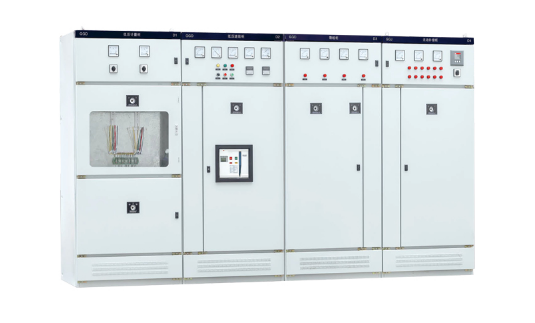
Instead of waiting for something to break, smart monitoring picks up on tiny shifts most people overlook. It’s not about constant alarms, but about recognizing patterns—how a motor’s vibration changes slightly over weeks, or how temperature drifts just enough to signal trouble long before a shutdown. This kind of insight lets teams act while the equipment is still running smoothly, not scramble after the fact.
The real power lies in its ability to connect dots that seem unrelated at first. A pressure drop combined with a subtle electrical fluctuation might mean nothing on their own, but together they tell a story. By combining data from various sensors and applying predictive models, the system flags risks without flooding you with noise. Maintenance becomes a scheduled, deliberate task rather than a frantic emergency call.
What sets it apart is how it learns. It becomes more accurate with each cycle, understanding the unique “normal” of your operation. This means fewer false positives and a sharper focus on genuine risks. The result is less downtime, lower repair costs, and a peace of mind that comes from knowing you’re solving problems before they ever reach the surface.
Thermal Dynamics: Designing for Heat Dissipation Efficiency
Efficient heat dissipation remains a cornerstone of modern electronics design, where thermal dynamics directly dictate component longevity and performance consistency. Without strategic thermal pathways, even the most advanced chips throttle under their own heat output, leading to degraded user experiences and premature failure.
At the board level, material selection plays a surprisingly nuanced role. While copper pours and aluminum heatsinks are staples, the real gains often come from optimizing interface materials and geometric fin arrangements that exploit natural convection. Clever routing of airflow, even in passively cooled enclosures, can yield disproportionate improvements by disrupting stagnant thermal pockets.
Beyond traditional methods, phase-change materials and vapor chambers are reshaping what's possible in tight form factors. These solutions quietly buffer transient heat spikes, smoothing out thermal gradients that would otherwise stress solder joints and silicon substrates over thousands of cycles. Designing for dissipation efficiency is less about brute-force cooling and more about crafting a balanced thermal ecosystem.
The Material Edge: Selecting for Long-Term Resilience
Every era of construction swings between novelty and time-tested wisdom. What gets lost in the rush toward sleek, engineered solutions is the quiet genius of materials that have already proven they can shrug off centuries. Selecting for resilience isn’t about chasing the strongest alloy or the densest composite — it’s about reading the environment honestly and letting the material’s own logic do the work. A limestone facade in a rainy climate might calcify and heal its own microfractures. Cedar cladding, left untreated, tightens its grain against moisture and decay. These aren’t flaws. They’re the material’s language, and when you stop trying to outsmart it, you start building something that gets tougher over time, not weaker.
The real edge comes from understanding that long-term resilience is rarely a single property. It’s a layered relationship between the material, the microclimate, and the rhythm of maintenance a culture is willing to sustain. High-performance coatings can extend a building’s life, but they also tether it to a supply chain. Unfinished copper, on the other hand, anticipates neglect — it sacrifices surface stability for a living patina that acts as its own weather barrier. Smart selection isn’t about eliminating wear; it’s about designing for graceful aging, where the material doesn’t just survive but adapts.
The next frontier in material resilience isn’t a new formula — it’s a new literacy. It’s learning to read the porosity of brick before choosing a mortar, or knowing which timber species develops the tightest grain in a given slope of a mountain. When specifiers reclaim this kind of material intelligence, the building stops being a fragile assault on the site and becomes an extension of it. That’s the edge that outlasts any warranty.
Tailored Solutions: When One Size Doesn’t Fit All in Power Distribution
Off-the-shelf power distribution units often fall short when applied to complex industrial or commercial environments. A manufacturing floor buzzing with heavy machinery has little in common with a silent data center full of blade servers, yet many standard solutions treat them as identical twins. The result is either costly over-engineering that pads the budget with unused features, or dangerous under-specification that leaves critical loads vulnerable. Neither extreme is acceptable when uptime and safety are on the line.
True tailoring starts by reading a facility’s electrical fingerprints—load profiles, harmonic signatures, and growth forecasts—before any equipment is selected. It might mean integrating dual-source switching for a bioreactor that cannot tolerate even milliseconds of interruption, or de-rating circuits for a desert installation where ambient heat silently erodes conventional ratings. These aren’t checkbox customizations; they’re surgical adjustments that align every breaker, busbar, and monitoring point with the physical and operational realities of the site. When done right, the tailored system becomes invisible, a quiet backbone that flexes around constraints instead of shouting over them.
Building for Tomorrow: Scalability in Switch Cabinet Architecture
When you’re laying out a network closet or data center, it’s easy to underestimate just how fast things can change. A cabinet that feels spacious today might be bursting at the seams in two years. That’s why forward-thinking design isn’t about cramming more gear into the same box — it’s about building in room to breathe from day one, without wasting precious floor space.
Real scalability comes from modular thinking. Instead of a monolithic frame, we use bays that can be added or rearranged as needs evolve. Adjustable mounting rails, snap-in cable managers, and side panels that pop off without tools mean you’re not locked into a single layout forever. Even power distribution gets smarter: busway systems let you tap into power anywhere along the run, so new equipment doesn’t trigger a full electrical rework.
The payoff shows up when a sudden project demands double the switch density, or a cooling overhaul requires equipment that’s a few inches deeper. A scalable cabinet adapts without litigation over clearance or downtime. It’s the kind of quiet resilience that turns a one-time installation into a long-term asset — and keeps your infrastructure from becoming tomorrow’s teardown job.
FAQ
It comes down to thermal management and busbar layout. A design that allows natural convection while keeping hot spots isolated from sensitive components can cut failure rates significantly. Some cabinets even use segregated chambers so that a fault in one section doesn't cascade into a full shutdown.
Beyond the IP rating on paper, practical details like gasket material and drainage paths make the actual difference. A cabinet rated IP65 might still collect moisture if condensation isn't properly routed. Top-tier designs include labyrinth vents or membrane-based pressure equalization that breathes without letting contaminants in.
Modularity gives you the freedom to reconfigure or expand without stopping operations. You can add a new feeder bay or swap a breaker size over a weekend. Welded boxes lock you into a fixed layout, so any change becomes a major event involving hot work permits and extended downtime.
It's a defining safety feature now. Designs with arc-resistant construction channel explosive energy away from personnel, often using pressure relief flappers on the top or rear. Some advanced cabinets can withstand an internal arc for half a second while maintaining structural integrity, which buys critical time for upstream protection to act.
The difference is night and day. Laminated busbars with minimal bolted joints reduce hotspots and maintenance needs. Sandwich-type designs, where each phase is tightly coupled with insulation layers, also lower impedance and practically eliminate the chance of a phase-to-phase flashover under stress.
It's not just about slapping sensors inside. The cabinet needs to support sensor integration without compromising cooling or aisle space. Designs with built-in cable routing for CTs, voltage taps, and even fiber optics let you deploy partial discharge monitoring or thermal imaging later without drilling holes through IP-rated barriers.
Conclusion
Modern switch cabinet designs are moving decisively beyond one-size-fits-all enclosures, embracing modular architectures that allow utilities and industries to reconfigure layouts as needs evolve. This shift is paired with intelligent monitoring systems that track temperature, load, and partial discharge in real time, flagging anomalies long before they escalate into costly outages. Thermal dynamics have become a central design pillar, with engineers optimizing airflow paths, integrating advanced heat sinks, and using compartmentalized venting to protect sensitive components from overheating even in demanding environments. The result is a new generation of cabinets that actively manage their own health rather than passively housing equipment.
Material selection plays an equally critical role in long-term resilience, with designers increasingly specifying corrosion-resistant alloys, UV-stabilized polymers, and coated steels that withstand harsh industrial atmospheres without frequent maintenance. At the same time, tailored solutions are filling the gaps left by standardized products, delivering custom busbar arrangements, ingress protection ratings, and seismic certifications for specialized applications from offshore platforms to urban microgrids. Scalability is being baked into the architecture itself, with busway systems and plug-in units that make expansion straightforward without extensive rework. Taken together, these advances are reshaping how power distribution infrastructure meets reliability targets, blending flexibility, intelligence, and durability into switch cabinets that adapt to both current demands and future growth.
Contact Us
Contact Person: Tonglun Chen
Email: [email protected]
Tel/WhatsApp: 8618906642555
Website: https://www.cncsele.com