

Vehicle Ozone Machines Worth Recommending for Cleaner Car Air
2026-11-23
Most car owners assume a quick blast of air freshener means the cabin is clean, but odors trapped in vents and upholstery tell a different story. Ozone generators dig into those hidden sources instead of masking them, and a growing number of drivers are turning to LUFUTATECH for reliable vehicle ozone machines that actually finish the job. In this guide, we cut through the hype and highlight the models worth your attention if you want fresher, healthier air every time you get behind the wheel.
Odors That Air Fresheners Mask Are Exactly What Ozone Can Break Down
Most sprays and gels don't remove smells; they simply layer a stronger scent over the problem. What gets left behind are the volatile compounds from cooking, pets, mildew, and smoke. These are the same molecules that ozone reacts with directly, tearing apart their chemical bonds rather than covering them with perfume. The result is air that doesn't just seem cleaner but actually contains fewer of the odor-causing substances.
A lemon-scented mist might make a room feel fresh for an hour, but the underlying stale or sour notes return as soon as the fragrance fades. Ozone works differently because it targets the source. When it meets the sulfur compounds from spoiled food or the ammonia traces from pet accidents, oxidation breaks them into simpler, non-odorous molecules. It doesn't need to hide anything; the thing you were trying to mask is gone.
This also explains why some odors seem impossible to eliminate with typical fresheners. Embedded smells in fabric, carpet, or wall cavities keep releasing gases long after a spray has evaporated. Ozone, as a gas, travels into those same spaces and reacts with the trapped compounds. What air fresheners only postpone, ozone can actually dismantle at the molecular level.
Not Every Vehicle Ozone Machine Gives You the Control You Actually Need
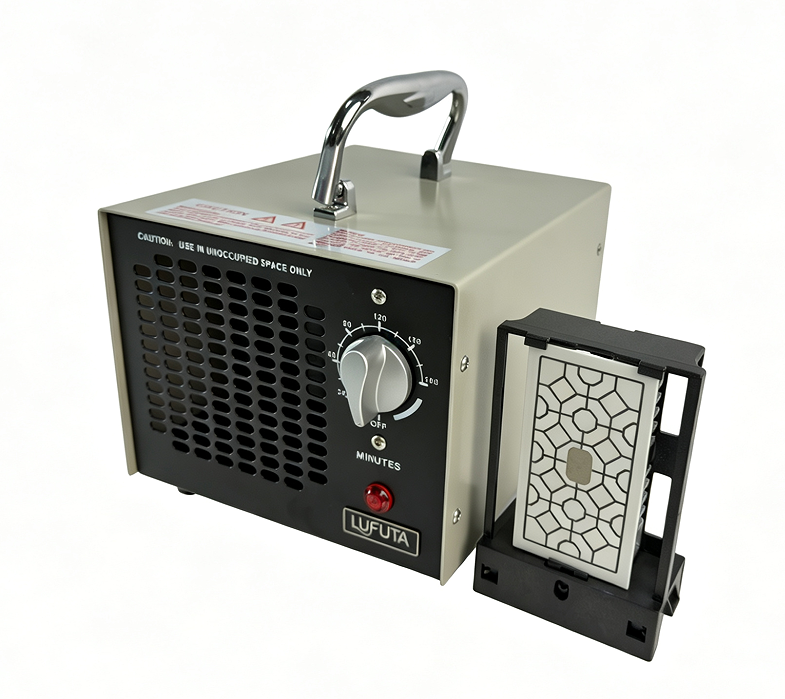
Many ozone generators aimed at car owners come with a single dial or a basic timer that only lets you set 30 or 60 minutes. That might work for a small sedan, but a van, truck cab, or RV interior often needs a longer run or a lower output to avoid overpowering the space. Without finer control, you're either guessing or waiting through cycles that don't match the actual odor problem.
Some machines also lack a delayed start, which matters more than people expect. You need time to close the door, walk away, and let the unit begin after you're clear of the ozone. If the only option is an immediate start, you end up either holding your breath near the vehicle or running back to unplug it. A proper control setup should let you set a start delay, choose the treatment duration, and if possible adjust output intensity for different jobs.
The real difference shows up when you move beyond basic smoke or food smells. Mold, pet odors, and deeply embedded smells in upholstery often require multiple shorter treatments rather than one long blast. A machine that locks you into fixed cycles can over-treat a small cabin or under-treat a larger one. Control isn't about having more buttons; it's about matching the machine's behavior to the vehicle and the severity of the odor, without guesswork.
The Safe Way to Run Ozone in a Car Without Damaging the Interior
Running an ozone generator inside a car can neutralize stubborn odors, but the plastics, rubber seals, and leather surfaces are vulnerable to oxidation if exposed too long. A safer approach starts with choosing a low-output unit and keeping the treatment window under 30 minutes. Place the machine on a non-porous surface, like a metal tray, away from the dashboard and seat stitching, then close the doors and let it work without anyone inside.
After the cycle ends, avoid the temptation to immediately climb in and drive off. Open all doors and let the cabin air out for at least 20 minutes so residual ozone breaks down before you enter. Wipe down frequently touched areas with a damp microfiber cloth, and check rubber door seals for any signs of drying or cracking. If the smell of ozone is still strong, repeat the airing step rather than running the generator again too soon.
Protecting the interior also means being selective about when you treat the vehicle. Avoid doing it in direct sunlight or on hot days, since heat accelerates chemical reactions and can make materials more fragile. For vehicles with older leather or faded plastics, consider lower ozone levels and shorter sessions, or isolate the treatment to the floor area with barriers over sensitive trim. A little caution keeps the air fresh without turning the cabin into a brittle, faded shell.
Cabin Size Changes How Much Ozone You Should Use
Most ozone generator guides treat cabin size as a footnote, but it is the variable that matters most once you move past basic odour removal. A small coupe interior barely holds 90 to 110 cubic feet of air, while a full-size SUV or crew-cab truck can easily exceed 160 cubic feet. That difference changes whether a 5,000 mg/h machine should run for twenty minutes or closer to forty-five, and it also affects where you place the unit so the gas actually circulates instead of pooling near the rear glass.
Rather than relying on the printed timer settings, start with the cabin volume and work backward from the ozone output rating. For compact cabins, a short burst at a lower output often works better because it reduces the chance of saturating upholstery and rubber seals before the gas has time to oxidize the source of the smell. In larger cabins, the same short cycle will leave untreated pockets under the seats and inside the headliner, so you need either a longer run or a small fan running on low to keep the air drifting through the whole space.
After any treatment, the airing-out period should scale with the dose you used, not with the size of the vehicle alone. High concentrations in a small cabin can linger behind trim panels and inside foam, so opening the doors for a few minutes is often not enough. If you are working on a larger space, you may get away with a lower concentration overall, but you still need to let the interior breathe until the sharp, chlorine-like edge disappears completely.
A Good Unit Should Do More Than Just Produce a Strong Smell
A sharp blast of fragrance might grab attention in the first few seconds, but it rarely holds up over a full afternoon. A good unit earns its place by keeping the scent even and controlled, not by filling a room so fast that the nose shuts down. When the output is balanced, people notice the space, not the machine sitting in the corner.
There is also a practical side that gets overlooked. Units that simply push out a heavy smell often dry the air, leave residue on nearby surfaces, or force everyone to open a window. A better design works quietly with the room, maintaining a comfortable level without constant adjusting. It should fade into the background rather than demand attention every time it cycles on.
Long-term reliability matters just as much as the first impression. Consistent mist or vapor output, easy maintenance, and materials that do not break down after a few weeks all matter more than an aggressive initial scent. The goal is not to impress someone for one minute, but to make the room feel noticeably fresher hours later without anyone having to think about why.
Long-Term Value Comes Down to Build Quality and Simple Maintenance
A piece of equipment that holds its value rarely does so by accident. It starts with materials and assembly choices that aren't visible on a spec sheet—thicker gauge steel, properly sealed seams, fasteners that don't loosen after a season of vibration. These details quietly determine whether a tool feels just as solid at year five as it did on day one, and whether a buyer will pay a fair price for it later.
Simple maintenance is the other half of the equation. When routine care means little more than wiping down a surface, checking a couple of accessible points, and occasionally replacing a cheap wear item, the machine tends to stay out of the repair bay and in service. That ease doesn't just reduce downtime; it protects resale value because prospective buyers can see the unit hasn't been neglected or patched together.
Over time, the market catches on. Models known for straightforward upkeep and durable construction hold a steadier price curve, while flashy features fade into irrelevance. The real long-term value isn't in the initial spec list—it's in how little the owner has to think about the machine after it's been put to work.
FAQ
They release ozone that reacts with odor molecules, bacteria, mold spores, and leftover smoke particles, breaking them down instead of just covering them with fragrance.
A worthwhile unit treats the source of stubborn smells rather than masking them, and the better models offer adjustable output, a timed cycle, and a clear warning to air out the vehicle afterward.
No, you should run it only when the car is unoccupied and then let the interior air out thoroughly before driving. Ozone can irritate the lungs, so the safest routine is treat, wait, and ventilate.
For most cars, ten to thirty minutes is enough for moderate odors, while heavy smoke or pet smells may need a second short cycle. Always follow the unit's suggested run time and air out the car completely.
Look for a compact size that fits on a seat or floor, a built-in timer, low noise operation, and a cord that reaches your power source. Avoid units that feel flimsy or lack clear safety instructions.
The treatment itself should be done without people or pets inside, and the car should be ventilated until the ozone smell clears. Once the interior is aired out, it is safe for normal use.
A brief ozone odor may linger right after treatment, but it fades quickly with ventilation. It does not leave perfume or chemical residue the way many spray fresheners do.
Use it only when odors return or after something like spilled milk, smoke exposure, or moldy upholstery creates a problem. Routine weekly use is usually unnecessary and can stress interior materials over time.
Conclusion
Air fresheners rarely solve the problem; they simply layer a perfume over trapped odors from smoke, food spills, or damp carpet. Ozone attacks those odor molecules directly, breaking them down instead of covering them up. But that does not mean any machine will work well. The units actually worth buying give you control over output level and run time, because a fixed high-output cycle can be just as useless as a weak one. A timer that allows short, repeatable sessions matters more than a single "shock" mode, especially in vehicles where you cannot easily vent the cabin afterward. Running ozone safely also means treating the interior as something that can degrade if exposed too aggressively. Rubber seals, vinyl, and certain plastics tolerate short exposures better than long blasts, which is why controlled cycles and post-treatment airing make a practical difference.
Cabin size shifts the math. A compact car needs far less ozone than a three-row SUV or a van, and a unit with adjustable output prevents both under-treatment and pointless overexposure. The most recommendable machines do not rely on a sharp, lingering smell to convince you they worked; the real test is whether the source odor stays gone after the air clears. Build quality and maintenance decide how long that performance holds. Look for ceramic plates that are easy to access, a fuse-protected power connection, and a housing that can handle being moved around a garage. Machines that require constant wiping or replacement parts tend to become clutter. Simple upkeep, predictable controls, and durable internals are what separate a tool worth keeping from another gadget that ends up on a shelf.
Contact Us
Contact Person: Paul Luo
Email: [email protected]
Tel/WhatsApp: 0086-19966314501
Website: https://www.lufutatech.com