

Waste Tire Recycling Line Supplier: Key Factors for Choosing a Reliable Partner in Sustainable Tire Processing
2026-09-15
Every year, millions of tires reach the end of the road—but their story doesn't have to end in a landfill. Turning waste tires into valuable resources starts with choosing the right recycling line supplier. Yet with so many equipment makers claiming to be experts, how do you separate genuine long-term partners from those who will disappear after installation? From throughput and automation to after-sales support and compliance, the decision involves more than just price tags. In this guide, we'll walk through the key factors that determine whether a waste tire recycling line will deliver sustainable profits—and why SFC approaches these challenges differently.
Look Beyond the Quote: What Actually Determines Long-Term Line Performance
The quoted price for a production line rarely reflects how the line will behave after six months of continuous operation. What matters more is whether the supplier controls material batch variation tightly enough to hold tolerances without constant operator intervention.
Long-term performance is shaped by the line's response to accumulated wear, minor contamination, and shifts in ambient temperature or humidity. A low initial quote often comes with looser process controls, leading to drift that eats into throughput and forces unplanned recalibration.
Instead of comparing quotes alone, smart evaluations look at historical defect rates, mean time between failures, and how quickly the supplier responds to quality deviations. Spending slightly more upfront frequently lowers total cost per unit over the line's lifespan, because fewer stoppages and less rework outweigh the price difference many times over.
Customization Is Not Optional When Rubber Meets Reality
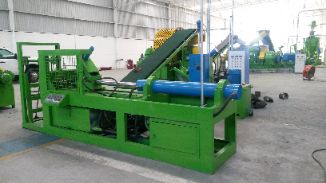
Every production line has its own quirks, and a rubber component that works perfectly in one setting can fail miserably in another. Standard catalogs rarely account for the exact temperature swings, chemical exposure, or mechanical stress your equipment faces. That is why treating customization as a luxury rather than a baseline requirement leads to premature wear, unexpected downtime, and costly replacements.
When engineers talk about tailoring rubber compounds or geometry, they are not chasing marginal gains. They are addressing the gap between a generic part and one that survives actual operating conditions. The right durometer, the optimal cure system, the precise dimensional tolerance—these details decide whether a seal holds pressure or a gasket withstands repeated compression. Ignoring them until a failure occurs is far more expensive than building the solution correctly from the start.
Reality does not adjust to your specifications. Either the rubber matches the environment, or the environment dismantles the rubber. Customization is the only honest response to that truth.
Real Plants, Real Numbers: Why Verified Installations Matter More Than Brochures
A glossy brochure can promise impressive yields and seamless operation, but those pages rarely tell you what happens when a system meets real soil, real weather, and real operator habits. Verified installations strip away the guesswork. When you walk a site where a plant has run for several seasons, you see how it handles dust, voltage fluctuations, and the occasional skipped maintenance cycle. Those details never make it into marketing copy, yet they decide whether a project delivers lasting value.
Numbers pulled from live performance logs carry a weight that design estimates cannot match. Observed uptime, actual output per installed kilowatt, and measured degradation rates reveal whether a technology truly holds up under local conditions. This kind of evidence matters most in edge cases: high humidity, irregular grid supply, non-standard mounting structures. Brochures present a single idealized scenario; verified data reflects dozens of imperfect realities, giving you a range rather than a single headline figure.
Choosing a solution based on documented field results changes the nature of the conversation. Instead of asking a vendor to defend a datasheet, you can ask for references within 100 kilometers, for maintenance logs, for weather-adjusted performance ratios. That shift moves the discussion from theoretical capability to demonstrated resilience. In the end, real plants and real numbers do more than validate a technology—they expose the gaps between what a system promises on paper and what it delivers on site.
After-Sales Support: The Hidden Cost Driver You Cannot Afford to Ignore
Most companies treat after-sales support as a necessary evil—something that exists to keep customers from walking away but rarely gets a second look on the balance sheet. The reality is more uncomfortable: every unresolved ticket, every return processed without a defined path, and every service call that requires multiple follow-ups quietly erodes margin. These costs don't announce themselves like a spike in raw material prices. They accumulate in the background, buried in labor hours, reverse logistics, and the soft expense of a customer's patience running thin.
What makes this cost driver so dangerous is its compounding nature. A product that fails once might cost you a replacement unit. A product that fails twice often costs you the customer. Between those points lie dozens of small decisions—whether to repair, replace, refund, or simply apologize—and each one pulls from a different budget line. Without a clear after-sales strategy, support teams end up improvising, and improvisation is expensive. You pay for expedited shipping, for technician overtime, for unnecessary part swaps, and for the management time spent untangling complaints that should have been prevented upstream.
Ignoring after-sales costs is no longer a neutral choice; it's an active drag on competitiveness. Smart operators treat support not as a cost center to minimize but as an early-warning system for product and process failures. When warranty claims rise in a particular region, that's a signal. When a specific component shows a pattern of early failure, that's a signal. Reading these signals early turns hidden costs into visible savings—and turns a reactive support team into a profit-protection mechanism.
Environmental Compliance That Goes Beyond Paperwork
Many facilities treat environmental permits as a filing cabinet burden—check a box, send a report, move on. But real compliance lives in the air monitors, stormwater outfalls, and spill kits that get inspected at 2 a.m. when nobody's watching. It’s the difference between a signed manifest and a drum that never leaks in the first place.
Going beyond paperwork means integrating compliance into daily operations: calibrating sensors not just because the schedule says so, but because a drifting pH meter can turn a minor upset into a notice of violation. It’s training the night-shift operator to notice an unusual sheen on the retention pond before it becomes a permit exceedance.
That kind of compliance doesn’t come from a binder. It comes from walking the site, asking questions, and making it easier to do the right thing than to skip it. The paperwork then becomes a record of what actually happened, not a wish list.
From Scrap to Stack: Evaluating Turnkey Project Delivery Without Delays
When someone says a project went from scrap to stack without a single delay, that claim deserves more than a polite nod. The phrase itself bundles two very different moments: the messy front end where materials, permits, and drawings are still scattered, and the polished end where a functional structure finally stands. Evaluating whether a turnkey contractor actually delivered that transition on time means digging into the seams between those moments. Most delays don't announce themselves at the groundbreaking; they hide in the weeks when steel is being detailed, foundations are waiting on soil reports, or a crane schedule shifts by three days and quietly ripples outward. A truly delay-free handover rarely comes from heroic last-minute pushes—it comes from a delivery model where the same team owns both the scrap and the stack, so no one can point fingers at someone else's missed deadline.
The practical way to evaluate such a claim is to ignore the ribbon-cutting photo and ask for the daily logs. A turnkey contractor who delivered without delays should be able to show a consistent cadence: material deliveries arriving no more than two days before they were needed, change orders counted on one hand, and a critical path that never had to be redrawn. Compare the originally approved baseline schedule with what actually happened—not the revised baseline that gets quietly issued in month three. Look for evidence that design decisions were locked early enough to let procurement run ahead of construction, because in scrap-to-stack work, a late electrical room layout can freeze an entire floor while the clock keeps ticking. The contractors worth trusting are the ones who treat schedule adherence as a procurement strategy, not just a site-management chore.
There is also a human side to this evaluation that spreadsheets miss. Walk through the structure with someone who was on site during the middle weeks, when the project looked furthest from done. Ask where the surprises came from, how the team handled a failed inspection, and whether the owner's requested changes were absorbed without moving the completion date. A no-delay record often reveals itself in those smaller moments: a site manager who kept the steel erector and the glazing crew from fighting over the same crane window, or a project director who told the client no to a late design tweak instead of sacrificing the handover date. From scrap to stack is not just a metaphor for progress—it is a test of whether the turnkey promise was ever real, or just written into a proposal.
FAQ
A dependable supplier goes beyond listing equipment specs. They should walk you through how their machinery handles real-world variations—like worn truck tires versus passenger tires with embedded steel—and be transparent about throughput rates under continuous operation, not just ideal conditions. Ask for references from plants similar to your intended scale.
Request video footage or a live demonstration showing the line processing mixed tire streams without excessive pre-sorting. The cutting and shredding stages should accommodate bead diameters from small car tires to larger OTR casings if that's part of your target feedstock. Any hesitation to show actual footage is a red flag.
After-sales support is where many partnerships succeed or fail. You want a supplier with local or regional service technicians, a stocked spare parts inventory, and clear response-time commitments. Ask directly about their average downtime resolution for common wear items like shredder blades and conveyor belts.
Yes, and they should be willing to adapt rather than force a standard footprint. A good partner will ask for your site measurements, power constraints, and material flow goals before proposing a layout. Watch out for suppliers who only offer one rigid configuration and expect you to build around it.
It's essential. A supplier familiar with regional emission limits, noise ordinances, and dust control requirements can save you months of permitting headaches. Ask how their systems capture fiber and rubber fines, and whether they provide documentation to support your environmental permit applications.
Instead of asking for a generic 'high purity' claim, ask for sample reports showing steel recovery rates, fiber contamination levels in the rubber granulate, and particle size distribution. A trustworthy supplier will provide third-party test results or allow you to send a sample batch through their pilot line.
Ask their engineers to explain the wear rates of key components under your expected feed rate, or to walk you through how their control system handles a sudden overload. You can also ask for a list of recent installations and contact those operators directly to hear about real maintenance intervals.
Look for a supplier who asks about your five-year capacity plans, offers operator training as part of the package, and proposes preventive maintenance schedules from day one. If they push for a fast signature without discussing your output market or feedstock variability, treat that as a warning sign.
Conclusion
Price quotes can be misleading when you are buying a waste tire recycling line. The real question is what the line will cost per ton of processed rubber over ten years, not what it costs today. Look at the thickness of the shredder chamber, the metallurgy of the knives, and the ease of access for blade changes. A line that seems cheap but requires weekly knife rotation or frequent bearing replacement will drain capital quickly. Feedstock rarely matches a supplier's demo tires. Real tire waste includes passenger car tires, truck tires, OTR casings, and sometimes sidewalls with embedded steel or textile. A supplier that asks detailed questions about your incoming material and runs trials on your actual scrap has an advantage. Custom hoppers, magnet placement, and screen sizes should be tuned to your region's tire mix. Do not accept a catalogue machine as a universal solution. When you visit reference sites, ask operators about downtime, not just output. Verified installations with real tonnage logs tell you more than glossy brochures.
After-sales support is where many suppliers fail. A recycling line is not a static asset; it wears, clogs, and needs adjustment. Check whether the supplier stocks critical spares locally or ships them from overseas. Response time for a gearbox failure can mean weeks of lost production. Training for your maintenance crew should be part of the contract, not an optional webinar. Environmental compliance is another area where paperwork alone is worthless. Ask about actual dust collection efficiency, noise levels at the property line, and handling of nylon fiber fluff. A reliable partner measures these parameters at operating plants and shares the data. Finally, turnkey delivery should not be a gamble. Delays usually come from poor coordination between mechanical installation, electrical work, and civil foundations. A supplier with a proven project manager, a clear milestone schedule, and penalty clauses for late commissioning is more likely to get your plant from scrap yard to finished rubber stack on time.
Contact Us
Contact Person: Chen Zhengwei
Email: [email protected]
Tel/WhatsApp: +86-13963975727
Website: https://www.sfcrubbermachine.com