

Why OEM Stainless Steel Threaded Rod Is Essential for Your Next Project
2026-11-02
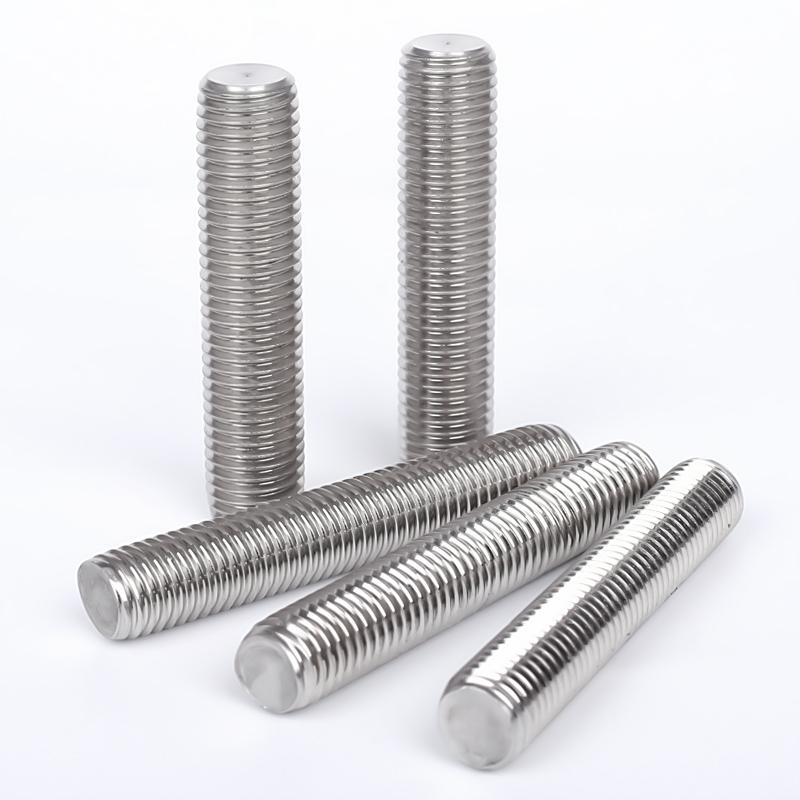
When a threaded rod fails, the whole assembly goes with it. For OEM buyers, that risk isn't worth taking. A stainless steel threaded rod from Wanluo is more than a fastener—it's the quiet backbone of your design. Why do leading manufacturers insist on OEM-grade stainless rods? Because corrosion resistance, tensile strength, and dimensional consistency aren't optional; they're the difference between a project that holds and one that haunts you. In this post, we'll break down what makes Wanluo's OEM stainless steel threaded rods indispensable for your next build.
When Standard Lengths Create More Problems Than They Solve
There’s a quiet assumption in many creative workflows that hitting a specific length—say, 1,500 words or a ten-minute video—automatically signals depth. But the opposite often happens. When the goal shifts from saying something clearly to filling a quota, sentences stretch, examples repeat, and the original point gets buried under padding. Readers and viewers can feel that drift, and it rarely works in favor of the content.
Consider a product tutorial that could be delivered in four focused steps. Once a “standard” runtime is imposed, those steps get surrounded by unnecessary context, tangents, and restated instructions. The user who came for a quick answer now has to scrub through minutes of filler, which creates frustration rather than confidence. A shorter, tighter piece would have solved the problem faster—and left a better impression.
The real issue isn’t that length standards are always wrong. It’s that they treat every topic as if it needs the same amount of space. Some ideas are naturally compact, and forcing them into a longer format weakens their impact. The better approach is to let the content’s purpose dictate its size, even if that means breaking the “normal” length on purpose.
The Real Cost of Corrosion in Outdoor and Marine Environments
Corrosion is often dismissed as a cosmetic nuisance until a load-bearing beam fails or a buried pipeline springs a leak. In coastal and marine settings, the combination of salt-laden air, high humidity, and aggressive UV exposure accelerates metal degradation at rates far beyond inland norms. The resulting financial burden is staggering: global estimates put the direct cost of corrosion at over 2.5 trillion U.S. dollars annually, with outdoor infrastructure and marine assets accounting for a disproportionate share. Every rusted handrail, pitted hull plate, or corroded fastener eventually demands repair, replacement, or redesign, and those expenses compound quietly over decades of service.
What makes corrosion in these environments particularly expensive is not the visible rust itself but the cascade of secondary costs it triggers. A corroded support column may require temporary shutdown of a pier or offshore platform, costing thousands per hour in lost productivity. Protective coatings fail prematurely when salt crystals penetrate microscopic pores, leading to frequent re-blasting and repainting cycles that far exceed initial application costs. There are also hidden liabilities: structural weakening can cause sudden equipment failure, worker injuries, or environmental spills from corroded storage tanks, each bringing regulatory fines, legal fees, and reputational damage that rarely appear in maintenance budgets.
Forward-looking operators now treat corrosion as a design parameter rather than an afterthought. Selecting alloys with higher pitting resistance, designing drainage to avoid salt accumulation, and investing in cathodic protection systems can shift the cost curve from expensive emergency repairs to predictable, lower-cost inspections. Lifecycle cost analyses consistently show that spending more upfront on marine-grade materials and robust coating systems yields substantial savings over a 20- to 30-year service life. In the end, the real cost of corrosion is not what you spend to fight it, but what you lose when you ignore the slow, relentless chemistry of salt and metal.
Why Thread Fit and Finish Determine Assembly Speed
A fastener that fights you at every turn isn't just annoying—it's a quiet thief of production time. When thread fit is too tight, operators waste seconds rocking, backing off, and retrying the same bolt. When it's too loose, they lose time chasing cross-threading or adding extra torque just to feel confident the joint won't fail. The sweet spot is a fit that starts by hand and snugs up with minimal wrenching, so assembly becomes a single, predictable motion instead of a wrestling match.
Finish plays the same game, only through friction. Rough or inconsistent plating, burrs, or leftover debris on threads turn what should be a low-effort spin into a stop-start struggle. Even a few extra newton-meters of prevailing torque may not sound like much, but across hundreds of fasteners per shift it adds minutes you can't get back. A clean, uniform finish lets the nut glide until the clamping zone, then delivers a crisp, repeatable stop—so torque tools hit their marks without fighting variables.
The real cost shows up in the pace of the line and the fatigue of the people on it. Fasteners that assemble predictably keep operators moving with rhythm instead of pausing for corrections, and they reduce the temptation to overtighten just to be safe. When thread fit and finish are dialed in, every joint closes with the same effort, every tool cycles on schedule, and the line speed stops depending on which batch of hardware happens to be in the bin.
How Material Certifications Remove Guesswork from Audits
Material certifications have turned the audit process from a game of trust into a straightforward verification exercise. Instead of relying on a supplier's verbal assurances or a poorly scanned datasheet, auditors can now pull up a certificate that ties a specific heat number to its exact chemical composition and mechanical test results. There is no need to wonder whether the material really meets the spec because the document chain leaves a clear trail back to the mill.
That trail also cuts down on redundant sampling. If a batch of stainless steel arrives with a proper EN 10204 3.1 certificate, the auditor can check yield strength, elongation, and impact values right from the page and compare them against the project requirements. The certificate acts as a controlled snapshot of what happened at the point of production, so the audit no longer hinges on someone's memory or a handwritten note.
Another shift comes from standardization. Certifications follow a consistent format and use shared terminology, which means an auditor moving between suppliers doesn't have to decode different report layouts. Discrepancies become visible almost immediately, whether they involve a missing heat treatment record or an out-of-range hardness value. This means what used to take days of back-and-forth now resolves in a single review session.
Matching Delivery to Project Milestones Instead of Warehouse Stock
On many job sites, the default still leans toward ordering everything upfront and letting it sit in a rented warehouse or laydown yard. That approach may feel safe, but it quietly drains budget through storage fees, double handling, and damage from weather or repeated moving. When deliveries are instead tied directly to project milestones, materials show up only when a specific phase is ready to receive them—foundation work gets its rebar and formwork just before the pour, not six weeks ahead.
This shift demands a different relationship with the schedule. You have to read the critical path closely and communicate with suppliers in terms of pour dates, steel erection windows, and equipment startup targets rather than generic lead times. A pump skid that arrives the week it's supposed to be set doesn't block access for the roofing crew or get buried under other trades' materials. It also means fewer "just in case" orders that end up forgotten in a corner.
The payoff is most visible in the final weeks of a project, when laydown space tightens and every move counts. Teams that align deliveries with milestones typically see lower handling costs, fewer lost or damaged items, and less time spent hunting for components. It takes more discipline upfront, but the reduction in site clutter and carrying cost usually more than makes up for it.
Rethinking Value Beyond the Initial Price Per Piece
Most buyers fixate on the sticker price of a single unit, but that number rarely tells the whole story. A piece that costs slightly more upfront can often deliver far greater value over time through lower maintenance, longer lifespan, or reduced replacement frequency. The real question isn't what you pay today, but what that piece will cost you across its entire working life.
Consider the hidden variables that quietly shape total cost: energy consumption, durability under real-world conditions, spare part availability, and even the ease of integration with existing systems. A cheaper unit might require more frequent servicing or create bottlenecks that slow down an entire operation. When you factor in downtime, labor, and lost productivity, the initial savings often evaporate.
Rethinking value means shifting from a transactional mindset to a relational one. Instead of asking for the lowest per-piece quote, ask how the supplier supports you after the sale—through warranties, technical guidance, or flexible restocking. That kind of partnership can turn a modest price difference into a long-term advantage, making the smart choice far more compelling than the cheap one.
FAQ
When you have rod made to order, the threads are rolled or cut to the exact engagement length and pitch your assembly requires. That eliminates weak spots from field cutting, keeps tolerances tight, and ensures each piece matches the next without hand-fitting.
Anywhere moisture, salt, or chemicals are present. Marine structures, wastewater plants, food processing lines, and exterior railings all see fewer failures because the material resists pitting and rust instead of just delaying it.
Yes, especially on larger runs. Custom lengths and pre-finished ends mean less scrap on site, fewer hours spent sawing and deburring, and fewer callbacks from corroded or poorly fitted fasteners.
304 and 316 are the most common, with 316L preferred where chlorides are heavy. Duplex grades are also an option when you need higher tensile strength and stress corrosion cracking resistance.
Consistent thread geometry spreads load evenly across the nut and rod, which prevents localized stress and reduces the chance of loosening under vibration. A poorly cut or rolled thread can fail well below the rated load of the material.
Ask for material test reports, proof of thread tolerance capability, and examples of similar custom work. You also want to confirm how they handle surface finish, packaging, and delivery windows so nothing slows your project down.
It depends on the shop, but many suppliers keep minimums modest because they know custom projects vary. For very small quantities, you may pay a setup fee, but that often beats buying stock and re-machining each rod by hand.
If the environment is dry and controlled, zinc-plated steel can work, but stainless gives you a wider safety margin against humidity, condensation, and accidental chemical contact. It also avoids the flaking and touch-up work that plated fasteners sometimes need.
Conclusion
Standard off-the-shelf threaded rod often forces compromises: cutting to length leaves rough ends, wastes material, or creates mismatched tolerances. In outdoor and marine environments, generic stainless grades or poor surface finish accelerate corrosion, and replacement costs dwarf any upfront savings. OEM stainless threaded rod solves these by producing exact lengths, precise thread engagement, and surface finishes tailored to the environment, reducing assembly time and long-term maintenance. Thread fit and finish directly affect how fast crews can install and how secure connections remain under load—sloppy threads increase cross-threading and rework. With OEM, each rod arrives ready for the specified nut or insert, no field chasing or deburring.
Material certifications matter when projects face audits or code compliance. OEM suppliers provide traceable mill test reports and heat lot data, so you don't have to guess whether the alloy truly meets 316 or duplex requirements. Delivery timing is another hidden factor: stocking standard lengths ties up capital and space, while OEM ordering aligns batches with construction or production milestones, reducing on-site inventory. Finally, value extends beyond piece price. Fewer failed inspections, faster assembly, lower corrosion-related callbacks, and predictable lead times often make OEM stainless threaded rod cheaper over the project lifecycle, even if the initial unit cost is slightly higher.
Contact Us
Contact Person: Shane
Email: [email protected]
Tel/WhatsApp: 8613357785029
Website: https://www.wanluohardware.com