

Zinc-Nickel Alloy Plating Equipment Factory Drives High-Performance Metal Finishing
2026-08-25
When corrosion resistance and durability define the success of a metal component, the right plating technology makes all the difference. Zinc-nickel alloy plating has become the go-to finish for automotive, aerospace, and heavy machinery applications—but only when the equipment behind it is engineered for precision and consistency. Junda, a factory dedicated to advanced electroplating systems, is pushing high-performance metal finishing into new territory. From tight alloy composition control to uniform coating distribution, this is where demanding specifications meet real-world production. Here’s how the right zinc-nickel plating line changes everything.
Why Zinc-Nickel Outpaces Conventional Plating
Zinc-nickel deposits routinely hold up for 1,000+ hours in neutral salt spray testing before red rust appears, while standard zinc often fails well before the 500-hour mark at similar thickness. The reason comes down to the alloy's mixed corrosion products, which form a dense, self-healing barrier that slows zinc dissolution even after scratches.
Upfront, the bath chemistry costs more than a basic acid zinc line. But when you factor in fewer reworks, longer service intervals, and the ability to hit spec with a thinner coating, the total cost per protected part drops considerably. Many automotive and fastener suppliers have already made the switch for this reason — and because it removes the need for hexavalent chromium passivates that face increasing regulatory pressure.
What really separates zinc-nickel from conventional options is its behavior on high-strength steel. The alkaline process introduces almost no hydrogen embrittlement risk, allowing platers to skip lengthy post-bake steps. Thickness distribution also stays remarkably even across complex geometries, which means recessed areas get real protection instead of a thin wash that disappears after a few months of road exposure.
The Equipment Behind Uniform Alloy Deposition
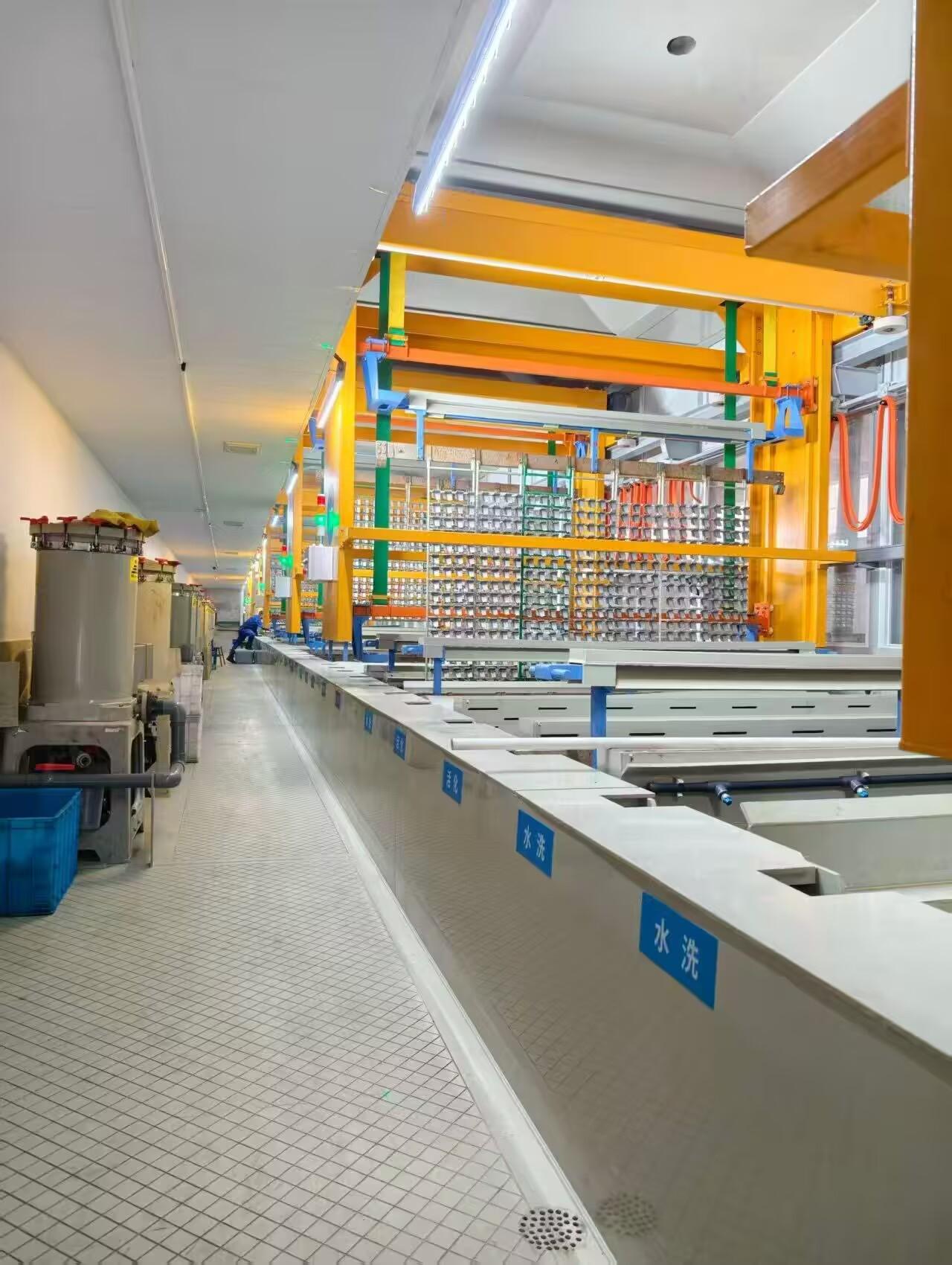
Uniform alloy deposition starts with a power supply that does more than just push current. Modern rectifiers with pulse and pulse-reverse capability let operators fine-tune the current density window, which directly affects how evenly nickel, zinc, or tin alloys plate across a part. Even a small ripple in the output can create localized burning or dull patches, so the rectifier’s filtering and ramp-up behavior matter as much as its maximum amperage.
The tank setup itself plays an equally practical role. Edgeless anodes, proper anode-to-cathode spacing, and vigorous solution movement—whether from air sparging, eductors, or cathode rod agitation—keep the metal ion concentration from stratifying near the surface. Continuous filtration, often through a 1–5 micron cartridge or bag system, removes particulates that would otherwise nucleate rough or porous alloy layers. Temperature control within a degree or two is non-negotiable for alloys like nickel-iron or zinc-nickel, where deposition kinetics shift quickly with heat.
Beyond the basics, many shops now rely on automated chemical feeders and real-time analyzers that sample the bath every few minutes. These systems adjust metal salts, brighteners, and pH modifiers based on amp-hours consumed, preventing the gradual drift that shows up as uneven alloy composition across a rack or barrel. A well-maintained hull cell test on a regular schedule still catches what sensors miss, tying the equipment’s performance back to the actual deposit on a test panel.
Tuning Bath Chemistry for High-Volume Runs
In high-volume plating, additive depletion rarely moves in a straight line. Drag-out, oxidation, and co-deposition each pull brightener, carrier, and leveler at different rates, so the ratio you set at makeup often drifts within a few shifts. Instead of reacting to roughness or dullness after it appears, track consumption per amp-hour and adjust the dosing pumps when the slope changes—not just when a single titration reads low.
Temperature and pH interact with organic additives more than they show on a log sheet. A bath held at the upper end of its range will burn through brightener faster and may generate breakdown products that compete with the leveler, giving you hazy low-current-density areas. Keeping both parameters in a narrow band, and tying replenishment to actual charge passed rather than fixed timers, prevents the slow drift that turns a stable bath into one that needs a major correction.
For very long runs, a quick Hull cell check or cyclic voltammetry strip every few hundred panels gives a trend line that single chemical assays miss. Watch the ratio of organic carbon to metal salt, not just the individual values. When the trend starts tilting, make several small additions over an hour rather than one large dump. This keeps the additive system balanced and avoids the sawtooth defect pattern that often appears after a shift change.
Making Corrosion Resistance Repeatable
Repeatable corrosion resistance doesn't come from a single magic formula. It hinges on controlling the variables that quietly sabotage consistency: surface preparation, coating thickness, cure temperature, and even ambient humidity. Skipping a proper abrasive blast profile or allowing flash rust to form between steps can turn two identical parts into wildly different outcomes. The first step is to document every parameter, not just the obvious ones, and then hold those parameters to tolerances that match the real-world exposure conditions.
One often-overlooked factor is the human element. Operators tend to develop their own rhythms—spraying a little faster, dwelling a little longer, or mixing batches by eye. Standardizing application through calibrated equipment, timed processes, and clear go/no-go checks removes that drift. It’s not about turning workers into robots; it’s about giving them reliable references so that the tenth part performs like the first. Regular adhesion tests and salt spray coupons aren't just paperwork; they’re early warnings that something in the line has shifted.
Finally, repeatability demands feedback loops. When a coating fails early, the root cause is rarely exotic—usually a subtle change in substrate, a new solvent batch, or a maintenance delay on spray nozzles. Building a simple log that connects process data to performance outcomes lets teams spot trends before they become failures. Over time, this discipline turns corrosion resistance from a hopeful property into an engineered, predictable result.
From Aerospace Fasteners to Marine Hardware
The same precision that keeps an aircraft wing intact at 35,000 feet also holds a ship's railing against salt spray and constant motion. Aerospace fasteners demand tight tolerances and exotic alloys, while marine hardware asks for corrosion resistance and brute strength. Yet the engineering mindset rarely shifts—both worlds reward components that refuse to fail quietly.
A titanium bolt designed for a jet engine can find a second life securing a mast fitting on a racing yacht, provided the threads survive the switch from hydraulic fluid to seawater. The real challenge isn't material compatibility; it's the paperwork and plating specs that separate aviation's clean rooms from a boatyard's open air. Smart suppliers bridge that gap by stocking dual-certified parts.
Beyond the obvious crossover, there's a lesson in inventory discipline. Aerospace buyers order in small, traceable batches with decade-long shelf lives. Marine distributors want bulk pricing and tolerance for rough handling. Merging those supply chains means rethinking packaging, not just part numbers—and that's where the quiet margin lives.
Scaling a Plating Line Without Losing Precision
Scaling a plating line usually starts with a simple assumption: if the bath chemistry and current density stay the same, the results should transfer. That assumption falls apart the moment you push from a 50-gallon pilot tank to a 1,000-gallon production line. Solution agitation, anode-to-cathode spacing, and even the way parts rack up change the local current distribution. Precision doesn't come from copying settings; it comes from re-mapping the variables that actually drift with scale.
One approach we've found reliable is to treat the scaled line as a new process window rather than an enlarged version of the old one. We start by running a designed experiment across the expected load range, measuring thickness at multiple points on a standard test panel instead of relying on a single coupon. Small shifts in brightener consumption or temperature gradients across a larger bath show up early in the data. Correcting for them before full production avoids the usual scrap spike that follows a too-quick scale-up.
The real skill is knowing which tolerances can flex and which cannot. Rack density, rectifier ripple, and filtration flow rate often matter more than the exact same additive concentration that worked in the lab. When you control those, the line scales up without the typical loss of edge definition or thickness uniformity. Precision becomes a design choice, not a hope.
FAQ
It designs and builds the plating lines, rectifiers, tanks, and control systems needed to deposit a zinc-nickel layer on metal parts. Without that specialized equipment, achieving the exact alloy ratio and uniform coverage would be nearly impossible.
The alloy typically holds 12-15% nickel, which dramatically slows corrosion compared to plain zinc. Salt spray tests often show protection lasting hundreds of hours longer, even on fasteners and brake components that face road salt and humidity.
The plating tanks with precise agitation, DC rectifiers that control current density, chemical dosing pumps for bath maintenance, and automated hoists or barrel systems all matter. Process control for pH and temperature keeps the nickel content consistent from the first part to the last.
Automotive and aerospace are the biggest users, especially for safety-critical fasteners and landing gear parts. Electronics, defense, and marine hardware also depend on zinc-nickel finishes where corrosion failure isn't an option.
It uses regular bath analysis, often with X-ray fluorescence or coulometric thickness testing, plus periodic salt spray or cyclic corrosion tests. Real-time monitoring of current density and chemical levels lets operators adjust before a batch drifts out of range.
Better galvanic protection, less white rust, and the ability to use thinner layers while still meeting automotive corrosion standards. It also reduces hydrogen embrittlement risk compared to cadmium, making it a safer replacement for high-strength steels.
Look for experience with similar part geometries, documented process capability, and support for bath chemistry control. A factory that offers pilot testing and after-sales training usually delivers a line that ramps up faster and holds tighter tolerances.
Conclusion
Zinc-nickel alloy plating has moved from a niche process to the default choice for corrosion-critical components because it consistently outperforms conventional zinc and even cadmium in salt spray and cyclic corrosion tests. The equipment factory behind this shift focuses on uniform alloy deposition: rectifiers with pulse plating capability, custom anode arrangements, and agitation systems that keep the nickel content locked in the 12–15% range where passivation truly bites. Bath chemistry tuning for high-volume runs is no longer guesswork either. Automated dosing pumps, real-time pH monitoring, and temperature-compensated conductivity sensors hold the electrolyte steady across thousands of parts, preventing the drift that causes dull patches or uneven alloy ratios.
Repeatable corrosion resistance comes from closed-loop control, not just good chemistry. Modern lines integrate thickness gauges and X-ray fluorescence to feed back into current density settings, so each rack gets the same deposit whether it is the first or the five-hundredth of the day. That repeatability is why aerospace fasteners, brake calipers, and marine hardware now specify zinc-nickel without second thoughts. Scaling a plating line used to mean sacrificing precision for throughput, but modular tank sections and expandable rectifier banks let factories add capacity while keeping the same anode geometry and flow patterns. The result is a high-performance metal finishing process that stays predictable from prototype runs to full production, even in aggressive environments.
Contact Us
Contact Person: hayyr
Email: [email protected]
Tel/WhatsApp: 8613082110525
Website: https://www.jundaelectroplating.com